Sacred Lexicon & Terminology
The Vocabulary of Ekādaśī
The terms you'll see across this site. Each links from anywhere it appears.
-
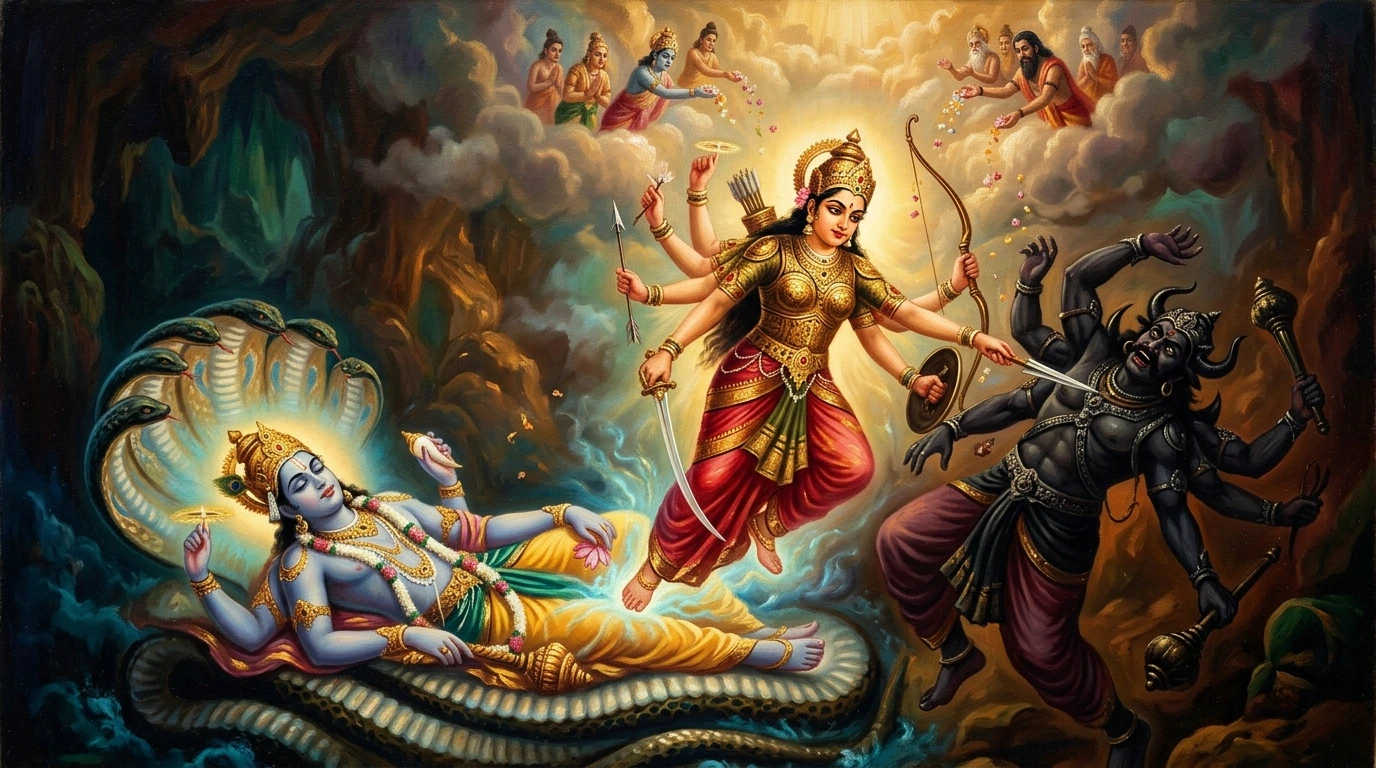
Ekadasi
एकादशीThe eleventh lunar day of each fortnight.
Ekadasi is the eleventh tithi (lunar day) of each fortnight in the Hindu lunar calendar. It occurs twice a month: once in the waxing fortnight (Śukla pakṣa) and once in the waning fortnight (Kṛṣṇa pakṣa), giving twenty-four Ekadasis in a regular year, and twenty-six in a leap year. The day is dedicated to Lord Vishnu, observed with fasting and contemplation.
-

Tithi
तिथिA lunar day, defined by the angle between Moon and Sun.
A tithi is the lunar "day" used in the Hindu calendar. It is defined by the angular elongation of the Moon from the Sun: each 12° of separation marks one tithi. There are thirty tithis per lunar month, fifteen in the waxing fortnight (Śukla pakṣa, ending at full moon) and fifteen in the waning fortnight (Kṛṣṇa pakṣa, ending at new moon). Because the Moon's speed varies, a tithi can last anywhere from about 19 to 26 hours, which is why the start and end times rarely match sunrise.
-

Pakṣa
पक्षA fortnight, half a lunar month.
A pakṣa is one of the two halves of a lunar month, each spanning fifteen tithis. Śukla pakṣa is the bright, waxing half (from new moon to full moon). Kṛṣṇa pakṣa is the dark, waning half (from full moon to new moon).
-
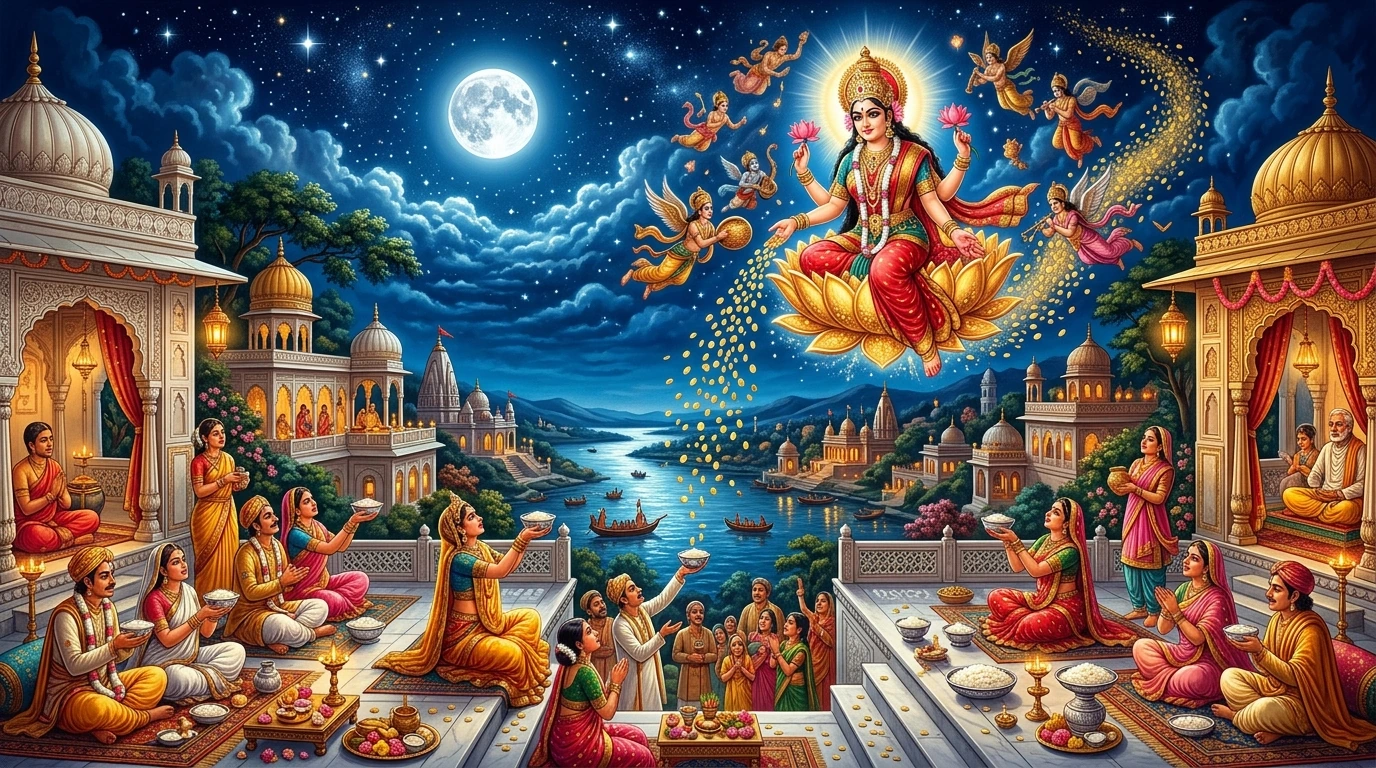
Śukla pakṣa
शुक्ल पक्षThe waxing fortnight, moon growing toward full.
Śukla pakṣa is the bright fortnight, running from the day after new moon (amāvāsyā) to the full moon (pūrṇimā). The eleventh day of this fortnight is the Śukla Ekadasi.
-

Kṛṣṇa pakṣa
कृष्ण पक्षThe waning fortnight, moon shrinking toward new.
Kṛṣṇa pakṣa is the dark fortnight, running from the day after full moon to the new moon. The eleventh day of this fortnight is the Kṛṣṇa Ekadasi.
-
Daśamī
दशमीThe tenth tithi, the day before Ekadasi.
Daśamī is the tenth lunar day. Its overlap with Ekadasi at sunrise is the central reason traditions sometimes disagree about which calendar day to fast on (see vedha).
-
Dvādaśī
द्वादशीThe twelfth tithi, the day after Ekadasi.
Dvādaśī is the twelfth lunar day. The fast is broken on this day, during the pāraṇa window. Some Ekadasis are joined with Dvādaśī to form an extended observance.
-
Pūrṇimā
पूर्णिमाFull moon, the last tithi of Śukla pakṣa.
Pūrṇimā is the fifteenth tithi of the bright fortnight, when the Moon is fully illuminated. In the purnimanta convention used widely in north India, the lunar month ends at pūrṇimā.
-

Amāvāsyā
अमावस्याNew moon, the last tithi of Kṛṣṇa pakṣa.
Amāvāsyā is the fifteenth tithi of the dark fortnight, when the Moon is not visible. It is the moment when adhika māsa is determined, if no solar saṅkrānti falls between two amāvāsyās, the lunar month between them is a leap month.
-
Aruṇodaya
अरुणोदयSunrise, the moment that determines a day's tithi.
Aruṇodaya is the moment of sunrise. The tithi prevailing at this moment is the one assigned to the calendar day. If Ekadasi tithi begins after sunrise, the day is named after Daśamī, and Ekadasi is observed on the following day when it has reached sunrise.
-

The sunrise rule
A calendar day belongs to whichever tithi is prevailing at its sunrise.
This single rule does most of the work in a panchang. A tithi can last between 19 and 26 hours and rarely starts or ends at a clean sunrise, so each calendar day is named after whichever tithi is on duty at its own sunrise. If Ekadasi tithi begins after sunrise on a given day, then at that sunrise Daśamī was still present, the day is therefore a 'Daśamī day' and the Ekadasi fast slides to the next day, when Ekadasi has reached sunrise. Both Smārta and Vaishnava traditions accept this rule; they differ only in the rare edge cases of vedha, kshaya, and atirikta tithis.
-
Sandhi
सन्धिThe transition moment between two tithis.
Sandhi means "junction". The instant a tithi ends and the next begins is the sandhi. Strict observance treats the sandhi window as ritually delicate, many sources avoid breaking the fast within the sandhi between Ekadasi and Dvādaśī, hence the rule that pāraṇa must occur after the Hari Vāsara (last quarter of Ekadasi) has fully ended.
-
Atirikta tithi
अतिरिक्त तिथिA tithi that spans two consecutive sunrises.
Atirikta literally means 'excess'. Occasionally a tithi is so long that it remains prevailing at two consecutive sunrises, both calendar days share its name. For Ekadasi this is when Smārta and Vaishnava observances diverge: the Smārta keeps the fast on the earlier day, the Vaishnava on the later (treating the later as 'unviolated' by Daśamī).
-
Kshaya tithi
क्षय तिथिA tithi so short it fails to touch a sunrise.
Kshaya means 'decay'. When a tithi begins after one sunrise and ends before the next, no civil day is named after it. Ekadasi is rare to kshaya-out, but when it does, traditions assign the fast to the day on which the tithi mostly falls (usually the day Daśamī was at sunrise and Ekadasi takes over by mid-morning).
-
Hari Vāsara
हरि वासरThe last quarter of Ekadasi tithi, its most sacred portion.
Hari Vāsara literally means "the day of Hari (Vishnu)". It refers to the final quarter of the Ekadasi tithi, considered the most sacred portion of the fast. The pāraṇa: breaking of fast, must occur after Hari Vāsara has ended, so that the entire sacred quarter has passed.
-
Pāraṇa
पारणThe breaking of the fast on Dvādaśī morning.
Pāraṇa is the ritual breaking of the Ekadasi fast on the morning of Dvādaśī. It begins at sunrise of the Dvādaśī day (or, if Ekadasi tithi extends past that sunrise, when Hari Vāsara ends), and must end before Dvādaśī tithi itself ends. Most panchangs publish a recommended one- to three-hour window after sunrise.
-
Vedha
वेधOverlap of one tithi with another at sunrise.
Vedha means "touch" or "pierce". When Daśamī tithi is still present at the sunrise of an Ekadasi day, it is said to "pierce" the Ekadasi. Vaishnava tradition reads this as disqualifying the day for fasting, and the fast is observed the following day instead, when Ekadasi alone is at sunrise.
-
Adhika Māsa
अधिक मासA leap lunar month, inserted every 2–3 years.
Adhika Māsa, also called Puruṣottama Māsa, is the thirteenth lunar month inserted into the Hindu calendar to keep it aligned with the solar year. It occurs whenever a lunar month contains no solar saṅkrānti, no transition of the Sun between zodiacal signs. Two extra Ekadasis: Padminī and Paramā, fall within this month, both sourced from the Skanda Purāṇa (the Puruṣottama Māsa Māhātmya); they are not part of the Padma Purāṇa’s twenty-four.
-
Saṅkrānti
संक्रान्तिThe Sun crossing from one zodiacal sign to the next.
A saṅkrānti is the moment the Sun enters a new sidereal rashi (zodiac sign). There are twelve a year: Mesha saṅkrānti in mid-April, Vrishabha in mid-May, and so on. The presence or absence of a saṅkrānti within a lunar month is the test for adhika māsa: a lunar month with no saṅkrānti is the leap month.
-
Rāśi
राशिA zodiac sign, one of twelve 30° sidereal segments of the ecliptic.
A rāśi is a thirty-degree band of the sidereal zodiac. The twelve rāśis: Mesha (Aries), Vrishabha (Taurus), Mithuna (Gemini), Karka (Cancer), Simha (Leo), Kanyā (Virgo), Tulā (Libra), Vrischika (Scorpio), Dhanu (Sagittarius), Makara (Capricorn), Kumbha (Aquarius), Mīna (Pisces), provide the spatial framework against which the Sun and Moon move. Hindu panchangs use the *sidereal* zodiac (with Lahiri ayanamsa) rather than the *tropical* zodiac of Western astrology.
-
Nakṣatra
नक्षत्रA lunar mansion, one of twenty-seven 13°20′ segments of the ecliptic.
A nakṣatra is one of twenty-seven equal divisions of the ecliptic, each 13°20'. The Moon moves through one nakṣatra per day (its sidereal month being 27 days). Lunar months are traditionally named for the nakṣatra the Moon is in at the purnima of that month, Mārgaśīrṣa is named for Mṛgaśirā nakṣatra, Pauṣa for Puṣya, and so on.
-
Pañchāṅga
पञ्चाङ्गLiterally 'five-limbed', the traditional Hindu almanac.
Pañchāṅga (also spelled panchang) means 'five limbs': the five quantities a Hindu almanac records for each day, tithi (lunar day), vāra (weekday), nakṣatra (lunar mansion), yoga (sun–moon combination), and karaṇa (half-tithi). Together they fix the ritual character of any moment. The Ekadasi tithi, Hari Vāsara, and pāraṇa windows displayed throughout this site come from the tithi limb of the pañchāṅga.
-
 Most Hindu households not specifically affiliated with a Vaishnava sampradāya
Smārta
स्मार्तThe tradition following the Smṛti texts, with flexible vedha rules.
The Smārta tradition prescribes Ekadasi on the day when Ekadasi tithi is present at sunrise (aruṇodaya), reading the rules of overlap with Daśamī relatively flexibly. Most household observances in India follow this approach.
-
 Gauḍīya Vaiṣṇavas (Bengal/Vrindavan)
Vaiṣṇava
वैष्णवThe tradition strict about Daśamī vedha, fast on the un-pierced day.
The Vaiṣṇava tradition, including Gauḍīya and Śrī Vaiṣṇava lineages, takes a stricter line on vedha (touch) with Daśamī. Where Daśamī is still present at sunrise of the Ekadasi day, the fast is observed the following day, when Dvādaśī reaches sunrise. Most months, Smārta and Vaiṣṇava agree.
-
Phalaśruti
फलश्रुतिThe promised fruit (merit) of an observance, as stated in scripture.
Phalaśruti is the statement of merit (phala) that the relevant scripture promises to the faithful observer. Each Ekadasi has its own phalaśruti, liberation, the fulfilling of desires, freedom from sin, victory, and so on.
- South India (Tamil Nadu
Amānta
अमान्तThe lunar-month convention where each month ends at amāvāsyā (new moon).
Amānta (literally 'ending at amāvāsyā') is the lunar-month system used across South India, Maharashtra, Gujarat, Karnataka, Andhra/Telangana, Tamil Nadu, and Kerala, and globally by Gauḍīya Vaiṣṇavas. Each lunar month runs from one amāvāsyā to the next, with śukla pakṣa first (waxing toward pūrṇimā) and kṛṣṇa pakṣa second (waning toward the next amāvāsyā). A month is named after the saṅkrānti (sun's entry into a rashi) that falls within it, the month containing Vṛṣabha saṅkrānti is Vaiśākha, the month containing Karka saṅkrānti is Āṣāḍha, and so on. If a month contains no saṅkrānti, it is the adhika māsa (leap month), and the Padminī and Paramā ekadasis fall within it.
- North India: Uttar Pradesh
Pūrṇimānta
पूर्णिमान्तThe lunar-month convention where each month ends at pūrṇimā (full moon).
Pūrṇimānta (literally 'ending at pūrṇimā') is the lunar-month system used across most of North India, Uttar Pradesh, Bihar, Madhya Pradesh, Rajasthan, Punjab, and the Hindi belt. Each lunar month runs from one pūrṇimā to the next, with kṛṣṇa pakṣa first and śukla pakṣa second. The names of the months are the same as in amānta, but the kṛṣṇa pakṣa is named for the month *ahead*, so 'Jyeṣṭha kṛṣṇa' in pūrṇimānta is the kṛṣṇa pakṣa leading up to Jyeṣṭha pūrṇimā, which in amānta would be called Vaiśākha kṛṣṇa. Same fortnight in the sky, different month-name. This is why the *names* of some ekadasis (especially the kṛṣṇa-pakṣa ones) attach to different calendar dates under the two systems, even though the underlying astronomy is identical.