Akṣaya Tṛtīyā
Vaiśākha Śukla Tṛtīyā · The day on which nothing given or begun is ever lost
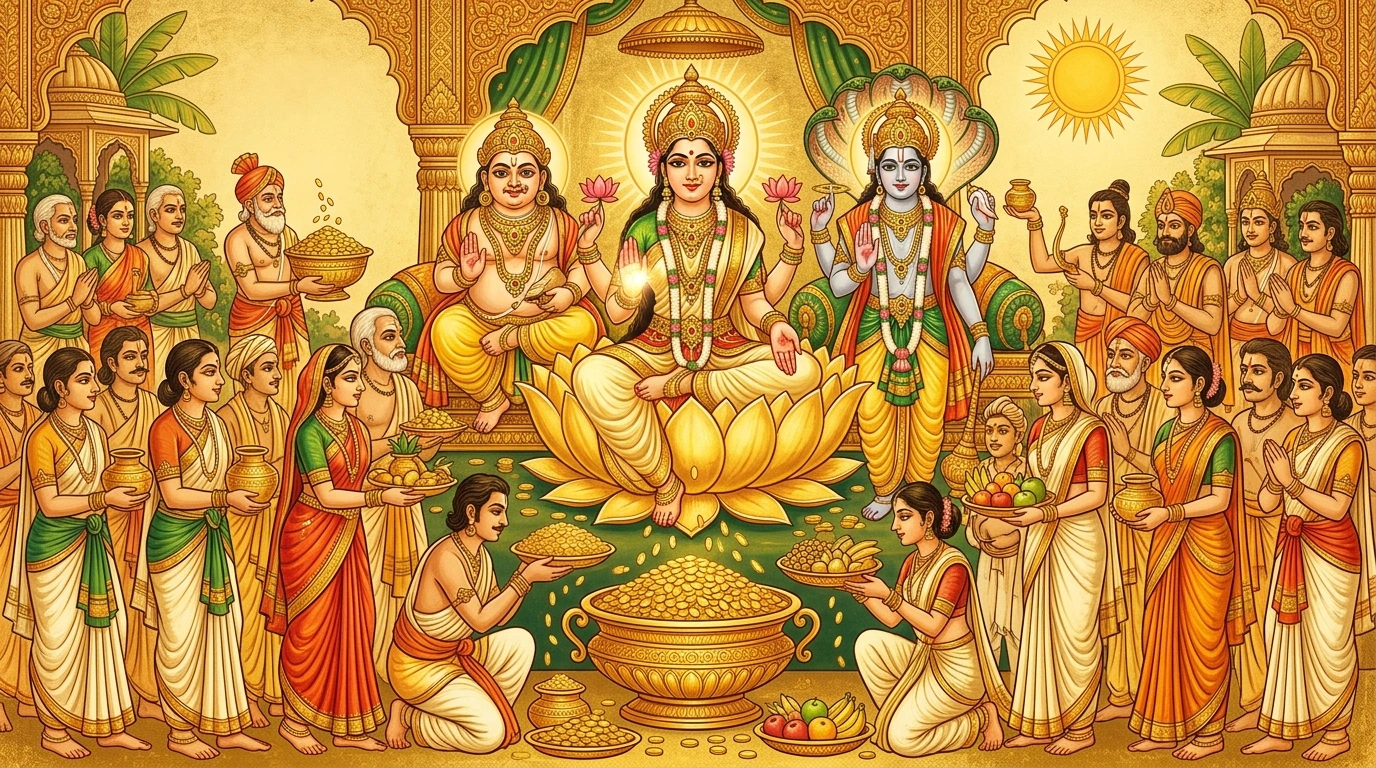
Akṣaya Tṛtīyā
“Akṣaya” signifies that which never diminishes. The forenoon and midday window on Vaiśākha Śukla Tṛtīyā is sacred for charitable donations (dāna), sacred study (japa), and launching enduring life ventures.
The Significance of Akṣaya Tṛtīyā
The imperishable day
Drawing on the Mahābhārata and the Purāṇic traditions attached to Vaiśākha Śukla Tṛtīyā.
The word akṣaya means imperishable, that which does not decay. The whole meaning of the day is in that one word: whatever is begun, given, or earned on Vaiśākha Śukla Tṛtīyā is held to bear fruit that never runs out. It is one of the sāḍe-tīn muhūrta, the three and a half always-auspicious moments of the year that need no further calculation; the day is auspicious in itself.
Several of the tradition’s beginnings are gathered on this date, and together they explain the name:
- It is held to be the day the Tretā-yuga began, the turning of one age into another.
- It is the day Veda-Vyāsa began to recite the Mahābhārata, with Gaṇeśa as his scribe, the start of the longest poem ever composed.
- It is the day the Gaṅgā descended to the earth, brought down by the austerities of Bhagīratha.
- In the Mahābhārata’s forest years, it is the day Sūrya gave Yudhiṣṭhira the Akṣaya Pātra, the vessel that never emptied of food while the Pāṇḍavas were in exile, a literal image of the imperishable.
- It is remembered, too, as the day Kṛṣṇa received his friend Sudāmā, who came with nothing but a handful of beaten rice, and was given undreamt-of abundance in return, the smallest offering made imperishable by the spirit in which it was given and received.
The thread running through all of these is the same: a beginning that does not exhaust itself, a gift that is not diminished by giving.
What is done, and why
Because the day’s merit does not decay, it is traditionally chosen to begin good things, a new venture, a journey, a marriage, the building of a house, and above all to give: dāna, charity, especially of food, water, and to those who have nothing. The giving is the point far more than the getting. The later custom of buying gold today follows the same logic of imperishable wealth, but the older and truer observance is the gift made and the good begun.
There is no fast in the austere sense; there is the offering of water, sattu, fruit, and the resolve to start something that will last.
How it is kept
Akṣaya Tṛtīyā is observed on Vaiśākha Śukla Tṛtīyā, on the day the Tṛtīyā tithi prevails through the day (madhyāhna). Because the day is itself a muhūrta, no further auspicious time need be sought for what one begins.
Why it is kept
The festival is a teaching about gravity in the moral world: that some acts: a true gift, an honest beginning, are not subject to decay at all. Sudāmā’s handful of rice and Yudhiṣṭhira’s bottomless vessel say the same thing. What is given rightly is never lost; it only changes hands.
Source: The traditions of Akṣaya Tṛtīyā, the start of Tretā-yuga and of the Mahābhārata, the descent of the Gaṅgā, the Akṣaya Pātra, Kṛṣṇa and Sudāmā, are drawn from the Mahābhārata and the Bhaviṣya and Skanda Purāṇas. The Mahābhārata is available at wisdomlib.org.
How it is observed
No fast: the “imperishable third” is kept by beginning auspicious things, giving in charity (dāna), and worshipping Viṣṇu and Lakṣmī; whatever is begun or given today is said never to diminish.
- Bathe in holy waters or invoke Gaṅgā in your morning bath.
- Worship Lord Viṣṇu and Goddess Lakṣmī with yellow flowers and fresh tulasī leaves.
- Give in charity: cold water pots (udaka-kumbha), umbrellas, grain, barley, or summer footwear to the needy.
- Commence auspicious projects, learning, or long-term investments without anxiety.
In Vedic astronomy, Rāhu is the shadow node (chāyā-graha) associated with illusion, darkness, and disruption. No new sacred endeavor, pūjā sankalpa, or idol installation (sthāpanā) should ever be commenced during Rāhu Kāla. Ongoing chanting or meditation may continue, but the initial invocation must never begin during this window.
Governed by Yama, the lord of mortality and justice. It is considered unfavorable for establishing enduring auspiciousness and prosperity; hence ritual beginnings and vows are suspended during this hour.
Notice: Part of this auspicious window overlaps with Rāhu Kāla. Vedic tradition advises initiating the primary sankalpa and sacred invocation either before Rāhu Kāla begins or immediately after it concludes.