The Intercalary Month
Adhika Māsa
The thirteenth lunar month, and the two Ekādaśīs that only live inside it.
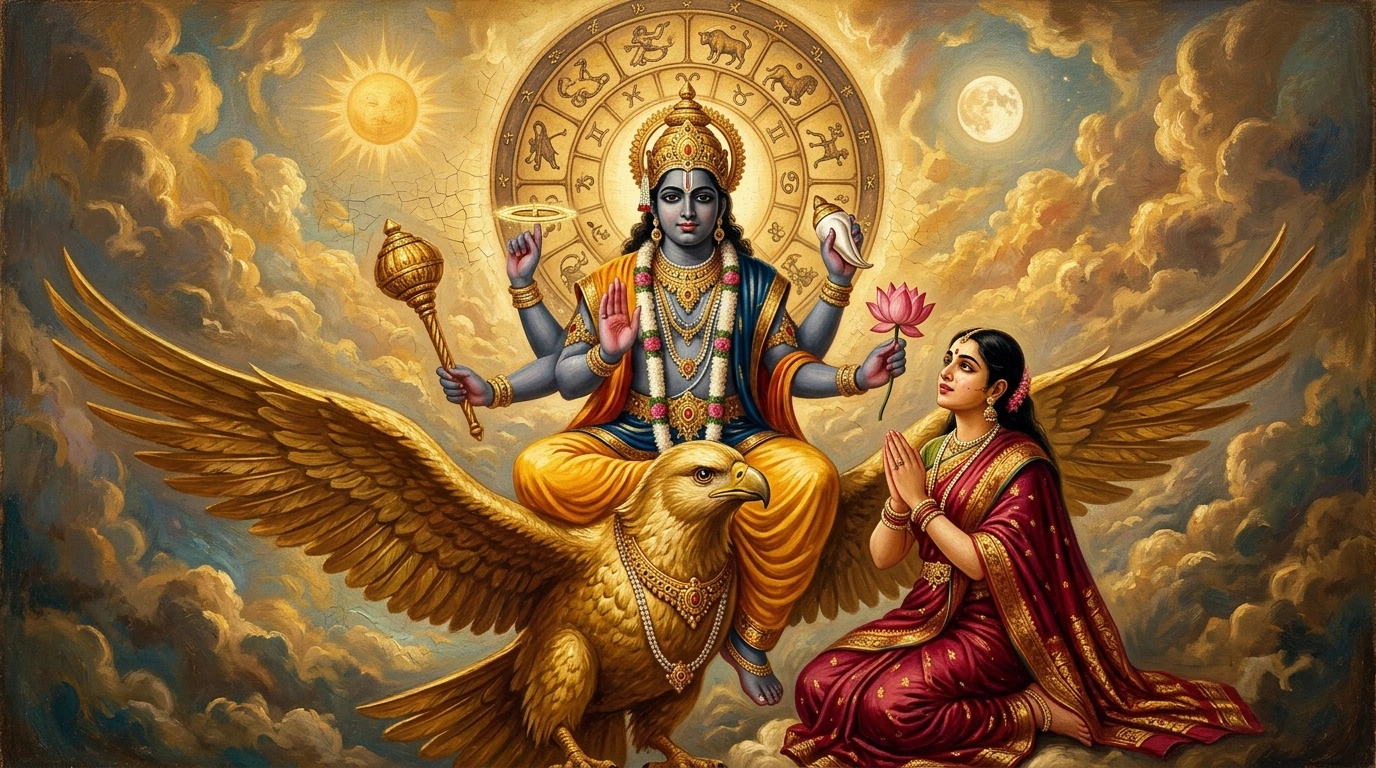
A Hindu lunar year is approximately 354 days long; a solar year is approximately 365. Left alone, the two calendars would drift apart at a rate of about eleven days a year, the spring festivals would slowly migrate into summer, and the rains would never quite line up with their named months. The remedy, codified in classical astronomy (Sūrya Siddhānta, Āryabhaṭīya, and later panchangs), is the Adhika Māsa: an extra lunar month, inserted roughly every thirty-two to thirty-three months, that absorbs the drift and pulls the two calendars back into step.
When the rule fires
The technical condition is sharply specific. A lunar month is the period between two consecutive new moons (amāvāsyā → amāvāsyā in the amānta convention) or two consecutive full moons (pūrṇimā → pūrṇimā in the pūrṇimānta convention). During an ordinary lunar month, the sun crosses exactly one rāśi (zodiac sign), a sankrānti. When a lunar month begins and ends without the sun crossing into a new sign, that month is declared adhika ("additional"): the sun has lingered in one sign long enough for the moon to lap it twice. The very next lunar month (with a sankrānti) is the nija ("proper") month of the same name. So an adhika year contains two months called, for example, Jyeṣṭha, first the adhika, then the nija.
The two extra Ekadasis
Adhika Māsa carries its own shukla and kṛṣṇa pakṣas, and therefore its own two Ekadasis. They are not assigned the normal twenty-four names, they have unique names that only appear in adhika years:
- Padminī Ekadasi , shukla pakṣa of the Adhika Māsa. "Padminī" means lotus; the story, recorded in the Skanda Purāṇa, frames the vow as a path that yields what no other Ekadasi quite reaches.
- Paramā Ekadasi , kṛṣṇa pakṣa of the Adhika Māsa. "Paramā" means supreme. The Padma Purāṇa version of the story makes the same claim from the opposite direction: the fast is described as the highest among Ekadasi vows.
Both vows are addressed to Lord Viṣṇu and observed exactly like any other Ekadasi, sattvic food the previous evening, fast on Ekadasi day, pāraṇa during the prescribed window on Dvādaśī. The unusual element is rarity: Padminī and Paramā arrive together (always in the same adhika year) and then disappear for thirty-two to thirty-three months.
The next three Adhika Māsa years
This year (2026) is itself an adhika year, the extra month is Jyeṣṭha. The pair of dates after each year are the Padminī and Paramā Ekadasi fasts, computed from the sky for your location, they can fall a day apart elsewhere.
- 2026, Adhika Jyeṣṭha. Padminī falls on Tuesday, 26 May 2026 and Paramā on Thursday, 11 June 2026 .
- 2029, Adhika Chaitra. Padminī falls on Monday, 26 March 2029 and Paramā on Monday, 9 April 2029 .
- 2031, Adhika Bhādrapada. Padminī falls on Thursday, 28 August 2031 and Paramā on Friday, 12 September 2031 .
Names you may hear
Adhika Māsa is also called Mala Māsa (the impure month, because regular auspicious rites like weddings and house-warmings are traditionally avoided), Puruṣottama Māsa (the month belonging to Puruṣottama, Lord Viṣṇu, because he is said to have accepted custody of this otherwise unclaimed month), and simply Adhik in everyday Indian speech.
The seeming contradiction, mala (impure) and puruṣottama (supreme), is characteristic of the tradition: a month set aside from worldly ceremony precisely so it can hold the highest spiritual practices. Devotional reading, japa, and the two Ekadasi fasts are considered to bear unusually rich fruit here.
How to know without computing
Every printed Indian panchang prints the adhika designation prominently, and the rule is the same everywhere, there is no disagreement about which years carry an extra month. If you're ever unsure for a specific year, check the calendar pages on this site , adhika years carry a dedicated note with the month and the Padminī/Paramā dates.
See also the full stories of Padminī and Paramā , or the general Ekadasi explainer if you're new to the observance.