Ugādi / Gudi Padwa
Chaitra Śukla Pratipadā · The first day of the lunar year, when creation began
Ugādi / Gudi Padwa
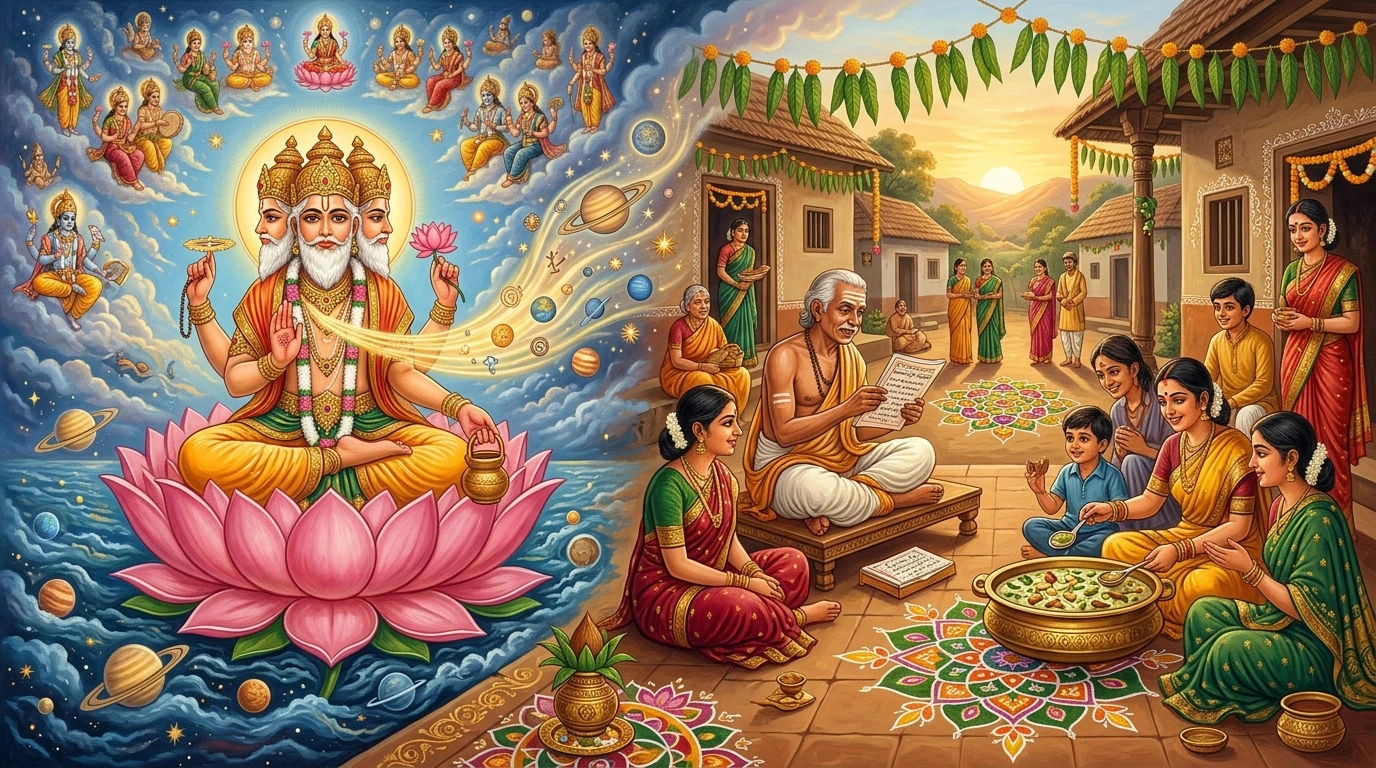
Lord Brahmā began the cosmic creation at sunrise on Caitra Śukla Pratipadā. The first daylight of the new year is when the celestial cycle (Saṁvatsara) resets.
The Significance of Ugādi / Gudi Padwa
The first sunrise of the year
Drawing on the Brahma Purāṇa and the calendrical tradition of the Sūrya Siddhānta. The retelling here follows the standard accounts of the day’s meaning rather than a single narrative chapter.
The word is yuga-ādi, “the beginning of the age”, worn down in speech to Ugādi. It is the first day of Caitra, the first lunar month, in the bright fortnight: the new year of the lunar calendar that this whole site is built on.
The tradition holds that this is the day Brahmā began the work of creation, that the first turning of time, the first ordering of the days and months and the movements of the sun and moon, was set going on Caitra Śukla Pratipadā. Whether one takes that as history or as image, the meaning is the same: the year is being started again from its origin. The almanac for the coming twelve months, the pañcāṅga, the five limbs of tithi, vāra, nakṣatra, yoga and karaṇa, is traditionally read aloud today, the pañcāṅga-śravaṇa, so that the household begins the year knowing the shape of the time ahead.
It is kept under different names across the south and west, Ugādi in Karnataka, Andhra and Telangana; Gudi Padwa in Maharashtra, where a bright cloth and a pot are raised on a pole at the door as a banner of victory and welcome. In Maharashtra the day also remembers the coronation of Śivājī, and older still, the return and crowning of righteous kings, the new year as the day order is restored.
What is done, and why
The signature of Ugādi is a single dish: Ugādi pacchaḍi, in which six tastes are deliberately put together, the bitterness of neem, the sweetness of jaggery, the sourness of tamarind, the heat of chilli, the salt of salt, the sharp green of raw mango. It is eaten first thing, and it is not a culinary accident. The year ahead will hold all six, grief and sweetness, the bitter and the bright, and the dish is a vow taken in the mouth: to receive the whole of what comes, not only the sweet part.
The day’s observance is simple and domestic: an oil bath at dawn, a clean threshold and a toraṇa of mango leaves over the door, new clothes, the reading of the year’s almanac, and the first taste of the six. There is no fast. It is a day of beginning well.
Why it is kept
Every tradition needs a day on which the clock is set back to zero, not erased, but re-founded. Ugādi is the lunar calendar’s own such day: it does not borrow January, it begins where the months themselves begin, at the first sunrise of Caitra. To start the year at its true origin, with the bitter and the sweet eaten together in the same first mouthful, is the whole teaching of the day.
Source: The significance of Caitra Śukla Pratipadā as the beginning of creation and of the yearly cycle is drawn from the Brahma Purāṇa and the calendrical reckoning of the Sūrya Siddhānta; the regional observances (Ugādi, Gudi Padwa) follow living tradition. Translations of the Brahma Purāṇa are available at wisdomlib.org.
How it is observed
The Saṁvatsara turns. Kept with an oil-bath at dawn, the bitter-sweet Ugādi pacchaḍi tasted as a sign of the year’s mixed fortunes, new clothes and a temple visit, and the reading of the year’s pañcāṅga (pañcāṅga-śravaṇa).
- Take a ritual oil bath before dawn (Abhyaṅga Snāna with sesame oil).
- Adorn the doorway with fresh green mango leaves and colorful rangoli.
- Prepare and taste the sacred Ugādi Pacchaḍi (combining sweet jaggery, bitter neem, sour tamarind, salty salt, pungent chilli, and tangy raw mango—symbolizing life’s varied fortunes).
- Listen to the ceremonial reading of the year’s new almanac (Pañcāṅga Śravaṇa).
In Vedic astronomy, Rāhu is the shadow node (chāyā-graha) associated with illusion, darkness, and disruption. No new sacred endeavor, pūjā sankalpa, or idol installation (sthāpanā) should ever be commenced during Rāhu Kāla. Ongoing chanting or meditation may continue, but the initial invocation must never begin during this window.
Governed by Yama, the lord of mortality and justice. It is considered unfavorable for establishing enduring auspiciousness and prosperity; hence ritual beginnings and vows are suspended during this hour.