Vaiśākha Pūrṇimā
Vaiśākha Pūrṇimā · The full moon of Buddha and of the tortoise who held the mountain
Vaiśākha Pūrṇimā
Commemorates the triple holy day of Gautama Buddha (birth, enlightenment, and mahāparinirvāṇa), and represents one of the most auspicious full moons for holy bathing and the Satyanārāyaṇa Vrata.
The Significance of Vaiśākha Pūrṇimā
One full moon, two appearances
Drawing on the Bhāgavata Purāṇa, Canto 8 (Kūrma) and the Buddhist tradition of the Vaiśākha full moon.
The full moon of Vaiśākha carries two of the tradition’s appearances at once.
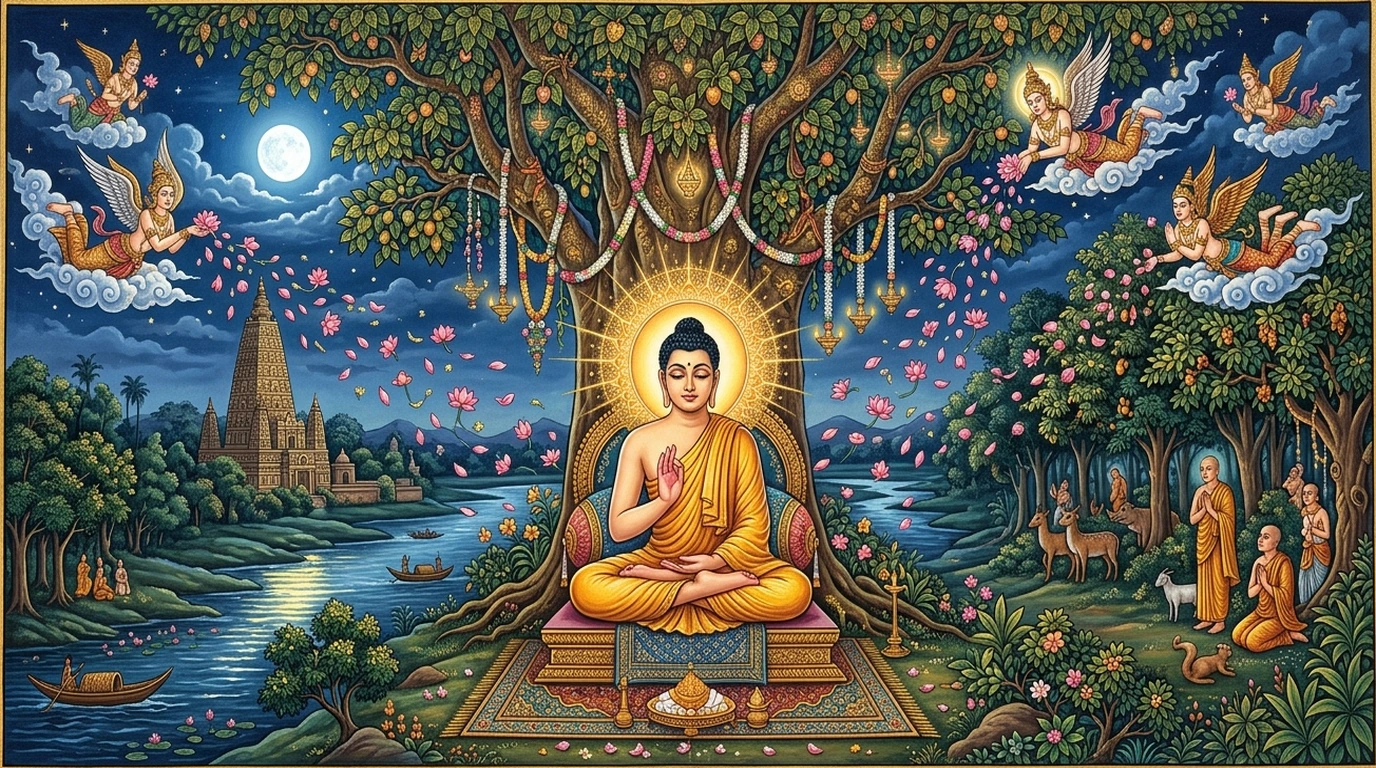
For much of the world it is Buddha Pūrṇimā, the day the Buddha is held to have been born, to have reached enlightenment under the bodhi tree, and to have passed into final nirvāṇa: birth, awakening, and release all remembered on the one full-moon night. In the Hindu reckoning the Buddha is counted among the avatāras of Viṣṇu, and the day is kept across the subcontinent.
It is also Kūrma Jayantī, the appearance of Viṣṇu as the tortoise. The Bhāgavata tells it in Canto 8: the gods and the demons, both wanting the nectar of immortality, agreed to churn the ocean of milk together. They used Mount Mandara as the churning-rod and the serpent Vāsuki as the rope. But the mountain had no base in the soft sea-bed, and as they pulled it began to sink. The whole enterprise, the one chance at immortality, was about to be lost into the deep.
Then Viṣṇu entered the water as an immense tortoise, slid beneath the sinking mountain, and held it on his back so the churning could go on. The Bhāgavata’s image is quiet and enormous: the Lord becomes the still point underneath everything, the patience that bears the weight while others pull above. The churning could then continue, bringing up its treasures and at last the nectar itself.
So the day holds two complementary faces of the same truth, the Buddha’s stillness under the bodhi tree, and the tortoise’s stillness under the mountain. In both, the decisive thing is not force but the capacity to bear and to be still while the work completes.
What is done, and why
Vaiśākha Pūrṇimā is kept with charity, the giving of water and food in the heat of the season, and, for those who follow it, abstention and quiet. Bathing in sacred rivers at the full moon is traditional. For Buddhists it is the year’s holiest day, marked with lamps, offerings, and the recollection of the Buddha’s life.
How it is kept
It falls on the full moon (Pūrṇimā) of Vaiśākha, the tithi prevailing at the full moon. There is no fast in the strict sense; it is a day of giving, bathing, and stillness.
Why it is kept
Both stories on this full moon say the same thing in different keys: the world is held up, and made free, not by the one who pulls hardest but by the one who can be perfectly still and bear the weight, the tortoise under the mountain, the awakened one under the tree.
Source: The Kūrma (tortoise) avatāra and the churning of the ocean are told in the Bhāgavata Purāṇa, Canto 8, Chapters 6–7, available at vedabase.io. Buddha Pūrṇimā follows Buddhist tradition.
How it is observed
A full-moon day of bathing in sacred water and charity, kept as the birth of the Buddha; some keep a Satyanārāyaṇa vrata.
- Take a sacred bath in holy water with a vow of non-violence (Ahiṁsā) and truthfulness (Satya).
- Recite the Śrī Satyanārāyaṇa Kathā and offer Panñcāmṛta and banana-flour prāsāda.
- Feed the hungry, donate water pots and summer essentials to spiritual seekers.
- Meditate upon inner peace, universal compassion, and spiritual liberation.
In Vedic astronomy, Rāhu is the shadow node (chāyā-graha) associated with illusion, darkness, and disruption. No new sacred endeavor, pūjā sankalpa, or idol installation (sthāpanā) should ever be commenced during Rāhu Kāla. Ongoing chanting or meditation may continue, but the initial invocation must never begin during this window.
Governed by Yama, the lord of mortality and justice. It is considered unfavorable for establishing enduring auspiciousness and prosperity; hence ritual beginnings and vows are suspended during this hour.