A Practical Guide
Ekādaśī Fasting Rules
What to eat, what to avoid, and when to break the fast.
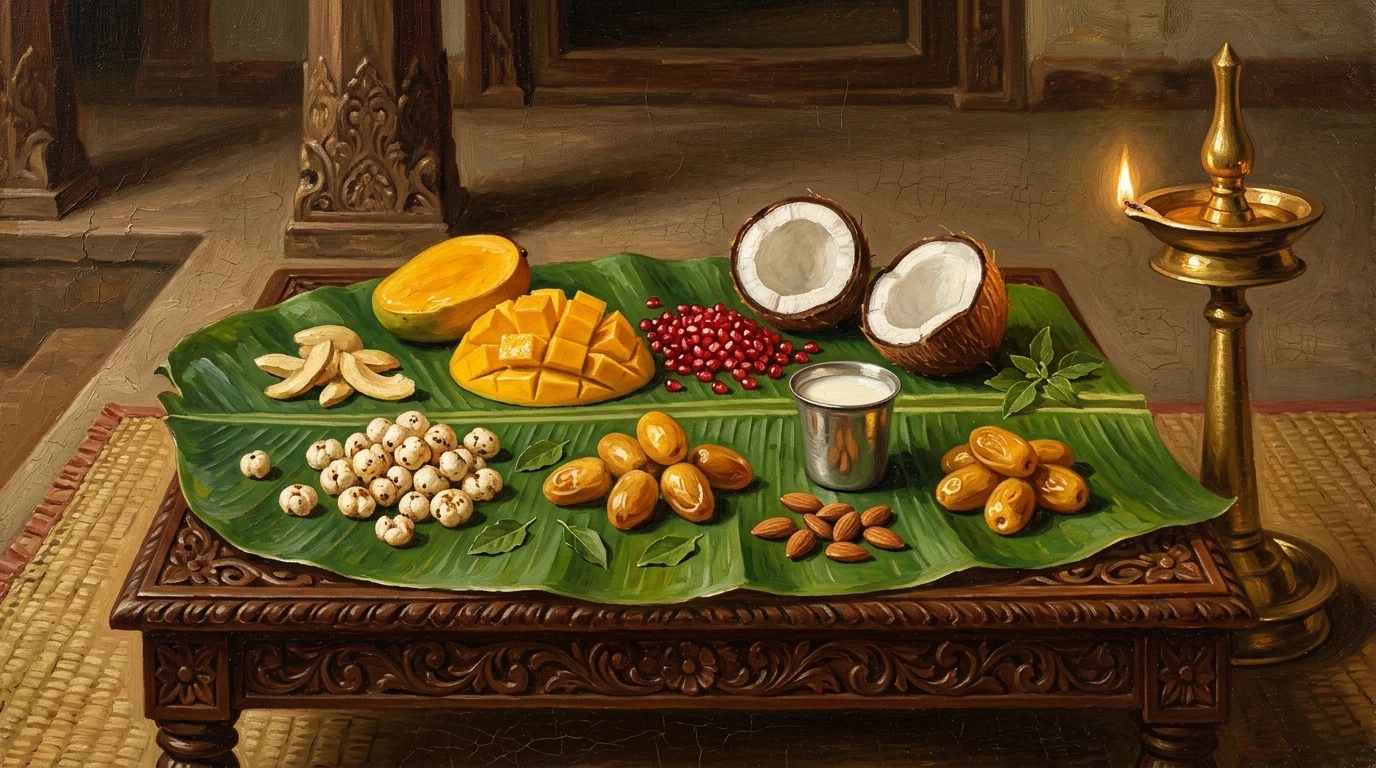
Ekadasi (sometimes written Ekadasi; Sanskrit ekādaśī) is the eleventh lunar day of each fortnight: twice a month, twenty-four times a year (twenty-six in adhika years). The observance is the same across traditions in its core: a one-day fast addressed to Lord Viṣṇu, broken on Dvādaśī during a specific window called pāraṇa. What varies is intensity and detail.
The three intensities
Tradition recognises three levels of fast, all valid. Pick the one your health and circumstances allow, beginners are explicitly told in the Purāṇic literature to start easy and tighten over time.
- Nirjala (without water). The strictest form, no food, no water, from sunrise on Ekadasi to sunrise on Dvādaśī. Nirjala Ekadasi (the shukla Ekadasi of Jyeṣṭha, falling in early summer) is traditionally observed nirjala by many otherwise-moderate practitioners; for the rest of the year, water-free fasts are kept by sannyāsīs and the very disciplined.
- Phalāhāra (fruits and water). The most common observance. Water, fresh fruit, milk, yogurt, nuts, and root vegetables (potato, sweet potato, raw banana) are permitted. No grains, no pulses. Suitable for working adults and most healthy people.
- Naktavrata (one sattvic meal). A single meal taken after sunset, made without grains or pulses, typically a fruit-and-dairy preparation, or a buckwheat (kuṭṭū) or amaranth (rājgirā) dish, with rock salt (sendhā namak) instead of regular salt. This is the gentlest valid observance.
What to avoid
The forbidden list is unusually concrete and consistent across sources:
- Grains: wheat, rice, millet, corn, oats, barley. The Purāṇic injunction is specific to grains: the Padma Purāṇa frames it as the consciousness of all sins (pāpa-puruṣa) taking refuge in food grains on Ekadasi day. Eating grains is said to nullify the fast.
- Pulses and legumes, dal of every variety, chickpeas, kidney beans, peas, sprouts. Some traditions distinguish these from grains for other purposes, but for Ekadasi the prohibition is the same.
- Onion and garlic, universal across all sattvic fasts, not specific to Ekadasi but applied here too.
- Regular table salt, replace with sendhā namak (rock salt / Himalayan pink salt) if seasoning is needed for a naktavrata meal.
- Honey on shukla Ekadasi, oil on kṛṣṇa Ekadasi, specific traditional refinements observed by stricter practitioners.
- Daytime sleep, gambling, gossip, and intoxicants : the day is considered a quiet, inward one, and the merit of the fast is said to leak through these activities.
Beyond Food: Spiritual Conduct
"Ekadasi is a complete reset for your body, mind, and spirit. Fasting is the container, but devotion is the contents."
The scriptures (such as the Hari Bhakti Vilasa, Padma Purana, and Skanda Purana) are very clear that Ekadasi is much more than a restriction on what you eat—it is a complete vow (vrata) of bodily and mental purification. The word Upavāsa means "to reside near" the Divine.
The traditional behavioral rules (Yamas and Niyamas):
- The Morning Bath (Snāna): The observance begins before sunrise (during Brahma Muhurta). You must take a full, purifying bath (including washing your hair) before making your mental vow (sankalpa).
- Physical Simplicity: Grooming (shaving, cutting hair), heavy perfumes, dressing up, and oil massages are paused for the day. Stricter practitioners observe strict celibacy (Brahmacharya) and sleep on a simple mat instead of a luxurious mattress.
- Mental Austerity (Mauna): Lying, arguing, and using harsh words break the spirit of the vow. The scriptures advise avoiding idle gossip (prajalpa). Some practitioners observe complete silence (mauna) to conserve energy.
- Redirection of Time: The hours normally spent cooking, eating, and socializing must be redirected toward chanting (e.g. Vishnu Sahasranama), reading scriptures, or internal meditation.
Pāraṇa, breaking the fast
The fast is broken on Dvādaśī (the twelfth tithi), not at sunrise itself. The precise window is called pāraṇa, and it must satisfy two conditions:
- It must be after sunrise on Dvādaśī.
- It must be after the Hari Vāsara, the first quarter of Dvādaśī, considered the sacred extension of the Ekadasi vow.
The window closes either at the end of Dvādaśī tithi or at midday, whichever comes first. Breaking the fast before the window opens is considered a fault; breaking it after the window closes is also a fault. The exact pāraṇa start and end time for each Ekadasi are computed and shown on the home page and every story page on this site, derived from local sunrise at your location, there is no single "correct" pāraṇa time, only the one specific to your sunrise.
The first food taken at pāraṇa is traditionally something simple, a few tulsi leaves with water, or a small bite of grain (tradition says to "touch the grain" to formally end the vow). A heavy meal is then eaten after that.
See also what Ekadasi is and why , Adhika Māsa , Smārta and Vaiṣṇava traditions , or today's pāraṇa window for your location .
Frequently asked
- What can you eat on Ekadasi?
- On the common phalāhāra fast you may have water, fresh fruit, milk, yogurt, nuts, and root vegetables such as potato, sweet potato, and raw banana, no grains, no pulses. A single sattvic meal (naktavrata) made without grains or pulses, using buckwheat (kuṭṭū) or amaranth (rājgirā) and rock salt, is also valid and gentler.
- What foods are forbidden on Ekadasi?
- Grains (wheat, rice, millet, corn, oats, barley) and all pulses and legumes (every kind of dal, chickpeas, kidney beans, peas, sprouts) are avoided. Onion, garlic, and regular table salt are also avoided, use rock salt (sendhā namak) if seasoning is needed. Eating grains is traditionally said to nullify the fast.
- Can you drink water while fasting on Ekadasi?
- Yes, water is allowed on the phalāhāra (fruits and water) and naktavrata observances. Only the strictest form, nirjala, is kept entirely without water from sunrise on Ekadasi to sunrise on Dvādaśī, and is usually reserved for Nirjala Ekadasi or very disciplined practitioners.
- Do you have to stay awake all night on Ekadasi?
- No. Staying awake through the night in chanting or kīrtana, called jāgaraṇa, is the deeper, more meritorious form of the vow and is praised highly in the Purāṇas, but it is a recommended limb, not the obligation. The fast itself and breaking it at the correct pāraṇa (on Dvādaśī) are what complete the vrata; sleeping at night does not nullify it. What is specifically discouraged is sleeping during the day on Ekadasi, which is said to diminish the fast.
- Can you sleep during the day on Ekadasi?
- Daytime sleep on Ekadasi is traditionally discouraged, it is listed among the lapses that diminish the merit of the fast, alongside gossip, gambling, and intoxicants. The day is meant to be a quiet, inward, alert one. Night sleep, by contrast, does not break the fast; staying awake at night (jāgaraṇa) is a recommended deepening, not a requirement.
- How do you break an Ekadasi fast (pāraṇa)?
- The fast is broken on Dvādaśī (the twelfth tithi), not at sunrise itself. Pāraṇa must be after sunrise on Dvādaśī and after the Hari Vāsara (the first quarter of Dvādaśī); the window closes at the end of Dvādaśī tithi or midday, whichever comes first. The exact time depends on your local sunrise and is shown on this site’s home and story pages.
- How often is Ekadasi observed?
- Ekadasi falls twice each lunar month, on the eleventh day of the waxing and waning fortnights, so twenty-four times a year (twenty-six in an adhika, extra-month, year).
- Who is exempt from fasting on Ekadasi?
- Children under eight, the elderly, the sick, pregnant and nursing women, and those on essential medication are exempt. They may instead do naktavrata (one sattvic meal), simply avoid grains and pulses, or read the story and remember the day. The merit is in the orientation, not the hardship.