Sacred Scriptural Explainer
What is Ekādaśī?
The eleventh lunar day: what it is, why it falls when it does, and what twenty-four stories it carries.
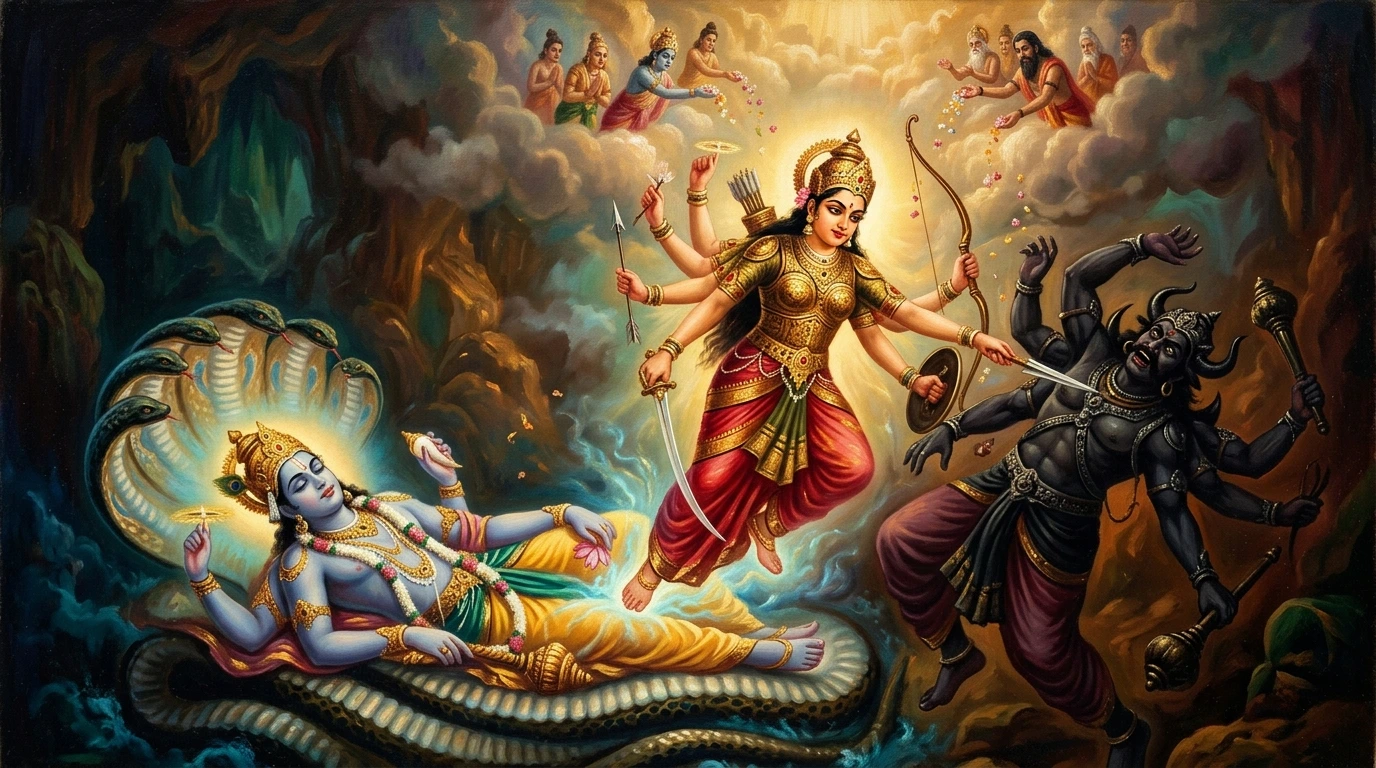
Ekādaśī is the eleventh lunar day (tithi) of each fortnight in the Hindu calendar. It arrives twice every lunar month: once during the waxing fortnight (śukla pakṣa, between new moon and full moon) and once during the waning fortnight (kṛṣṇa pakṣa, between full moon and new moon). Across a standard lunar year, this gives twenty-four Ekadasis.
In leap-month years, see Adhika Māsa: two more are added, for a total of twenty-six.
The Astronomy of Ekādaśī
A tithi is not a solar day; it is an angular distance. Specifically, it is one-thirtieth of the lunar synodic month: the moon, after meeting the sun at amāvāsyā, pulls ahead by exactly twelve degrees of elongation to complete each tithi. The eleventh tithi of either fortnight begins when the moon reaches 120° ahead of the sun (śukla 11) or 300° ahead (kṛṣṇa 11). Because the moon’s orbital speed varies, a tithi can range from 20 to 27 hours.
For fasting observance, the Ekādaśī day is defined as the civil day at whose sunrise the Ekādaśī tithi is prevailing. That sunrise rule is what makes location essential: the same astronomical tithi can fall on different calendar days for an observer in Bengaluru versus London, simply because their local sunrises are hours apart.
Why Fast on the Eleventh Day?
The classical explanation in the Padma Purāṇa is allegorical: the personification of all sin (pāpa-puruṣa) takes refuge inside grains on Ekādaśī to avoid being consumed by the spiritual radiance of those who fast. Consuming grains on this day unintentionally provides shelter to negative karma, while abstaining from grains starves it.
From a physiological perspective, Ekādaśī provides a bi-monthly digestive rest synchronized with lunar tides and bodily water balance. The mind clarifies, the senses quieten, and the cleared time is dedicated to mantra japa, sacred stories, and contemplation.
Most traditional practitioners honor both perspectives: the physical purification and the spiritual merit work together in complete harmony.
The Twenty-Four Sacred Names
Each Ekādaśī has its own name, narrative, and specific fruit, revealed in the Padma Purāṇa and Skanda Purāṇa:
- PāpamocanīCaitra Kṛṣṇa
- KāmadāCaitra Śukla
- VarūthinīVaiśākha Kṛṣṇa
- MohinīVaiśākha Śukla
- AparāJyeṣṭha Kṛṣṇa
- NirjalāJyeṣṭha Śukla
- YoginīĀṣāḍha Kṛṣṇa
- DevaśayanīĀṣāḍha Śukla
- KāmikāŚrāvaṇa Kṛṣṇa
- PutradāŚrāvaṇa Śukla
- AjāBhādrapada Kṛṣṇa
- ParivartinīBhādrapada Śukla
- IndirāĀśvina Kṛṣṇa
- PāpāṅkuśāĀśvina Śukla
- RamāKārtika Kṛṣṇa
- PrabodhinīKārtika Śukla
- UtpannāMārgaśīrṣa Kṛṣṇa
- MokṣadāMārgaśīrṣa Śukla
- SaphalāPauṣa Kṛṣṇa
- Putradā (Pauṣa)Pauṣa Śukla
- Ṣaṭ-tilāMāgha Kṛṣṇa
- JayāMāgha Śukla
- VijayāPhālguna Kṛṣṇa
- ĀmalakīPhālguna Śukla
The two additional leap-year Ekādaśīs, Padminī & Paramā, appear only during Adhika Māsa.
Smārta and Vaiṣṇava Observances
On most Ekādaśīs, both traditions observe the exact same calendar day. Roughly once or twice a year, when the Ekādaśī tithi touches two successive sunrises, traditions diverge: Smārta observers fast on the first sunrise, while Vaiṣṇava observers wait for the second sunrise to ensure the presence of Dvādaśī (the atirikta rule). Both dates are surfaced clearly on this website.
Quick Guides: Fasting Rules & Food Guide · Adhika Māsa Explained · Today’s Observance · All 26 Katha Legends.