Guru Pūrṇimā
Āshāḍha Pūrṇimā · The full moon of the teacher, Vyāsa, who arranged the Veda
Guru Pūrṇimā
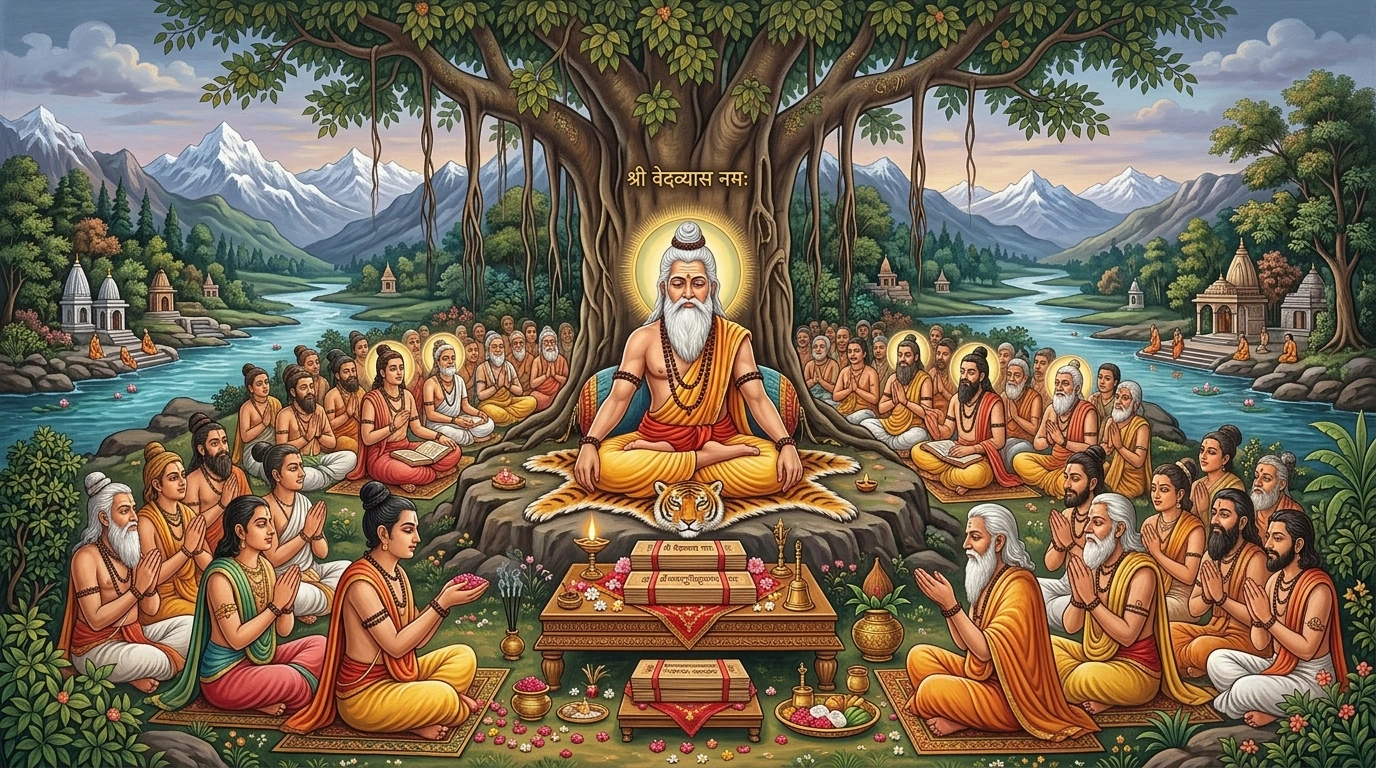
Marks the appearance anniversary of Sage Vedavyāsa (compiler of the Vedas, Brahma Sūtras, and 18 Purāṇas) and the day seekers renew their surrender to their spiritual masters. Morning is the sacred hour of study and reverence.
The Significance of Guru Pūrṇimā
The one who gathered the Veda
Drawing on the Mahābhārata and the Purāṇic tradition; Guru Pūrṇimā is also called Vyāsa Pūrṇimā.
The full moon of Āṣāḍha is the day of the guru, and it is named for one teacher above all: Kṛṣṇa Dvaipāyana Vyāsa: Veda-Vyāsa, the “arranger of the Veda.” The tradition holds this to be his appearance day, and the day his work is honoured.
That work was vast. The single body of revealed sound, the Veda, had grown so large that no one person could hold or transmit it whole. Vyāsa divided it into four: Ṛg, Yajur, Sāma, Atharva, and gave each to a disciple to carry forward, so that the knowledge would survive being too great for any single mind. He is held to have composed the Mahābhārata, into which the Bhagavad Gītā is set, and the Brahma Sūtra, and to have spoken the Bhāgavata and the other Purāṇas. Almost the whole transmitted tradition runs back, in one way or another, to him. To honour the guru is, in the end, to honour Vyāsa, and the seat from which a teacher speaks is called the vyāsa-pīṭha to this day.
The meaning of the word is old: gu is darkness, ru is the dispeller, the guru is the one who removes the dark. Not the giver of information, but the one who turns the lamp toward what was already there and could not be seen. Guru Pūrṇimā is the day the student turns back toward that one, in gratitude, and renews the relationship that made knowing possible. It is also the traditional start of the cāturmāsya, the four monsoon months in which wandering ascetics settle in one place and teach.
What is done, and why
The day is kept by honouring one’s teacher: the spiritual guru, but also the first teachers, parents, and all who passed on what they knew. There is guru-pūjā, the offering of respect at the teacher’s feet or seat; the reading of Vyāsa’s works; and for many, the taking or renewing of a vow of study. There is no fast; it is a day of reverence and beginning the season of learning.
How it is kept
Guru Pūrṇimā falls on the full moon (Pūrṇimā) of Āṣāḍha.
Why it is kept
The festival rests on a simple recognition: that no one comes to knowledge alone. Vyāsa divided the unbearable whole into pieces a human being could carry, and handed them on, and every teacher since has done a smaller version of the same. The day is the tradition turning, once a year, to say so.
Source: The work of Veda-Vyāsa: the division of the Veda, the Mahābhārata, the Purāṇas, and the tradition of Vyāsa Pūrṇimā are drawn from the Mahābhārata and Purāṇic accounts, available at wisdomlib.org.
How it is observed
The day of the teacher: worship of one’s guru and of Vyāsa (Vyāsa Pūjā), with offerings and the study of scripture.
- Perform Pāduka Pūjā (worship of the sacred wooden sandals or image of one’s Guru) with candana and fragrant flowers.
- Offer Dakṣiṇā, clean cloths, and express heartfelt gratitude for spiritual guidance.
- Study verses of the Bhagavad Gītā, Upaniṣads, or Guru Gītā.
- Meditate upon the lineage of spiritual masters (Guru-paramparā).
In Vedic astronomy, Rāhu is the shadow node (chāyā-graha) associated with illusion, darkness, and disruption. No new sacred endeavor, pūjā sankalpa, or idol installation (sthāpanā) should ever be commenced during Rāhu Kāla. Ongoing chanting or meditation may continue, but the initial invocation must never begin during this window.
Governed by Yama, the lord of mortality and justice. It is considered unfavorable for establishing enduring auspiciousness and prosperity; hence ritual beginnings and vows are suspended during this hour.