Śāradīya Navarātri · Day 1 of 10
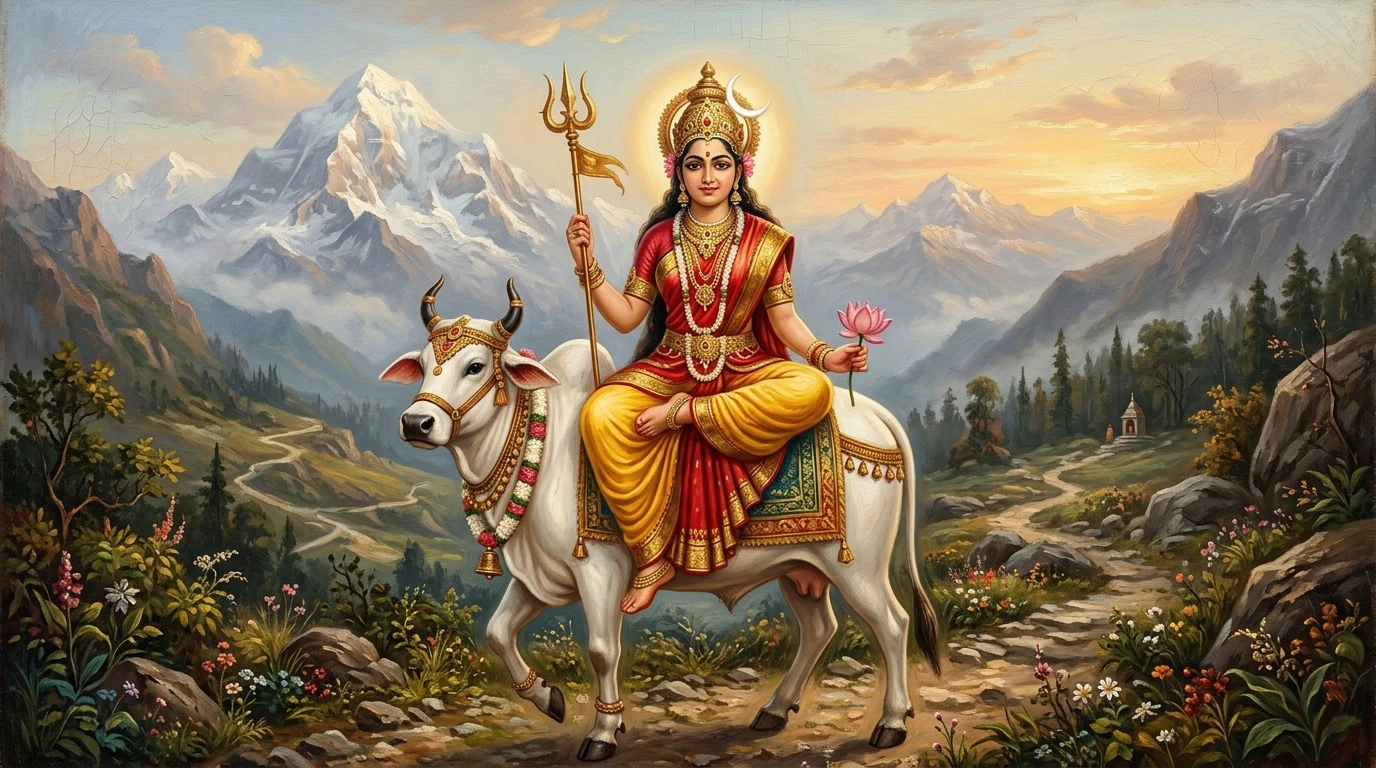
PratipadāMā Śailaputrī
शैलपुत्री
The Divine Daughter of the Himalayas
Select Navadurgā Day (1 – 10)Active Today
Today's ColorRoyal Yellow (Auspicious Sunshine)
Today's Prasad (Bhōg)Pure Cow Desi Ghee & Ghee Sweets
Inner Energy (Chakra)Mūlādhāra (Root Chakra · Earth)
Today's PracticeGhaṭasthāpanā, lighting the sacred lamp, and prayer
Day 1 Navadurgā Mantra
ॐ देवी शैलपुत्र्यै नमः॥
Om Devī Śailaputryai Namaḥ ||
Daily Fasting Guide · One Meal a Day (Ekabhukta)Simple meal after sunset · Water & fruits during daytime
During the DayWater, fresh fruits (apples, bananas, papaya), coconut water, milk, or soaked almonds.
Evening Meal (After Sunset)Simple satvik food cooked in pure cow ghee with rock salt (sendhā namak): samak rice khichdi, kuttu or singhara rotis, or boiled potatoes.
Today's Sky (13 October 1977)
Celestial Coordinates & Muhūrtas
Sūrya · SunDay Arc
Sunrise6:09 AM98° E
Sunset6:02 PM262° W
Candra · Moon
Moonrise6:23 AM98° E
Moonset6:32 PM260° W
Rāhu Kāla
1:34 PM – 3:04 PM
Yamagaṇḍa
6:09 AM – 7:38 AM
Abhijit Muhūrta
11:41 AM – 12:29 PM
Bearings indicate horizon degrees. Rāhu and Yamagaṇḍa are avoided for new auspicious beginnings; Abhijit is the midday victory window.
Found an error?
ekadasi.day has no ads and no popups. If a date, name, or story reads wrong, please write, accuracy matters more than reach.
mrvi@post.com →·Other ways to help