The 10 Days of Navarātri
The nine nights of the Goddess (*Navadurgā*) and the triumphant tenth day of victory (*Vijayadaśamī*).
Uprooting Impurities
Destruction of tamas, indolence, deep-seated emotional patterns, and external obstacles through severe tapas.
Cultivating Divine Virtues
Manifesting solar vitality, noble virtues, compassionate abundance, maternal protection, and spiritual light.
Supreme Illumination
Transcendence of fear, purification of accumulated karma, and bestowal of the 8 classical Siddhis and Self-knowledge.
Triumph of Dharma
Victory of Durgā over Mahiṣāsura and Śrī Rāma over Rāvaṇa; Śamī Pūjā, Vidyārambha, and breaking the sacred fast.
The 10 Sacred Days of Navarātri
The complete day-by-day spiritual system: authentic Purāṇic manifestation stories, classical 19th-century Raja Ravi Varma meditative oil paintings, daily ritual disciplines, and sacred Sanskrit chants.
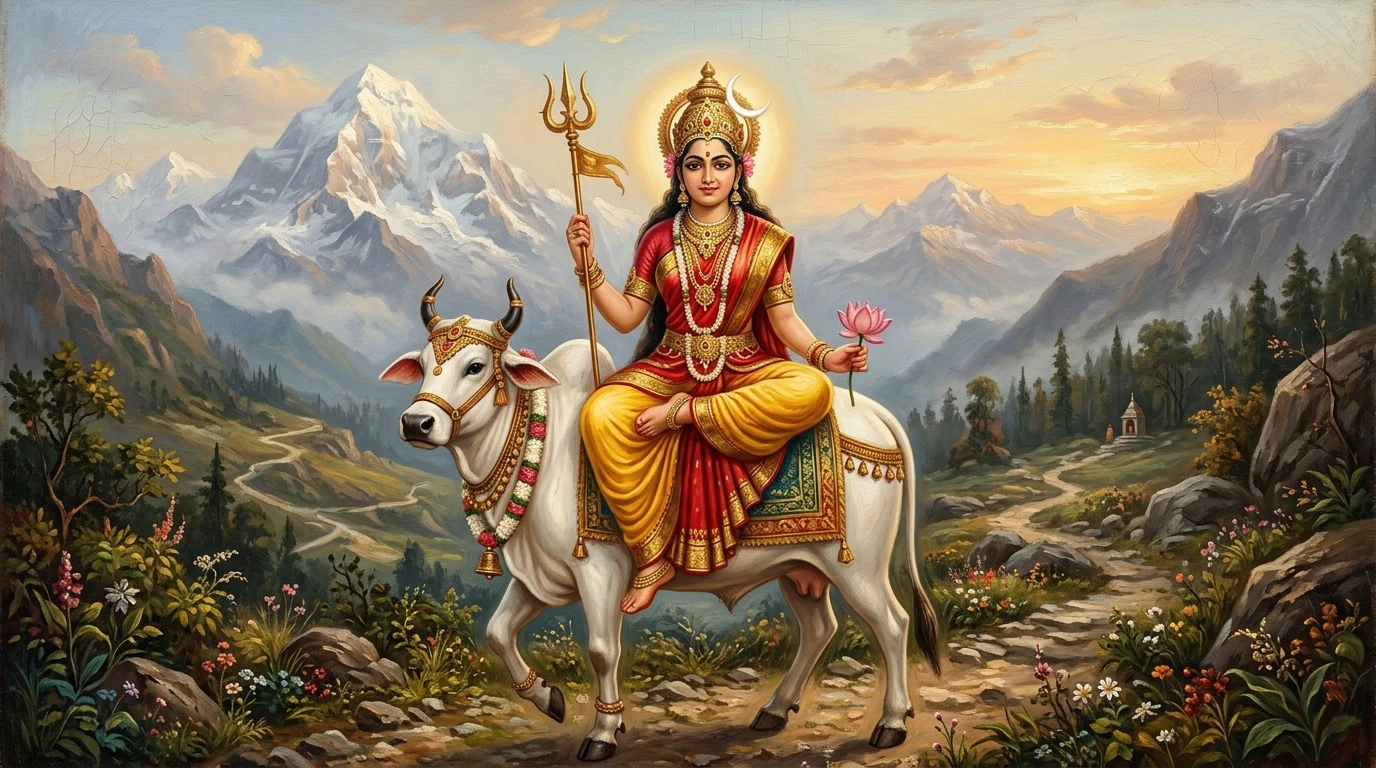
Mā Śailaputrī seated in serene majesty upon the white Nandi bull with triśūla and sacred lotus, painted in authentic Raja Ravi Varma heritage style.
Destruction of deep-rooted negative tendencies, inertia (tamas), and physical attachments.
शैलपुत्री
The Divine Daughter of the Himalayas
Luminous warmth, joy, intellectual clarity, and divine auspiciousness.
Offered for complete freedom from physical illness and granting enduring longevity.
The Sacred Manifestation of Śailaputrī
In her previous incarnation, the Divine Mother was born as Satī, the daughter of Prajāpati Dakṣa, and wed Lord Śiva. When Dakṣa organized a colossal sacrificial yajña and deliberately insulted Śiva, Satī immolated herself in the sacred sacrificial fire of yogic tapas.
She subsequently reincarnated as the daughter of King Himavat (the Lord of the Himālayas) and Queen Menā. Because she was born as the daughter of the king of mountains (Śaila), she is venerated throughout the cosmos as Śailaputrī.
As the primary manifestation of Navadurgā, she embodies the supreme spiritual energy that awakens the dormant Kuṇḍalinī Śakti at the Mūlādhāra cakra, anchoring the seeker’s consciousness in unwavering devotion to the Divine.
Adorned with a radiant crescent moon (Candrārdha) upon her forehead, draped in royal yellow silk, radiating serene maternal grace.
The names, meditative verses (*dhyāna ślokas*), and attributes of the nine forms of Navadurgā are derived from the sacred Devī Kavaca (verses 3–5) embedded within the Durgā Saptaśatī of the Mārkaṇḍeya Purāṇa, as well as the Śrīmad Devī Bhāgavata Purāṇa. The ten-day observance culminates in Vijayadaśamī per canonical Vedic solar and lunar Pañcāṅga principles.