Holikā / Gaura Pūrṇimā
Holi
Wednesday, 28 March 2040
From the pañchāṅga
How it is observed
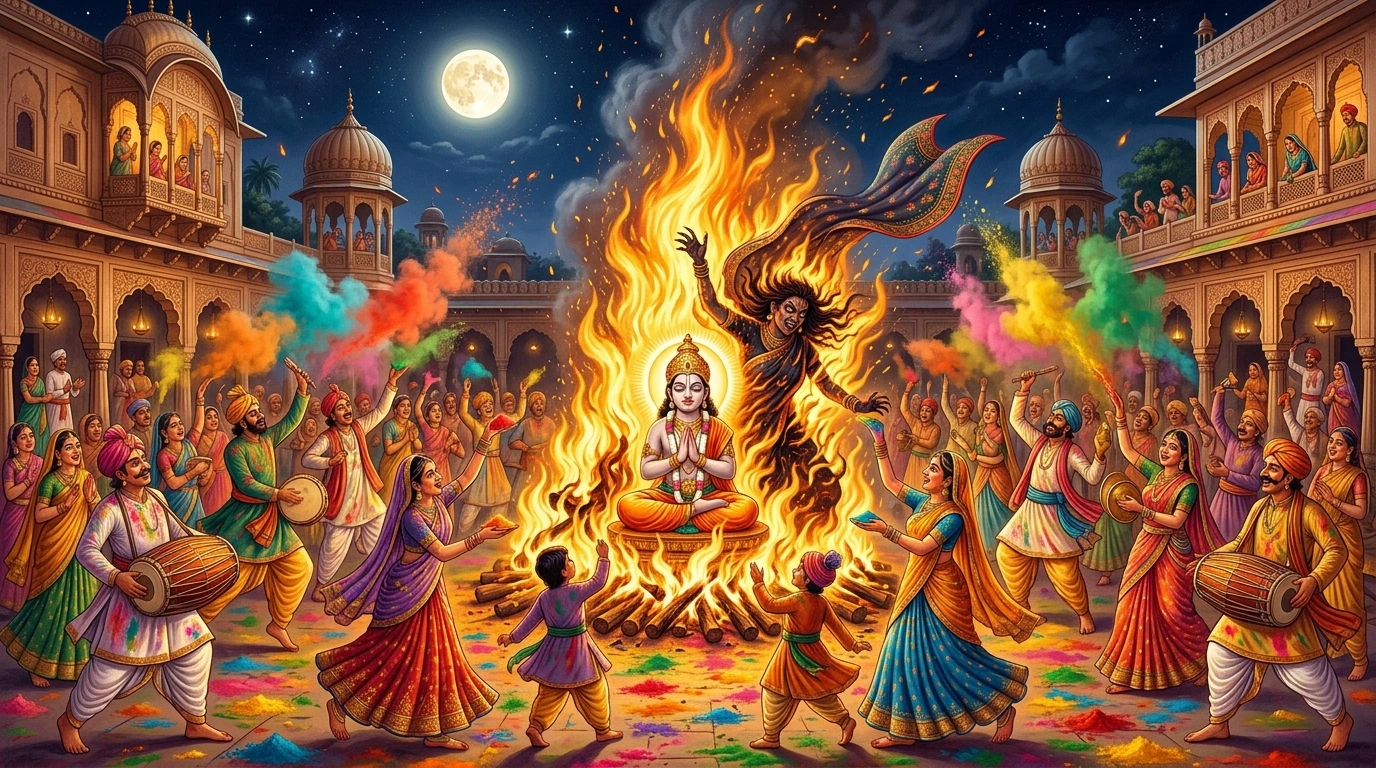
The Holikā bonfire is lit on the full-moon eve (Holikā Dahana), and colours are played the next day. Kept by Vaiṣṇavas as Gaura Pūrṇimā, the appearance of Caitanya Mahāprabhu.
Wednesday, 28 March, in the old reckoning
- Cosmic Time
अद्य · श्वेतवराह कल्पे · वैवस्वत मन्वन्तरे · कलियुगे प्रथम पादे
adya · śveta-varāha kalpe · vaivasvata manvantare · kali-yuge prathama pāde
- Calendrical Time
शालिवाहन शके १९६२ · रौद्र संवत्सरे · उत्तरायणे · वसन्त ऋतौ
śālivāhana śake 1962 · Raudra saṁvatsare · Uttarāyaṇe · Vasanta ṛtau
- Astronomical Limb (Pañcāṅga) · पञ्चाङ्ग कालः
चैत्र मासे · शुक्ल पक्षे · पूर्णिमा तिथौ · बुध वासरे · उत्तर फाल्गुनी नक्षत्रे · वृद्धि योगे · विष्टि करणे
Chaitra māse · Śukla pakṣe · Pūrṇimā tithau · Budha vāsare · Uttara Phalgunī nakṣatre · Vṛddhi yoge · Viṣṭi karaṇe
- Sacred Locality
जम्बूद्वीपे · भारतवर्षे*
jambū-dvīpe · bhārata-varṣe (India)
*The locality lines, jambū-dvīpe bhārata-varṣe, your deśa and your kṣetra: name your continent, country, region, and town. India is shown by default; spoken aloud you'd substitute your own.
What You Just Read: The Three Frames of Time
The saṅkalpa places the moment in three nested dimensions—cosmic, calendrical, and astronomical—so the seeker knows exactly when and where they stand in eternity.
Cosmic Time (Eternal Scale)
Cosmic time doesn’t change with where you read this. Śveta-varāha is the present kalpa (a single day of Brahmā, ~4.32 billion human years). Vaivasvata is the current manvantara (epoch) within it. Kali-yuga prathama pāda places us in the first quarter of the dark age. These are the deepest layers of the Hindu reckoning of time, identical whether recited in Bengaluru, Mumbai, London, Sydney, or San Francisco.
Calendrical Time (Solar & Seasonal Cycles)
Calendrical time tracks the present era and season. The Śaka era counts from 78 CE; the named saṁvatsara is one of a sixty-year Jovian cycle (Prabhava, Vibhava... Akṣaya, then repeating). The ayana indicates the solar half-year: Uttarāyaṇa (sun ascending north, January to July) or Dakṣiṇāyana (sun descending south, July to January). The ṛtu names the sacred bi-monthly season.
Astronomical Time (The Five Limbs of Pañchāṅga)
Astronomical time is the most immediate. The māsa (lunar month), pakṣa (fortnight), and tithi (lunar phase) follow the moon; the vāra is the solar weekday; the nakṣatra is which of the 27 stellar constellations the moon currently occupies; the yoga is combined solar-lunar longitude; and the karaṇa is the half-tithi. Together, these five (nakṣatra, yoga, tithi, karaṇa, vāra) form the literal “five limbs” of the word pañchāṅga.
Local Sunrise Reckoning & Daily Purpose
All values above are calculated for your local sunrise. The day traditionally “belongs” to whichever tithi prevailed at the moment of sunrise. Even if the tithi changes mid-morning, the day retains its sunrise name for rituals until the next sunrise. This is the authentic convention observed across printed panchangas and traditional temples worldwide.
Why it is spoken every day: The saṅkalpa is the daily (nitya) opening of sacred life, not reserved solely for grand festivals. Recited each morning, it re-anchors you in conscious awareness of eternity and dedicates your actions with pure resolve (saṅkalpa literally means “sacred will or resolve”). On an Ekādaśī, this same declaration formally opens the fast.
Celestial Coordinates & Muhūrtas
12:24 PM – 1:56 PM
7:49 AM – 9:21 AM
12:00 PM – 12:48 PM
Bearings indicate horizon degrees. Rāhu and Yamagaṇḍa are avoided for new auspicious beginnings; Abhijit is the midday victory window.
Found an error?
ekadasi.day has no ads and no popups. If a date, name, or story reads wrong, please write, accuracy matters more than reach.
feedback@ekadasi.day →·Other ways to help