Ajā Ekādaśī
Purāṇic Glories & Sacred Lore · Bhādrapada · Kṛṣṇa Pakṣa
Lord Śrī Kṛṣṇa
Revealing transcendental glories
King Yudhiṣṭhira
Seeking liberation for all beings
ॐ नमो भगवते वासुदेवाय नमः
oṁ namo bhagavate vāsudevāya
The Legend of Ajā Ekādaśī
The sacred Purāṇic dialogue between Lord Śrī Kṛṣṇa and King Yudhiṣṭhira revealing the transcendental glories and vows of this holy vrata.
Liberation from accumulated sins and attainment of Viṣṇuloka.
The Steadfast Truth of King Hariścandra
In the assembly of the Pāṇḍavas, King Yudhiṣṭhira bowed before Lord Śrī Kṛṣṇa with folded hands:
“O Keśava, jewel of the Yādavas! Please tell me about the Ekādaśī that arrives in the dark fortnight of the month of Bhādrapada (August–September). What is its sacred name, and how should one observe it to find peace?”
Lord Kṛṣṇa smiled with deep warmth and replied:
“O noble King! Listen with a devoted heart. This sacred day is known as Ajā Ekādaśī, the day of the Unborn Eternal Lord. Whoever observes this fast with faith and sincerity is cleansed of heavy past misdeeds and ascends to the highest spiritual realm. To illustrate its glory, let me tell you the moving story of Emperor Hariścandra.”
The Ordeal of Emperor Hariścandra
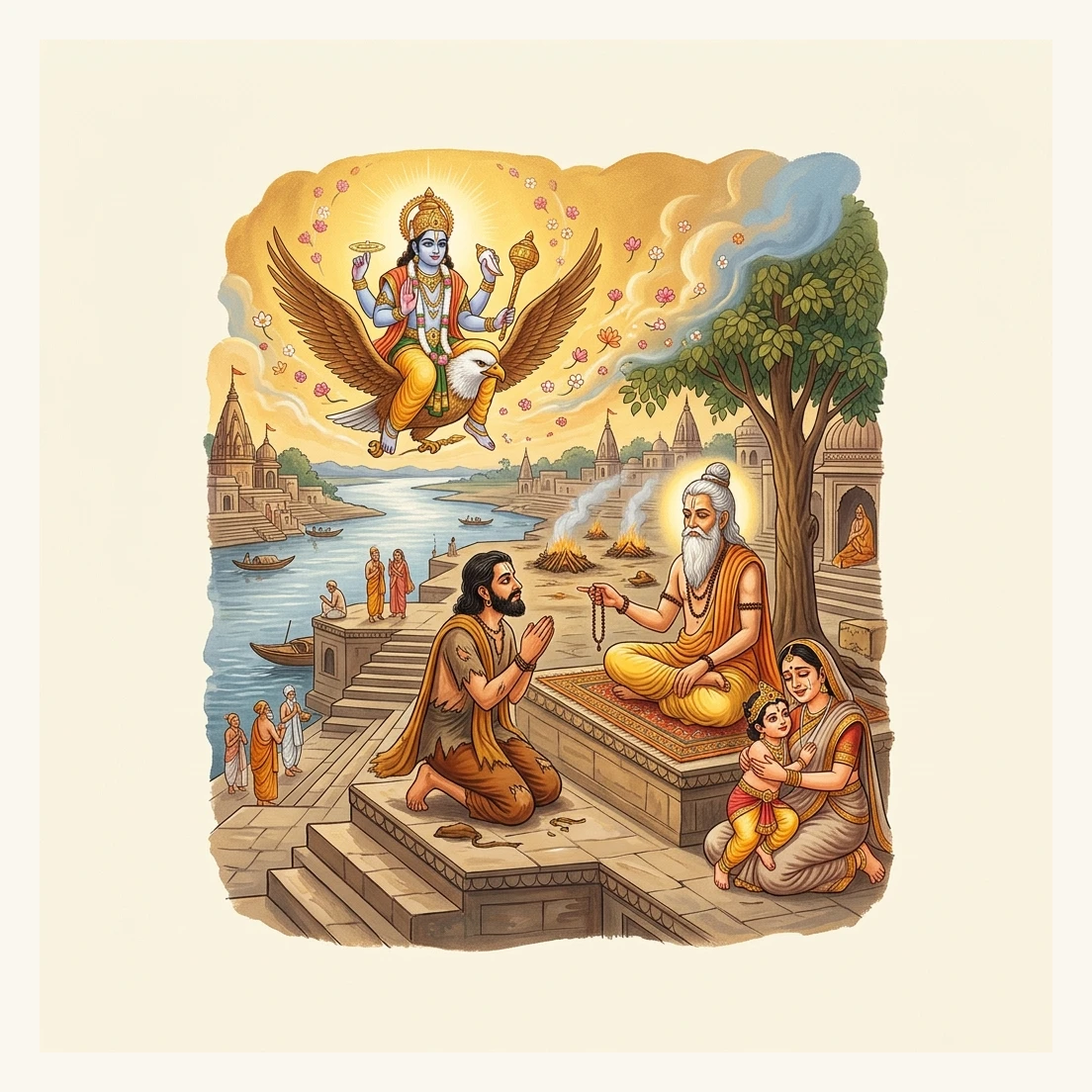
In ancient times, there ruled a righteous emperor named Hariścandra, renowned across all three worlds for his truthfulness and honor. Through an unexpected turn of destiny, the emperor lost his vast kingdom, his royal treasures, and all his worldly comforts.
To fulfill his solemn pledge of truth, Hariścandra was forced to part with everything he held dear. He sold his beloved queen Tārāmatī and their young son Rohitāśva into service, and he himself became the assistant to an undertaker at the cremation grounds of Vārāṇasī.
Day and night, the once-mighty monarch watched funeral pyres burning on the banks of the sacred Gaṅgā. He collected funeral shrouds, weeping in secret for his scattered family, yet never abandoning his truth or his duty. Many years passed in this silent suffering, until sorrow weighed heavily upon his heart.
The Guidance of Sage Gautama
One day, the revered sage Gautama arrived at the holy cremation grounds. Recognizing the noble king despite his dust-covered garments, the sage felt deep compassion for him.
Hariścandra prostrated before the sage and wept:
‘O holy father! I have lost my throne, my queen, and my only child. I am living amidst smoke and ashes. What great vow can release me from this agonizing plight?’
Sage Gautama gently placed a blessing hand on the king’s head and said:
‘Take heart, O righteous monarch! In the dark fortnight of Bhādrapada comes Ajā Ekādaśī. On that day, observe a peaceful fast with complete purity of mind and body. Keep a loving vigil through the night and offer prayers to Lord Hari. The spiritual merit of this single day is so powerful that it will dissolve all your karmic debts and restore your peace.’
When the sacred dawn of Ajā Ekādaśī arrived, King Hariścandra observed the fast with unbroken faith, offering pure water, prayers, and his devoted heart to the Supreme Lord.
Divine Restoration and Grace
As the dawn of Dvādaśī broke, the divine fruits of the vow manifested before his eyes. The celestial beings showered blossoms from the heavens, and the King of Dharma appeared, declaring:
‘O Hariścandra, your steadfast truth and devotion have triumphed!’
By the grace of Lord Hari and the merit of Ajā Ekādaśī, his beloved queen and son were reunited with him in radiant health. His lost kingdom was restored, and after ruling with wisdom and righteousness for many years, the king and his subjects attained the eternal abode of joy.
How to Observe Aja Ekādaśī
- Morning Resolve (Sankalpa): Wake early during the Brahma-muhūrta, bathe peacefully, and resolve to spend the day in prayer, truthfulness, and remembrance of God.
- Sacred Fasting: Keep a gentle fast suited to your strength—waterless, water-only, or with light fruits and milk.
- Pūjā and Worship: Offer fresh flowers, incense, a ghee lamp, and Tulasi leaves to Lord Viṣṇu. Chant the sacred mantra: Oṁ Namo Bhagavate Vāsudevāya.
- Night Vigil: Spend the evening in quiet reflection, singing hymns, or reading sacred verses.
- Auspicious Pāraṇā: Next morning on Dvādaśī, perform morning prayers, offer food or charity to the needy, and break your fast within the designated pāraṇā window.
Source: Padma Purāṇa, Uttara Khaṇḍa, Chapter 56, ‘Ajā Ekādaśī Mahātmyam’. Translated and retold in classical devotional prose for contemplation and daily observance.
Deepen Your Spiritual Immersion
Support the preservation of authentic Vedic astronomy and scripture. Sanctum Patrons unlock deep commentaries, printable altar cards, and uninterrupted contemplation.
100% of contributions fund authentic scriptural research & planetary ephemeris maintenance.
Frequently Asked Questions
- What is Aja Ekadasi?
- Aja Ekadasi is the ekādaśī tithi, the eleventh lunar day, of the waning fortnight (kṛṣṇa pakṣa) of Bhādrapada. Its name signifies "the unborn". Like every Ekadasi, it is observed by fasting and remembrance of Lord Viṣṇu. The sacred narrative and transcendental fruits (phalaśruti) of Aja are preserved in Purāṇas.
- When is Aja Ekadasi observed?
- Aja Ekadasi falls on the ekādaśī tithi of the waning fortnight of Bhādrapada in the Hindu lunar calendar. The exact Gregorian date varies each year because the lunar calendar shifts relative to the solar year. Smārta and Vaiṣṇava observers occasionally fast on different civil days when the tithi spans two sunrises; see the timings table above for your locality's exact window.
- Who is worshipped on Aja Ekadasi?
- Aja Ekadasi, like all Ekadasis, is dedicated to Lord Śrī Kṛṣṇa / Mahāviṣṇu. Traditional devotional observances include chanting the Viṣṇu-sahasranāma, reading the corresponding chapter from Purāṇas, hearing the sacred katha, and meditating on the divine holy names.
- What is the spiritual fruit (phalaśruti) of observing Aja Ekadasi?
- Canonical scriptures declare that observing Aja Ekadasi bestows: Liberation from accumulated sins and attainment of Viṣṇuloka.. Across all sacred Ekadasis, the fast purifies consciousness, dissolves karmic impressions, and elevates the soul toward spiritual liberation.
- How is Aja Ekadasi observed?
- A complete observance begins the prior evening (Daśamī) with a light sattvic meal, followed by a dedicated fast on Ekadasi day. Devotees may observe nirjala (without water), phalahāra (fruits, milk, and water), or a single sattvic meal according to physical capacity. Grains, rice, wheat, beans, onion, and garlic are strictly avoided. The fast concludes on Dvādaśī morning during the designated pāraṇa window with sacred Caraṇāmṛta and Tulasī.
- What is the difference between Smārta and Vaiṣṇava observance of Aja Ekadasi?
- On most occasions, both traditions observe the fast on the identical date. A variation occurs during an atirikta Ekādaśī when the tithi spans two consecutive sunrises. Smārtas fast on the first day (Viddhā), while Vaiṣṇavas observe the fast on the subsequent morning (Śuddhā), ensuring adherence to Dvādaśī touching sunrise.