Āmalakī Ekādaśī
Purāṇic Glories & Sacred Lore · Phālguna · Śukla Pakṣa
Lord Śrī Kṛṣṇa
Revealing transcendental glories
King Yudhiṣṭhira
Seeking liberation for all beings
ॐ नमो भगवते वासुदेवाय नमः
oṁ namo bhagavate vāsudevāya
The Legend of Āmalakī Ekādaśī
The sacred Purāṇic dialogue between Lord Śrī Kṛṣṇa and King Yudhiṣṭhira revealing the transcendental glories and vows of this holy vrata.
Liberation from accumulated sins and attainment of Viṣṇuloka.
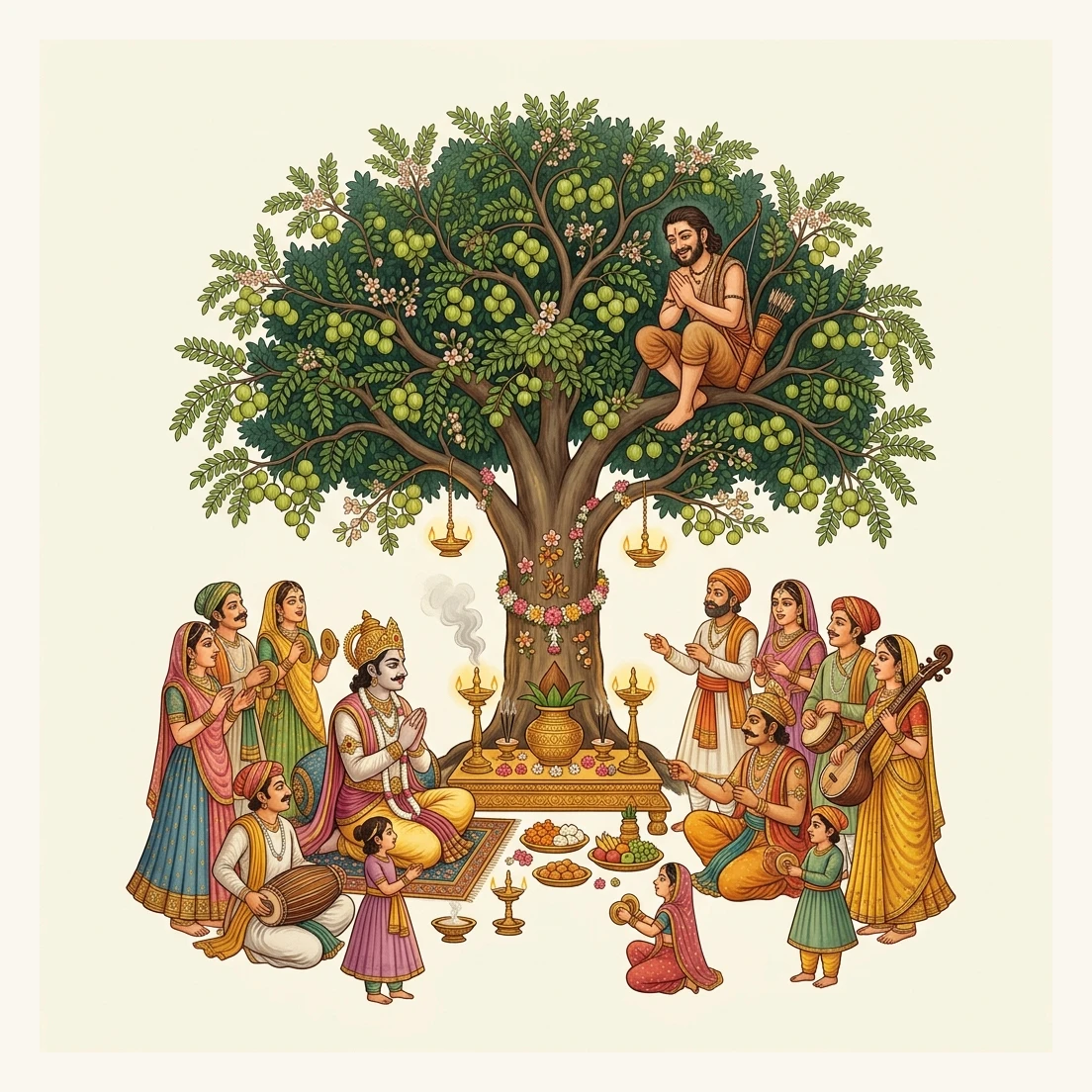
The Sacred Āmalakī Tree of Divine Grace
In the royal court of Ayodhyā, King Māndhātā bowed low before the venerable Sage Vasiṣṭha:
“O revered master! You know the deepest truths of the sacred lore. Please tell me of a fast that bestows liberation and dissolves all suffering.”
Sage Vasiṣṭha replied with great affection:
“O King, listen to the glory of Āmalakī Ekādaśī, which falls in the bright fortnight of the month of Phālguna (February–March). This Ekādaśī is celebrated around the holy Āmalakī tree (the Indian gooseberry), which is dear to Lord Viṣṇu and Mother Lakṣmī. Worshipping the Lord under this sacred tree brings blessings equal to donating a thousand cows.”
The Kingdom of Vaidiśa
In ancient times, there was a blessed kingdom named Vaidiśa, ruled by the noble and saintly King Caitraratha. In this land, not a single person was dishonest, cruel, or neglected their spiritual duties. The temples rang with the chanting of Vedic hymns and devotional songs.
Every year, when Āmalakī Ekādaśī arrived, the king, the royal family, and all the citizens gathered together at the temple on the riverbank, where a majestic Āmalakī tree grew.
The Hunter in the Branches
On one such holy Ekādaśī night, the entire congregation remained awake in the temple courtyard, singing praises, lighting hundreds of ghee lamps, and offering prayers to Lord Viṣṇu beneath the branches of the sacred tree.
Late that evening, a weary and hungry hunter arrived at the temple. He had spent his whole life hunting in the forest and knew nothing of rituals or fasts. Because the temple grounds were crowded, the hunter quietly climbed up into the branches of the Āmalakī tree to rest.
Throughout the night, the hunter looked down upon the illuminated deity. He listened to the names of Hari being sung, inhaled the sweet fragrance of the incense, and watched the lamps flicker under the stars. Without even realizing it, he remained completely without food or water, keeping the sacred vigil (jāgaraṇa) alongside the devotees.
The Rebirth of King Vasuratha
Years later, when the hunter passed away, the spiritual merit of that single night spent unwittingly in devotion bore fruit. He was reborn as the noble and generous prince Vasuratha.
One day, while hunting in a dense forest, Prince Vasuratha became separated from his troops and fell asleep under a tree. A band of fierce forest bandits approached him, seeking to attack. But when they raised their weapons, their blades would not harm him. Suddenly, a radiant divine woman wielding a celestial discus appeared from the prince’s body and dispersed the attackers, protecting him completely.
When the prince awoke, he heard a divine voice from the sky:
‘O King! You were protected by Lord Keśava Himself, who never forgets the holy vigil you once kept on Āmalakī Ekādaśī!’
Tears of gratitude filled Vasuratha’s eyes as he remembered the boundless mercy of the Lord, who honors even the smallest gesture of devotion.
How to Observe Amalaki Ekādaśī
- Morning Bath & Resolve: Bathe peacefully in the morning, wear clean clothes, and dedicate your day to Lord Viṣṇu.
- Honoring the Āmalakī Tree: If possible, visit an Āmalakī tree. Offer pure water, sandalwood paste, fresh flowers, and a lighted lamp at its base. If a tree is not nearby, offer fresh āmalakī fruit before the deity at home.
- Gentle Fasting: Observe a peaceful fast suited to your health—fruit and milk, or a simple grain-free diet.
- Devotional Vigil: Chant Oṁ Namo Nārāyaṇāya or sing sacred bhajans in the evening.
- Next Morning Pāraṇā: On Dvādaśī morning, offer gratitude to the Lord, share food with others, and break the fast within the auspicious pāraṇā window.
Source: Padma Purāṇa, Uttara Khaṇḍa, Chapter 47, ‘Āmalakī Ekādaśī Mahātmyam’. Translated and retold in classical devotional prose for contemplation and daily observance.
Deepen Your Spiritual Immersion
Support the preservation of authentic Vedic astronomy and scripture. Sanctum Patrons unlock deep commentaries, printable altar cards, and uninterrupted contemplation.
100% of contributions fund authentic scriptural research & planetary ephemeris maintenance.
Frequently Asked Questions
- What is Amalaki Ekadasi?
- Amalaki Ekadasi is the ekādaśī tithi, the eleventh lunar day, of the waxing fortnight (śukla pakṣa) of Phālguna. Its name signifies "the amalaki tree". Like every Ekadasi, it is observed by fasting and remembrance of Lord Viṣṇu. The sacred narrative and transcendental fruits (phalaśruti) of Amalaki are preserved in Purāṇas.
- When is Amalaki Ekadasi observed?
- Amalaki Ekadasi falls on the ekādaśī tithi of the waxing fortnight of Phālguna in the Hindu lunar calendar. The exact Gregorian date varies each year because the lunar calendar shifts relative to the solar year. Smārta and Vaiṣṇava observers occasionally fast on different civil days when the tithi spans two sunrises; see the timings table above for your locality's exact window.
- Who is worshipped on Amalaki Ekadasi?
- Amalaki Ekadasi, like all Ekadasis, is dedicated to Lord Śrī Kṛṣṇa / Mahāviṣṇu. Traditional devotional observances include chanting the Viṣṇu-sahasranāma, reading the corresponding chapter from Purāṇas, hearing the sacred katha, and meditating on the divine holy names.
- What is the spiritual fruit (phalaśruti) of observing Amalaki Ekadasi?
- Canonical scriptures declare that observing Amalaki Ekadasi bestows: Liberation from accumulated sins and attainment of Viṣṇuloka.. Across all sacred Ekadasis, the fast purifies consciousness, dissolves karmic impressions, and elevates the soul toward spiritual liberation.
- How is Amalaki Ekadasi observed?
- A complete observance begins the prior evening (Daśamī) with a light sattvic meal, followed by a dedicated fast on Ekadasi day. Devotees may observe nirjala (without water), phalahāra (fruits, milk, and water), or a single sattvic meal according to physical capacity. Grains, rice, wheat, beans, onion, and garlic are strictly avoided. The fast concludes on Dvādaśī morning during the designated pāraṇa window with sacred Caraṇāmṛta and Tulasī.
- What is the difference between Smārta and Vaiṣṇava observance of Amalaki Ekadasi?
- On most occasions, both traditions observe the fast on the identical date. A variation occurs during an atirikta Ekādaśī when the tithi spans two consecutive sunrises. Smārtas fast on the first day (Viddhā), while Vaiṣṇavas observe the fast on the subsequent morning (Śuddhā), ensuring adherence to Dvādaśī touching sunrise.