Aparā Ekādaśī
Purāṇic Glories & Sacred Lore · Jyeṣṭha · Kṛṣṇa Pakṣa
Lord Śrī Kṛṣṇa
Revealing transcendental glories
King Yudhiṣṭhira
Seeking liberation for all beings
ॐ नमो भगवते वासुदेवाय नमः
oṁ namo bhagavate vāsudevāya
The Legend of Aparā Ekādaśī
The sacred Purāṇic dialogue between Lord Śrī Kṛṣṇa and King Yudhiṣṭhira revealing the transcendental glories and vows of this holy vrata.
Liberation from accumulated sins and attainment of Viṣṇuloka.
The Boundless Ocean of Divine Mercy
King Yudhiṣṭhira approached Lord Śrī Kṛṣṇa with great reverence:
“O Lord of the Universe! What is the name of the Ekādaśī that arrives in the dark fortnight of Jyeṣṭha (May–June), and what are its blessings? Please describe it to me out of your loving grace.”
Lord Kṛṣṇa replied gently:
“O King! The Ekādaśī of this fortnight is named Aparā Ekādaśī, because its spiritual fruits are aparā—limitless and boundless! Just as a radiant sunrise instantly drives away the deepest gloom of night, so does observing Aparā Ekādaśī dissolve even the heaviest burdens of sorrow, guilt, and past misdeeds.”
The Brothers Mahīdhvaja and Vajradhvaja
In ancient days, there ruled a righteous and merciful king named Mahīdhvaja. He cared for his subjects like his own children and spent his days in devotion and good deeds. However, his younger brother, Vajradhvaja, harbored deep jealousy and bitterness.
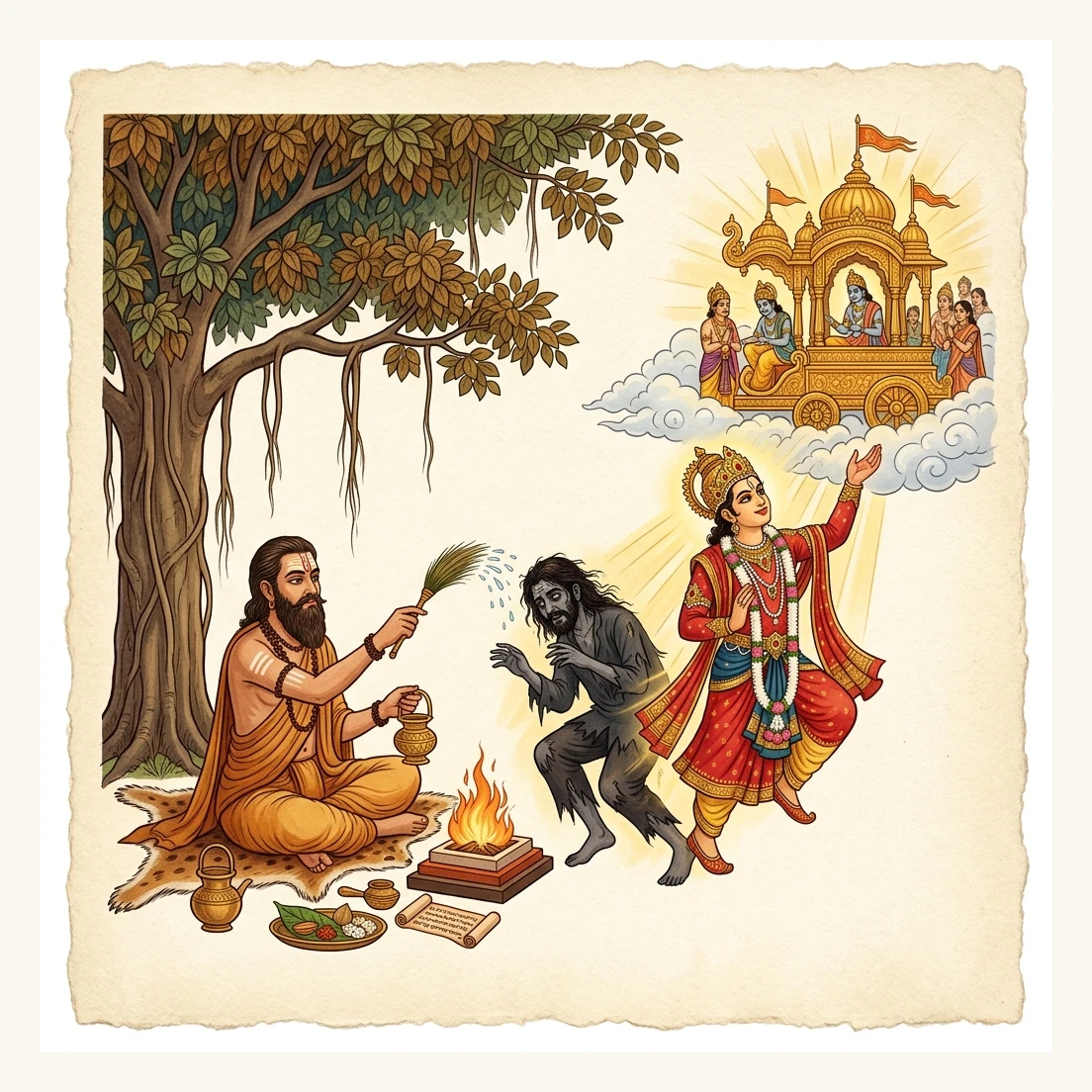
Overcome by envy, Vajradhvaja committed a grave misdeed: he poisoned the noble king and buried his body in the forest near a banyan tree. Because of his untimely and tragic demise, the spirit of King Mahīdhvaja became trapped as an unhappy wandering ghost, haunting the grove and causing distress to travelers.
The Compassion of Sage Dhaumya
One afternoon, the compassionate sage Dhaumya was passing by the grove. With his divine inner vision, the sage perceived the restless spirit and recognized him as the virtuous King Mahīdhvaja.
Moved by immense sorrow for the fallen king’s plight, Sage Dhaumya addressed the spirit with great tenderness:
‘O noble soul! Your suffering touches my heart. You lived a life of kindness, yet this shadow has bound you. I shall perform a holy penance on your behalf to free you forever.’
When Aparā Ekādaśī arrived, Sage Dhaumya observed a complete, strict fast with deep prayer and devotion. On Dvādaśī morning, after completing his worship, the sage stood facing the sun, poured sacred water from his palms, and offered the entire spiritual merit of his fast to King Mahīdhvaja.
Ascent to Vaikuṇṭha
The moment the holy water touched the earth, the restless spirit was instantly freed from all distress. A luminous celestial form, glowing like molten gold, emerged from the shadow. King Mahīdhvaja prostrated before Sage Dhaumya with tears of profound joy:
‘O holy master! By the boundless power of Aparā Ekādaśī, all my sorrows are extinguished, and the doors of heaven are opened!’
A celestial chariot carried the liberated king directly to Vaikuṇṭha, while flowers fell like rain from the skies.
How to Observe Apara Ekādaśī
- Morning Bath & Prayer: Begin your morning with a sacred bath and offer water to the rising sun.
- Worship of Lord Trivikrama: Meditate upon Lord Viṣṇu in His majestic form as Trivikrama, who measures the entire universe in three strides. Offer yellow flowers, tulasi, and light a lamp.
- Gentle Fasting: Keep a peaceful fast. Consume only fruits, milk, or pure water according to your strength.
- Remembrance & Charity: Spend the day in peaceful reflection. Offer charity or food to the needy on Dvādaśī morning.
- Auspicious Pāraṇā: Break your fast within the specified morning window on Dvādaśī.
Source: Padma Purāṇa, Uttara Khaṇḍa, Chapter 50, ‘Aparā Ekādaśī Mahātmyam’. Translated and retold in classical devotional prose for contemplation and daily observance.
Deepen Your Spiritual Immersion
Support the preservation of authentic Vedic astronomy and scripture. Sanctum Patrons unlock deep commentaries, printable altar cards, and uninterrupted contemplation.
100% of contributions fund authentic scriptural research & planetary ephemeris maintenance.
Frequently Asked Questions
- What is Apara Ekadasi?
- Apara Ekadasi is the ekādaśī tithi, the eleventh lunar day, of the waning fortnight (kṛṣṇa pakṣa) of Jyeṣṭha. Its name signifies "the boundless". Like every Ekadasi, it is observed by fasting and remembrance of Lord Viṣṇu. The sacred narrative and transcendental fruits (phalaśruti) of Apara are preserved in Purāṇas.
- When is Apara Ekadasi observed?
- Apara Ekadasi falls on the ekādaśī tithi of the waning fortnight of Jyeṣṭha in the Hindu lunar calendar. The exact Gregorian date varies each year because the lunar calendar shifts relative to the solar year. Smārta and Vaiṣṇava observers occasionally fast on different civil days when the tithi spans two sunrises; see the timings table above for your locality's exact window.
- Who is worshipped on Apara Ekadasi?
- Apara Ekadasi, like all Ekadasis, is dedicated to Lord Śrī Kṛṣṇa / Mahāviṣṇu. Traditional devotional observances include chanting the Viṣṇu-sahasranāma, reading the corresponding chapter from Purāṇas, hearing the sacred katha, and meditating on the divine holy names.
- What is the spiritual fruit (phalaśruti) of observing Apara Ekadasi?
- Canonical scriptures declare that observing Apara Ekadasi bestows: Liberation from accumulated sins and attainment of Viṣṇuloka.. Across all sacred Ekadasis, the fast purifies consciousness, dissolves karmic impressions, and elevates the soul toward spiritual liberation.
- How is Apara Ekadasi observed?
- A complete observance begins the prior evening (Daśamī) with a light sattvic meal, followed by a dedicated fast on Ekadasi day. Devotees may observe nirjala (without water), phalahāra (fruits, milk, and water), or a single sattvic meal according to physical capacity. Grains, rice, wheat, beans, onion, and garlic are strictly avoided. The fast concludes on Dvādaśī morning during the designated pāraṇa window with sacred Caraṇāmṛta and Tulasī.
- What is the difference between Smārta and Vaiṣṇava observance of Apara Ekadasi?
- On most occasions, both traditions observe the fast on the identical date. A variation occurs during an atirikta Ekādaśī when the tithi spans two consecutive sunrises. Smārtas fast on the first day (Viddhā), while Vaiṣṇavas observe the fast on the subsequent morning (Śuddhā), ensuring adherence to Dvādaśī touching sunrise.