Devshayanī Ekādaśī
Purāṇic Glories & Sacred Lore · Āshāḍha · Śukla Pakṣa
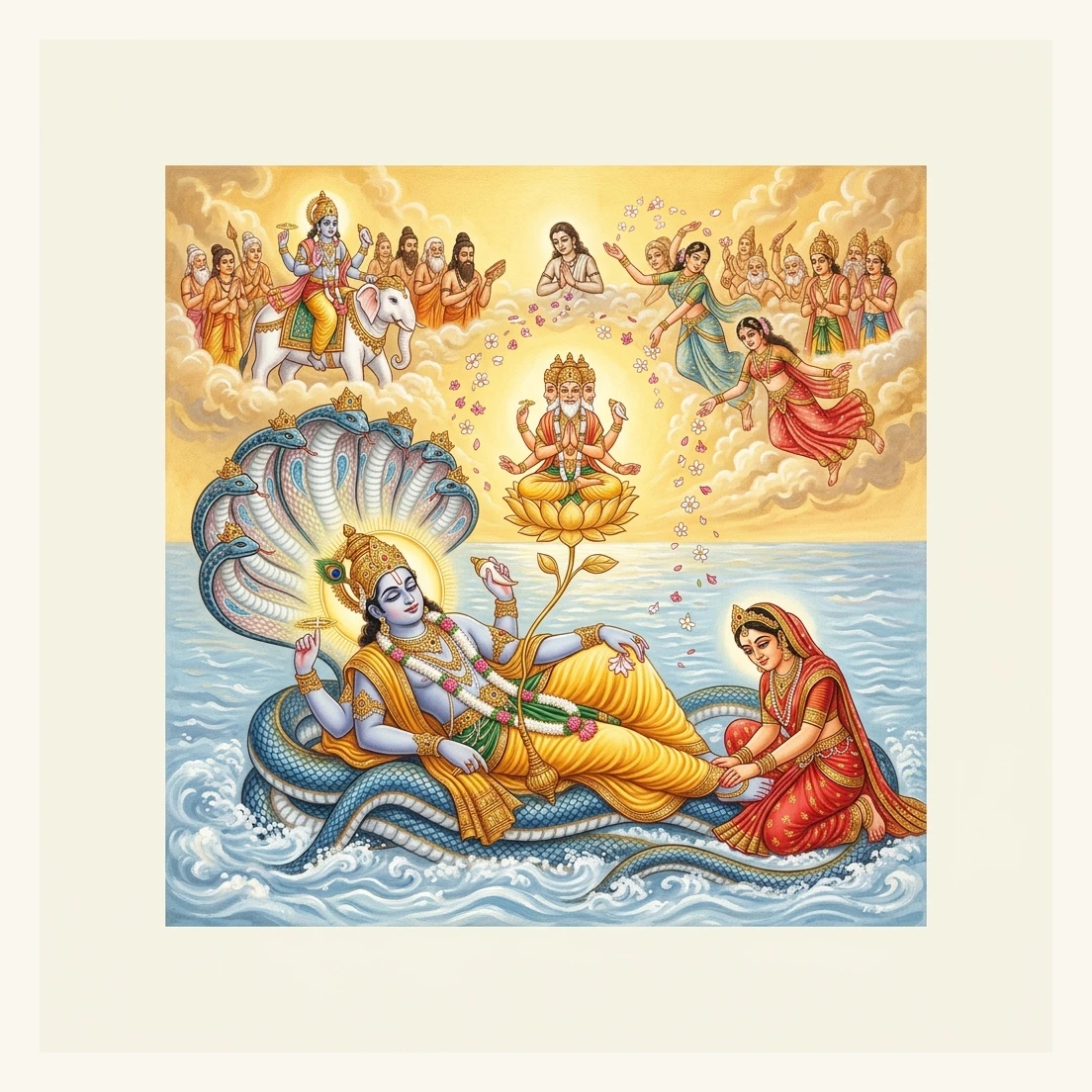
Lord Śrī Kṛṣṇa
Revealing transcendental glories
King Yudhiṣṭhira
Seeking liberation for all beings
ॐ नमो भगवते वासुदेवाय नमः
oṁ namo bhagavate vāsudevāya
The Legend of Devshayanī Ekādaśī
The sacred Purāṇic dialogue between Lord Śrī Kṛṣṇa and King Yudhiṣṭhira revealing the transcendental glories and vows of this holy vrata.
Liberation from accumulated sins and attainment of Viṣṇuloka.
The Cosmic Slumber of Lord Viṣṇu (Devaśayanī)
In the quiet hours of twilight, King Yudhiṣṭhira asked Lord Śrī Kṛṣṇa:
“O Keśava! Which holy Ekādaśī marks the beginning of the four sacred monsoon months (Cāturmāsya)? What is its divine significance, and which deity is adored?”
Lord Kṛṣṇa answered with profound serenity:
“O righteous son of Pāṇḍu! This holy day is celebrated across the three worlds as Devaśayanī Ekādaśī (also called Śayana or Haridivā-śayanī), arriving in the bright fortnight of Āṣāḍha (June–July). On this day, I enter a state of sacred yogic sleep (yoga-nidrā) upon the cosmic serpent Ananta Śeṣa in the milk ocean for four months. Whosoever observes this day receives the blessing of all pilgrimages and brings joy to their ancestors.”
The Great Drought in Ayodhyā
In the ancient golden age of Satyayuga, there ruled a noble monarch named King Māndhātā in the lineage of the Sun. Under his reign, people flourished and righteousness prevailed.
However, due to a subtle play of cosmic karma, dark rain clouds failed to gather over his kingdom for three long years. Wells dried up, fields withered to dust, and the songs of birds fell silent. Sacrifices and charity could no longer be performed without grains and water. Seeing his beloved subjects suffer from hunger, King Māndhātā was heartbroken. He resolved to seek spiritual guidance to restore prosperity to the earth.
The Hermitage of Sage Aṅgiras
Leaving his capital, the king entered a deep forest and arrived at the tranquil ashram of Sage Aṅgiras, the luminous son of Brahmā. The sage welcomed the exhausted king with pure water and kind words.
King Māndhātā poured out his heart:
‘O revered father! I have protected my people with justice and love, yet a terrible drought ravages my kingdom. The people are dying of thirst and hunger. What fault have I committed, and what remedy can bring the rains?’
Sage Aṅgiras closed his eyes in meditation and replied:
‘O King! No fault lies in your heart. But nature responds to the spiritual rhythm of the universe. In the bright half of Āṣāḍha, observe the sacred fast of Devaśayanī Ekādaśī alongside your queens, ministers, and subjects. Surrender your kingdom’s grief to Lord Viṣṇu as He enters His divine slumber.‘
The Gathering of Rains and Blessings
Returning to Ayodhyā, King Māndhātā proclaimed the holy fast. On Devaśayanī Ekādaśī, every household cleansed their altars, observed fasting, and sang hymns of praise to Lord Nārāyaṇa.
Even before the fast had concluded on Dvādaśī, thunder rolled across the dry horizons. Cool winds swept through the parched valleys, and torrential rains poured down from the heavens. The rivers overflowed with life, fields turned lush and green, and the kingdom was restored to abundance and peace.
How to Observe Devshayani Ekādaśī
- Beginning of Cāturmāsya: Take a solemn vow of truthfulness, simplicity, and increased prayer for the upcoming four months.
- Pūjā to Lord Śayana-Nārāyaṇa: Bathe the deity with milk and water, offer yellow silken cloth, fragrant sandalwood, and tulasī leaves.
- Gentle Fasting: Observe a peaceful fast suited to your strength. Light water or fruit fasting is recommended.
- Lighting of Lamps: Light ghee lamps in the evening to dispel all inner darkness.
- Dvādaśī Pāraṇā: Complete your fast during the morning pāraṇā window, sharing food with family and the elderly.
Source: Padma Purāṇa, Uttara Khaṇḍa, Chapter 53, ‘Śayanī Ekādaśī Mahātmyam’. Translated and retold in classical devotional prose for contemplation and daily observance.
Deepen Your Spiritual Immersion
Support the preservation of authentic Vedic astronomy and scripture. Sanctum Patrons unlock deep commentaries, printable altar cards, and uninterrupted contemplation.
100% of contributions fund authentic scriptural research & planetary ephemeris maintenance.
Frequently Asked Questions
- What is Devshayani Ekadasi?
- Devshayani Ekadasi is the ekādaśī tithi, the eleventh lunar day, of the waxing fortnight (śukla pakṣa) of Āshāḍha. Its name signifies "the lord's slumber". Like every Ekadasi, it is observed by fasting and remembrance of Lord Viṣṇu. The sacred narrative and transcendental fruits (phalaśruti) of Devshayani are preserved in Purāṇas.
- When is Devshayani Ekadasi observed?
- Devshayani Ekadasi falls on the ekādaśī tithi of the waxing fortnight of Āshāḍha in the Hindu lunar calendar. The exact Gregorian date varies each year because the lunar calendar shifts relative to the solar year. Smārta and Vaiṣṇava observers occasionally fast on different civil days when the tithi spans two sunrises; see the timings table above for your locality's exact window.
- Who is worshipped on Devshayani Ekadasi?
- Devshayani Ekadasi, like all Ekadasis, is dedicated to Lord Śrī Kṛṣṇa / Mahāviṣṇu. Traditional devotional observances include chanting the Viṣṇu-sahasranāma, reading the corresponding chapter from Purāṇas, hearing the sacred katha, and meditating on the divine holy names.
- What is the spiritual fruit (phalaśruti) of observing Devshayani Ekadasi?
- Canonical scriptures declare that observing Devshayani Ekadasi bestows: Liberation from accumulated sins and attainment of Viṣṇuloka.. Across all sacred Ekadasis, the fast purifies consciousness, dissolves karmic impressions, and elevates the soul toward spiritual liberation.
- How is Devshayani Ekadasi observed?
- A complete observance begins the prior evening (Daśamī) with a light sattvic meal, followed by a dedicated fast on Ekadasi day. Devotees may observe nirjala (without water), phalahāra (fruits, milk, and water), or a single sattvic meal according to physical capacity. Grains, rice, wheat, beans, onion, and garlic are strictly avoided. The fast concludes on Dvādaśī morning during the designated pāraṇa window with sacred Caraṇāmṛta and Tulasī.
- What is the difference between Smārta and Vaiṣṇava observance of Devshayani Ekadasi?
- On most occasions, both traditions observe the fast on the identical date. A variation occurs during an atirikta Ekādaśī when the tithi spans two consecutive sunrises. Smārtas fast on the first day (Viddhā), while Vaiṣṇavas observe the fast on the subsequent morning (Śuddhā), ensuring adherence to Dvādaśī touching sunrise.