Indirā Ekādaśī
Purāṇic Glories & Sacred Lore · Āśvina · Kṛṣṇa Pakṣa
Lord Śrī Kṛṣṇa
Revealing transcendental glories
King Yudhiṣṭhira
Seeking liberation for all beings
ॐ नमो भगवते वासुदेवाय नमः
oṁ namo bhagavate vāsudevāya
The Legend of Indirā Ekādaśī
The sacred Purāṇic dialogue between Lord Śrī Kṛṣṇa and King Yudhiṣṭhira revealing the transcendental glories and vows of this holy vrata.
Liberation from accumulated sins and attainment of Viṣṇuloka.
The Liberation of Ancestors on Indirā Ekādaśī
King Yudhiṣṭhira inquired of Lord Śrī Kṛṣṇa:
“O Lord of all creation! Which Ekādaśī arrives in the dark fortnight of Āśvina (September–October)? What spiritual merit does it hold, and how does it benefit our departed forefathers?”
Lord Kṛṣṇa replied with tender affection:
“O Yudhiṣṭhira! This holy day is known as Indirā Ekādaśī. Falling during the sacred Pitru Pakṣa (the fortnight of the ancestors), it possesses the extraordinary power to liberate departed souls who may be caught in sorrow or distress. By dedicating the merit of this fast to one’s parents and forefathers, they are immediately elevated to the heavenly realms.”
King Indrasena and the Heavenly Messenger
In the kingdom of Māhiṣmatī, there ruled a virtuous king named Indrasena. He was devoted to Lord Viṣṇu, honored sages, and took paternal care of his subjects.
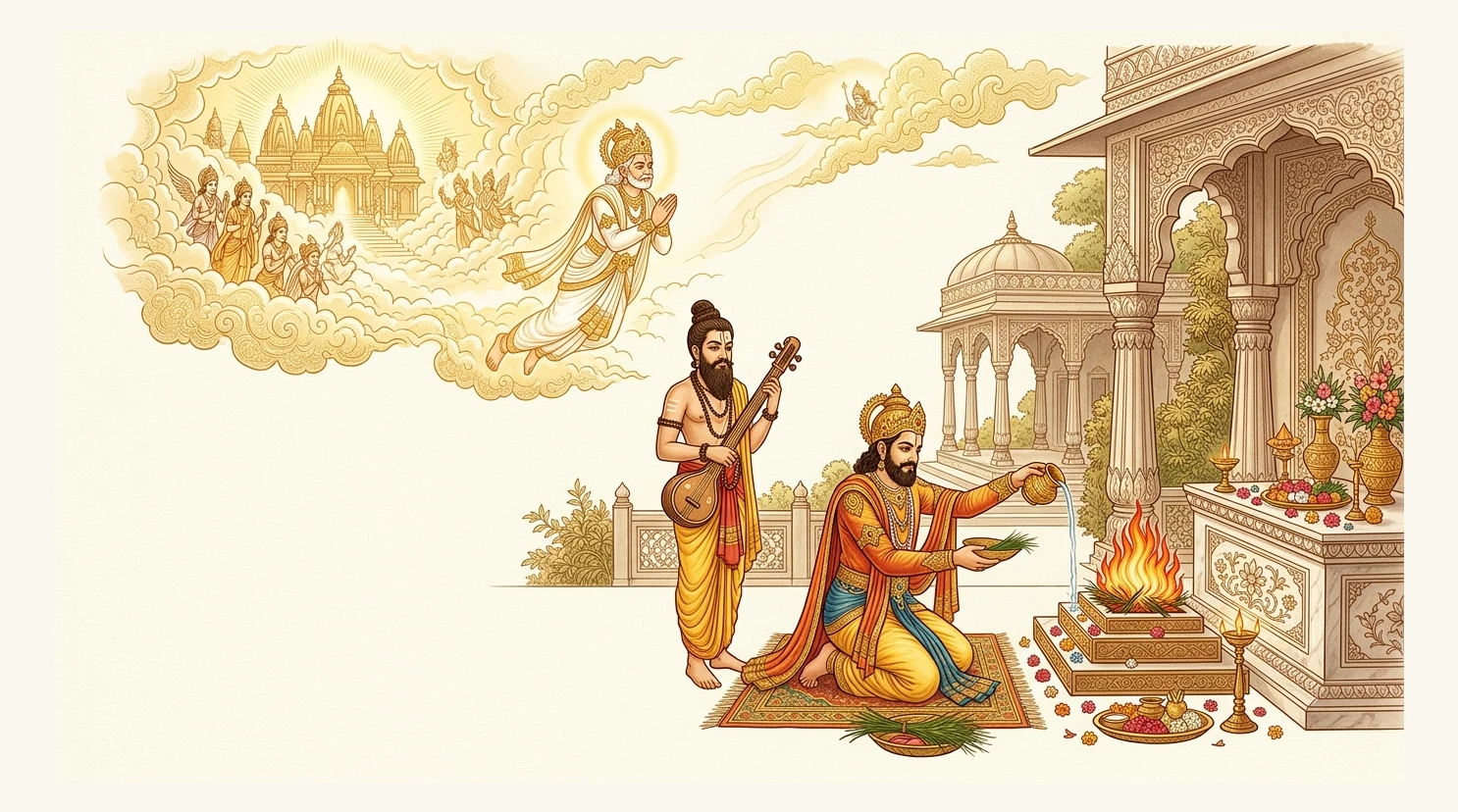
One morning, the divine sage Narada descended into the royal court, his vīṇā singing praises of Nārāyaṇa. King Indrasena welcomed the celestial sage with prostrations and washed his holy feet.
Narada smiled and said: ‘O King, hear why I have come. While visiting the realm of Yama, the Lord of Justice, I saw your departed father. Because of an unfulfilled vow from his past earthly life, he is unable to ascend to heaven. He sent this loving message to you: “Tell my virtuous son Indrasena that if he observes the sacred fast of Indirā Ekādaśī and gives its merit to me, I shall be freed and enter Vaikuṇṭha!”’
The Sacred Observance
Hearing of his father’s longing, tears filled Indrasena’s eyes. He asked Narada Muni for the exact method of observing the fast.
Narada instructed: ‘On Daśamī day, take a pure meal and prepare your mind. On Indirā Ekādaśī, rise before dawn, bathe in a sacred river or pure water, and offer tarpana (water offerings) with black sesame and darbhā grass to your ancestors. Offer your fasting, prayers, and silent vigils to Lord Śrīdhara.’
King Indrasena observed every detail with heartfelt love, surrounded by his queens and ministers. On Dvādaśī, after worshipping Lord Hari, the king solemnly dedicated all the spiritual merit of his fast to his departed father.
The Ascent to Heaven
As soon as the prayers concluded, celestial flowers showered from the sky. A divine chariot appeared, and King Indrasena beheld his father radiant as the morning sun, clad in celestial robes and smiling with boundless love.
‘Bless you, my son! By your devotion on Indirā Ekādaśī, thirty generations of our family have been elevated to the eternal realm of Lord Viṣṇu!’
With these words, his father ascended to heaven, leaving King Indrasena in tears of peaceful joy.
How to Observe Indira Ekādaśī
- Honoring Ancestors: Wake early, bathe peacefully, and offer heartfelt prayers or water offerings (tarpaṇa) to your parents and ancestors.
- Worship of Lord Śrīdhara: Offer fresh yellow flowers, incense, and lamps to Lord Viṣṇu.
- Peaceful Fasting: Observe a gentle fast avoiding grains and heavy foods.
- Dedication of Merit: Silently pray that any spiritual peace gained from the fast brings comfort and elevation to your departed loved ones.
- Auspicious Pāraṇā: Break fast on Dvādaśī morning within the designated window after offering charity.
Source: Padma Purāṇa, Uttara Khaṇḍa, Chapter 58, ‘Indirā Ekādaśī Mahātmyam’. Translated and retold in classical devotional prose for contemplation and daily observance.
Deepen Your Spiritual Immersion
Support the preservation of authentic Vedic astronomy and scripture. Sanctum Patrons unlock deep commentaries, printable altar cards, and uninterrupted contemplation.
100% of contributions fund authentic scriptural research & planetary ephemeris maintenance.
Frequently Asked Questions
- What is Indira Ekadasi?
- Indira Ekadasi is the ekādaśī tithi, the eleventh lunar day, of the waning fortnight (kṛṣṇa pakṣa) of Āśvina. Its name signifies "for the ancestors". Like every Ekadasi, it is observed by fasting and remembrance of Lord Viṣṇu. The sacred narrative and transcendental fruits (phalaśruti) of Indira are preserved in Purāṇas.
- When is Indira Ekadasi observed?
- Indira Ekadasi falls on the ekādaśī tithi of the waning fortnight of Āśvina in the Hindu lunar calendar. The exact Gregorian date varies each year because the lunar calendar shifts relative to the solar year. Smārta and Vaiṣṇava observers occasionally fast on different civil days when the tithi spans two sunrises; see the timings table above for your locality's exact window.
- Who is worshipped on Indira Ekadasi?
- Indira Ekadasi, like all Ekadasis, is dedicated to Lord Śrī Kṛṣṇa / Mahāviṣṇu. Traditional devotional observances include chanting the Viṣṇu-sahasranāma, reading the corresponding chapter from Purāṇas, hearing the sacred katha, and meditating on the divine holy names.
- What is the spiritual fruit (phalaśruti) of observing Indira Ekadasi?
- Canonical scriptures declare that observing Indira Ekadasi bestows: Liberation from accumulated sins and attainment of Viṣṇuloka.. Across all sacred Ekadasis, the fast purifies consciousness, dissolves karmic impressions, and elevates the soul toward spiritual liberation.
- How is Indira Ekadasi observed?
- A complete observance begins the prior evening (Daśamī) with a light sattvic meal, followed by a dedicated fast on Ekadasi day. Devotees may observe nirjala (without water), phalahāra (fruits, milk, and water), or a single sattvic meal according to physical capacity. Grains, rice, wheat, beans, onion, and garlic are strictly avoided. The fast concludes on Dvādaśī morning during the designated pāraṇa window with sacred Caraṇāmṛta and Tulasī.
- What is the difference between Smārta and Vaiṣṇava observance of Indira Ekadasi?
- On most occasions, both traditions observe the fast on the identical date. A variation occurs during an atirikta Ekādaśī when the tithi spans two consecutive sunrises. Smārtas fast on the first day (Viddhā), while Vaiṣṇavas observe the fast on the subsequent morning (Śuddhā), ensuring adherence to Dvādaśī touching sunrise.