Jayā Ekādaśī
Purāṇic Glories & Sacred Lore · Māgha · Śukla Pakṣa
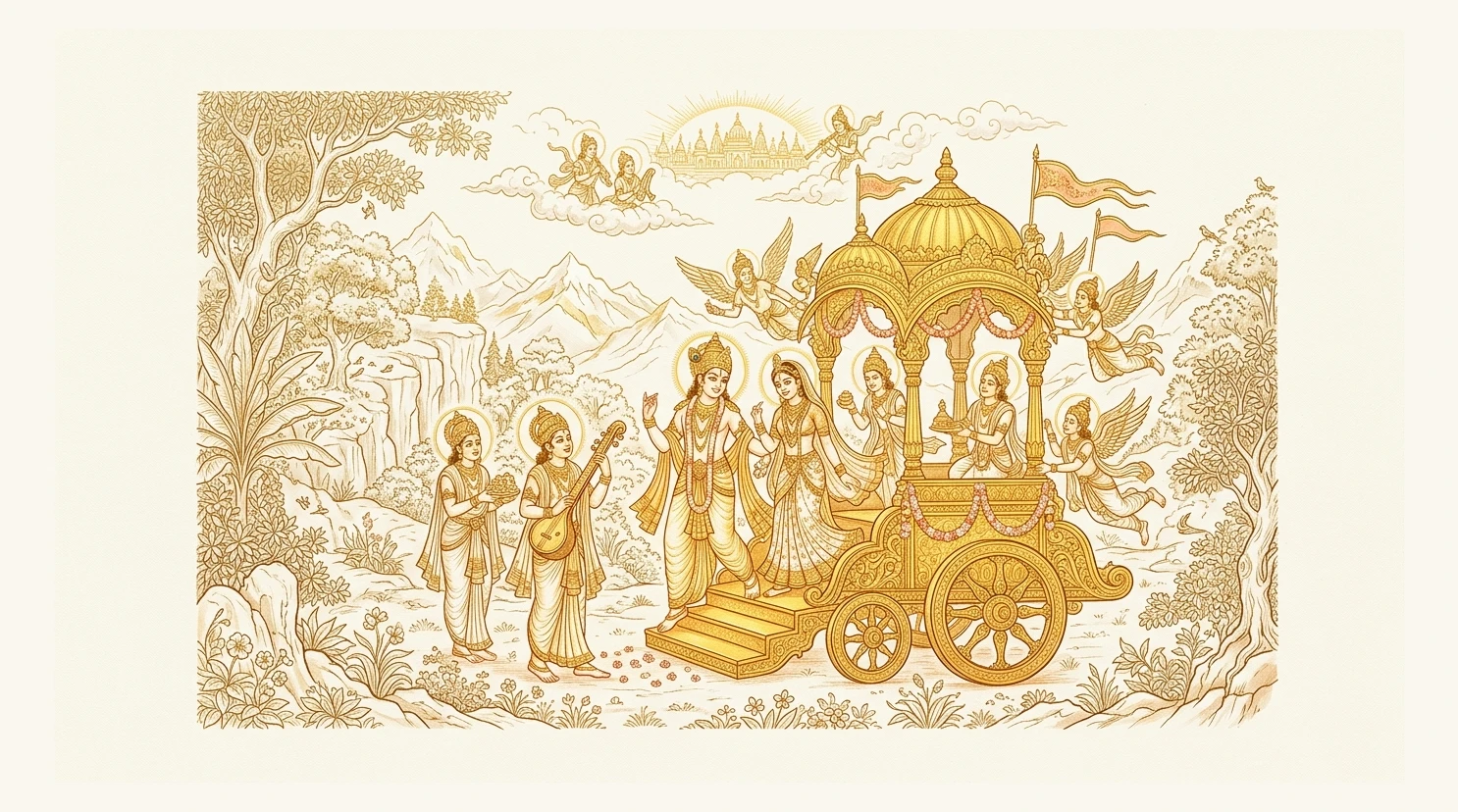
Lord Śrī Kṛṣṇa
Revealing transcendental glories
King Yudhiṣṭhira
Seeking liberation for all beings
ॐ नमो भगवते वासुदेवाय नमः
oṁ namo bhagavate vāsudevāya
The Legend of Jayā Ekādaśī
The sacred Purāṇic dialogue between Lord Śrī Kṛṣṇa and King Yudhiṣṭhira revealing the transcendental glories and vows of this holy vrata.
Liberation from accumulated sins and attainment of Viṣṇuloka.
The Celestial Singers Redeemed (Jayā Ekādaśī)
King Yudhiṣṭhira said:
“O Lord Janārdana! Please tell me about the Ekādaśī that comes in the bright fortnight of the month of Māgha (January–February). What is its sacred name, and how does it rescue souls from suffering?”
Lord Kṛṣṇa answered with a smile:
“O King! This day is celebrated as Jayā Ekādaśī, the giver of ultimate victory (jaya) over all sorrow and past bondage. Whoever observes it with love is freed from the lowest states of existence and regains their divine radiance. Listen to this ancient story from the celestial realms.”
The Celestial Court of Indra
In the heavenly garden of Nandanavana, Lord Indra was being entertained by celestial musicians and dancers. Among them was the gifted Gandharva singer Mālyavān and the enchanting Apsarā Puṣpavatī.
As they performed before the gods, their eyes met, and they were overwhelmed by romantic affection for each other. Lost in their thoughts, Mālyavān’s voice lost its melody, and Puṣpavatī’s feet missed the rhythm of the celestial drums. The heavenly assembly fell silent.
Indra, offended by their negligence in the divine court, spoke in anger: ‘Because you forgot your sacred duty in attachment, fall from heaven! Live as shivering goblins (piśācas) in the freezing Himalayan peaks, feeling cold, hunger, and misery!’
Suffering on the Snowy Peaks
Instantly, their radiant bodies transformed. Stripped of their divine beauty, Mālyavān and Puṣpavatī found themselves wandering the bitter snows of the high mountains. Their limbs trembled from the biting winds, and their teeth chattered day and night. They had neither warm shelter nor comforting food.
Weeping in anguish, Mālyavān said to his beloved: ‘What terrible karma have we gathered that has brought us to this bitter state? How can we ever be free?‘
The Saving Grace of Māgha Śukla
By divine providence, the day arrived when Māgha Śukla Ekādaśī dawned upon the peaks. Numb with cold and sorrow, neither of them could eat a single morsel or drink a drop of water. They sat beneath a banyan tree, shivering together, keeping awake through the long freezing night while chanting the name of God for mercy.
Without intending it, they had observed a complete waterless fast and an all-night vigil on Jayā Ekādaśī!
When the golden sun of Dvādaśī rose over the snowy summits, a miraculous change occurred. Their monstrous forms dissolved into pure light. Celestial garments and fragrant garlands adorned them once more, and their divine beauty was completely restored.
A celestial chariot descended and carried them back to heaven. When Lord Indra saw them radiant and humble, he marveled and asked what penance had freed them. Mālyavān replied: ‘O Lord, it was not our strength, but the matchless grace of Jayā Ekādaśī and devotion to Lord Hari that saved us!’
How to Observe Jaya Ekādaśī
- Morning Bath & Resolve: Bathe early and take a calm resolve to purify the senses and cultivate kindness.
- Worship of Lord Mādhava: Offer flowers, tulasi, and a lighted ghee lamp to Lord Viṣṇu.
- Gentle Fasting: Fast according to your physical strength, taking fruit, milk, or pure water.
- Evening Chanting: Sing devotional hymns or recite the Viṣṇu Sahasranāma.
- Dvādaśī Pāraṇā: Break fast the next morning within the auspicious time window after offering food to someone in need.
Source: Padma Purāṇa, Uttara Khaṇḍa, Chapter 45, ‘Jayā Ekādaśī Mahātmyam’. Translated and retold in classical devotional prose for contemplation and daily observance.
Deepen Your Spiritual Immersion
Support the preservation of authentic Vedic astronomy and scripture. Sanctum Patrons unlock deep commentaries, printable altar cards, and uninterrupted contemplation.
100% of contributions fund authentic scriptural research & planetary ephemeris maintenance.
Frequently Asked Questions
- What is Jaya Ekadasi?
- Jaya Ekadasi is the ekādaśī tithi, the eleventh lunar day, of the waxing fortnight (śukla pakṣa) of Māgha. Its name signifies "the victorious". Like every Ekadasi, it is observed by fasting and remembrance of Lord Viṣṇu. The sacred narrative and transcendental fruits (phalaśruti) of Jaya are preserved in Purāṇas.
- When is Jaya Ekadasi observed?
- Jaya Ekadasi falls on the ekādaśī tithi of the waxing fortnight of Māgha in the Hindu lunar calendar. The exact Gregorian date varies each year because the lunar calendar shifts relative to the solar year. Smārta and Vaiṣṇava observers occasionally fast on different civil days when the tithi spans two sunrises; see the timings table above for your locality's exact window.
- Who is worshipped on Jaya Ekadasi?
- Jaya Ekadasi, like all Ekadasis, is dedicated to Lord Śrī Kṛṣṇa / Mahāviṣṇu. Traditional devotional observances include chanting the Viṣṇu-sahasranāma, reading the corresponding chapter from Purāṇas, hearing the sacred katha, and meditating on the divine holy names.
- What is the spiritual fruit (phalaśruti) of observing Jaya Ekadasi?
- Canonical scriptures declare that observing Jaya Ekadasi bestows: Liberation from accumulated sins and attainment of Viṣṇuloka.. Across all sacred Ekadasis, the fast purifies consciousness, dissolves karmic impressions, and elevates the soul toward spiritual liberation.
- How is Jaya Ekadasi observed?
- A complete observance begins the prior evening (Daśamī) with a light sattvic meal, followed by a dedicated fast on Ekadasi day. Devotees may observe nirjala (without water), phalahāra (fruits, milk, and water), or a single sattvic meal according to physical capacity. Grains, rice, wheat, beans, onion, and garlic are strictly avoided. The fast concludes on Dvādaśī morning during the designated pāraṇa window with sacred Caraṇāmṛta and Tulasī.
- What is the difference between Smārta and Vaiṣṇava observance of Jaya Ekadasi?
- On most occasions, both traditions observe the fast on the identical date. A variation occurs during an atirikta Ekādaśī when the tithi spans two consecutive sunrises. Smārtas fast on the first day (Viddhā), while Vaiṣṇavas observe the fast on the subsequent morning (Śuddhā), ensuring adherence to Dvādaśī touching sunrise.