Kāmadā Ekādaśī
Purāṇic Glories & Sacred Lore · Chaitra · Śukla Pakṣa
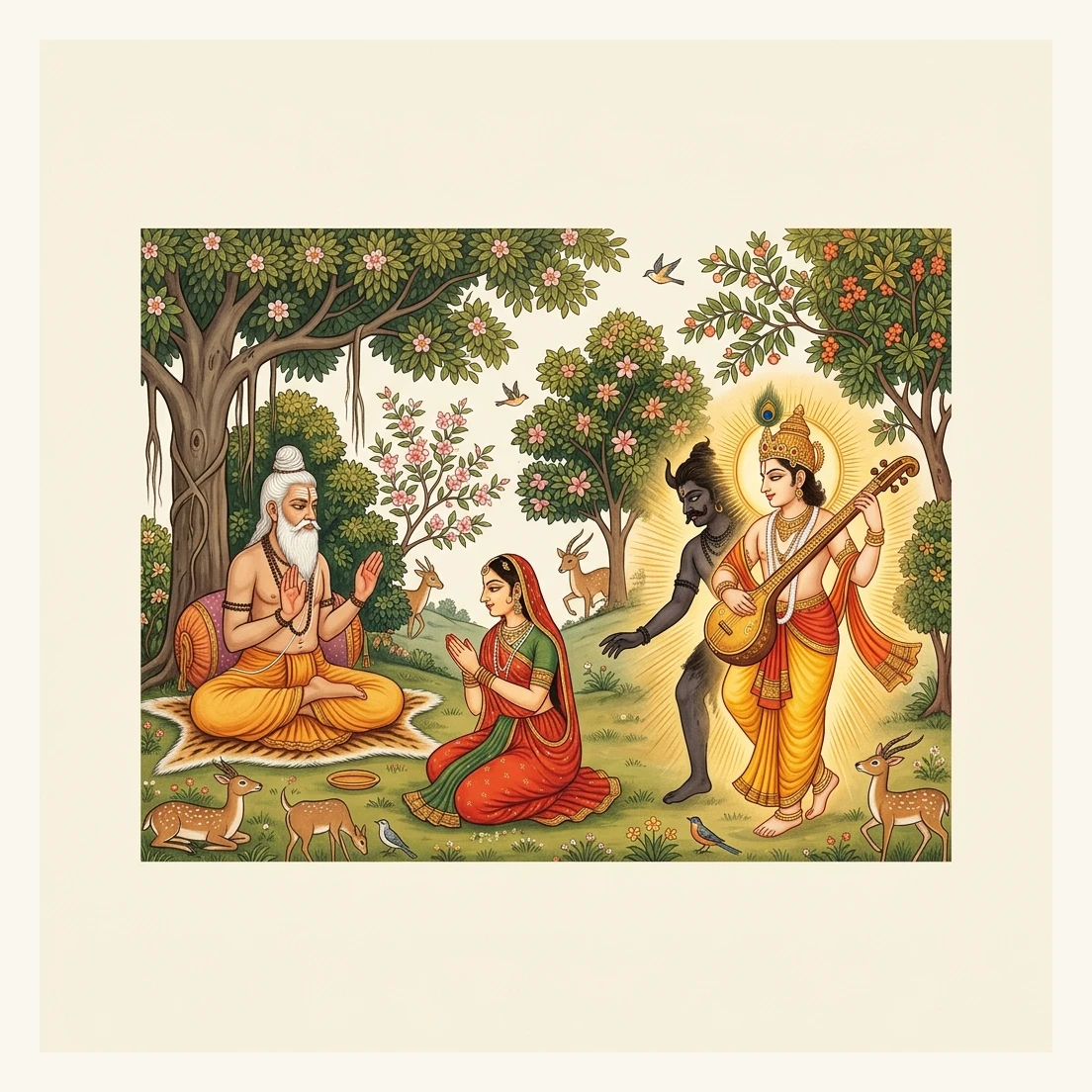
Lord Śrī Kṛṣṇa
Revealing transcendental glories
King Yudhiṣṭhira
Seeking liberation for all beings
ॐ नमो भगवते वासुदेवाय नमः
oṁ namo bhagavate vāsudevāya
The Legend of Kāmadā Ekādaśī
The sacred Purāṇic dialogue between Lord Śrī Kṛṣṇa and King Yudhiṣṭhira revealing the transcendental glories and vows of this holy vrata.
Liberation from accumulated sins and attainment of Viṣṇuloka.
The Wish-Fulfilling Day of Grace (Kāmadā Ekādaśī)
King Yudhiṣṭhira inquired:
“O Vāsudeva! Which Ekādaśī falls in the bright fortnight of the month of Caitra (March–April)? What is its name and the fruit of observing it?”
Lord Śrī Kṛṣṇa answered lovingly:
“O righteous King! This sacred day is named Kāmadā Ekādaśī—the wish-fulfilling Ekādaśī that grants all pure desires (kāma) and burns away the deepest regrets like a blazing fire consuming dry grass. Listen to this moving tale narrated by Sage Vasiṣṭha to King Dilīpa.”
The Land of Ratnapura
In the ancient city of Ratnapura, ruled by King Puṇḍarīka, lived a young Gandharva couple of extraordinary beauty and devotion—Lalita and his devoted wife Lalitā. They loved each other with such tenderness that they could scarcely bear to be apart for a single moment.
One afternoon, Lalita was singing in the royal assembly before King Puṇḍarīka. As he sang, his thoughts wandered to his beloved wife at home. His voice hesitated, the notes wavered, and the rhythm faltered.
An envious courtier named Karkotaka whispered to the king that the singer was insulting the court. In a flash of wrath, King Puṇḍarīka cursed Lalita: ‘Because you let your mind wander in lust, become a monstrous, flesh-eating demon!’
The Grief of Lalitā
In an instant, Lalita transformed into a terrifying, towering creature with bloodshot eyes and tangled hair. Horrified by his own form, he fled into the dense forest, roaring in agony.
When Lalitā learned of her husband’s tragedy, her heart was shattered. But true love does not surrender to despair. Refusing to abandon him, she followed his monstrous footsteps through the thorns and wilderness, weeping and seeking a way to save him.
The Blessing of Sage Śṛṅgī
After wandering for miles, Lalitā reached the peaceful ashram of the revered Sage Śṛṅgī on the slopes of Mount Vindhya. Prostrating before the holy sage, she poured out her tears:
‘O master! My beloved husband has been turned into a monster through a bitter curse. Is there any penance a faithful wife can perform to bring his true soul back?’
Sage Śṛṅgī looked upon her with deep maternal sympathy and said:
‘Grieve no more, gentle daughter. In the bright fortnight of Caitra arrives Kāmadā Ekādaśī. Observe this sacred fast with complete purity and devotion. On Dvādaśī morning, offer the entire merit of your fast to Lord Nārāyaṇa for your husband’s release.‘
Love and Redemption
Lalitā observed the fast with complete faith and loving surrender. On Dvādaśī, she stood before the deity and prayed: ‘O Supreme Lord! Whatever spiritual merit I have gathered from this fast of Kāmadā, let it be transferred to my husband to free him from his curse!’
Instantly, the monstrous form vanished! Lalita stood before her as a radiant Gandharva once again, adorned in celestial silks. Weeping with joy, the reunited couple thanked Sage Śṛṅgī, worshipped Lord Hari, and returned peacefully to their celestial home.
How to Observe Kamada Ekādaśī
- Morning Devotion: Wake early, cleanse the altar, and pray for the well-being of family and loved ones.
- Worship of Lord Viṣṇu: Offer fresh spring flowers, fragrant sandalwood, and tulasī leaves.
- Gentle Fasting: Observe a peaceful fast with water, fruits, or milk.
- Prayer for Others: Pray sincerely for the healing, peace, and spiritual upliftment of someone you love.
- Dvādaśī Pāraṇā: Share food with others and break your fast within the designated morning window.
Source: Padma Purāṇa, Uttara Khaṇḍa, Chapter 49, ‘Kāmadā Ekādaśī Mahātmyam’. Translated and retold in classical devotional prose for contemplation and daily observance.
Deepen Your Spiritual Immersion
Support the preservation of authentic Vedic astronomy and scripture. Sanctum Patrons unlock deep commentaries, printable altar cards, and uninterrupted contemplation.
100% of contributions fund authentic scriptural research & planetary ephemeris maintenance.
Frequently Asked Questions
- What is Kamada Ekadasi?
- Kamada Ekadasi is the ekādaśī tithi, the eleventh lunar day, of the waxing fortnight (śukla pakṣa) of Chaitra. Its name signifies "fulfiller of desires". Like every Ekadasi, it is observed by fasting and remembrance of Lord Viṣṇu. The sacred narrative and transcendental fruits (phalaśruti) of Kamada are preserved in Purāṇas.
- When is Kamada Ekadasi observed?
- Kamada Ekadasi falls on the ekādaśī tithi of the waxing fortnight of Chaitra in the Hindu lunar calendar. The exact Gregorian date varies each year because the lunar calendar shifts relative to the solar year. Smārta and Vaiṣṇava observers occasionally fast on different civil days when the tithi spans two sunrises; see the timings table above for your locality's exact window.
- Who is worshipped on Kamada Ekadasi?
- Kamada Ekadasi, like all Ekadasis, is dedicated to Lord Śrī Kṛṣṇa / Mahāviṣṇu. Traditional devotional observances include chanting the Viṣṇu-sahasranāma, reading the corresponding chapter from Purāṇas, hearing the sacred katha, and meditating on the divine holy names.
- What is the spiritual fruit (phalaśruti) of observing Kamada Ekadasi?
- Canonical scriptures declare that observing Kamada Ekadasi bestows: Liberation from accumulated sins and attainment of Viṣṇuloka.. Across all sacred Ekadasis, the fast purifies consciousness, dissolves karmic impressions, and elevates the soul toward spiritual liberation.
- How is Kamada Ekadasi observed?
- A complete observance begins the prior evening (Daśamī) with a light sattvic meal, followed by a dedicated fast on Ekadasi day. Devotees may observe nirjala (without water), phalahāra (fruits, milk, and water), or a single sattvic meal according to physical capacity. Grains, rice, wheat, beans, onion, and garlic are strictly avoided. The fast concludes on Dvādaśī morning during the designated pāraṇa window with sacred Caraṇāmṛta and Tulasī.
- What is the difference between Smārta and Vaiṣṇava observance of Kamada Ekadasi?
- On most occasions, both traditions observe the fast on the identical date. A variation occurs during an atirikta Ekādaśī when the tithi spans two consecutive sunrises. Smārtas fast on the first day (Viddhā), while Vaiṣṇavas observe the fast on the subsequent morning (Śuddhā), ensuring adherence to Dvādaśī touching sunrise.