Kāmikā Ekādaśī
Purāṇic Glories & Sacred Lore · Śrāvaṇa · Kṛṣṇa Pakṣa
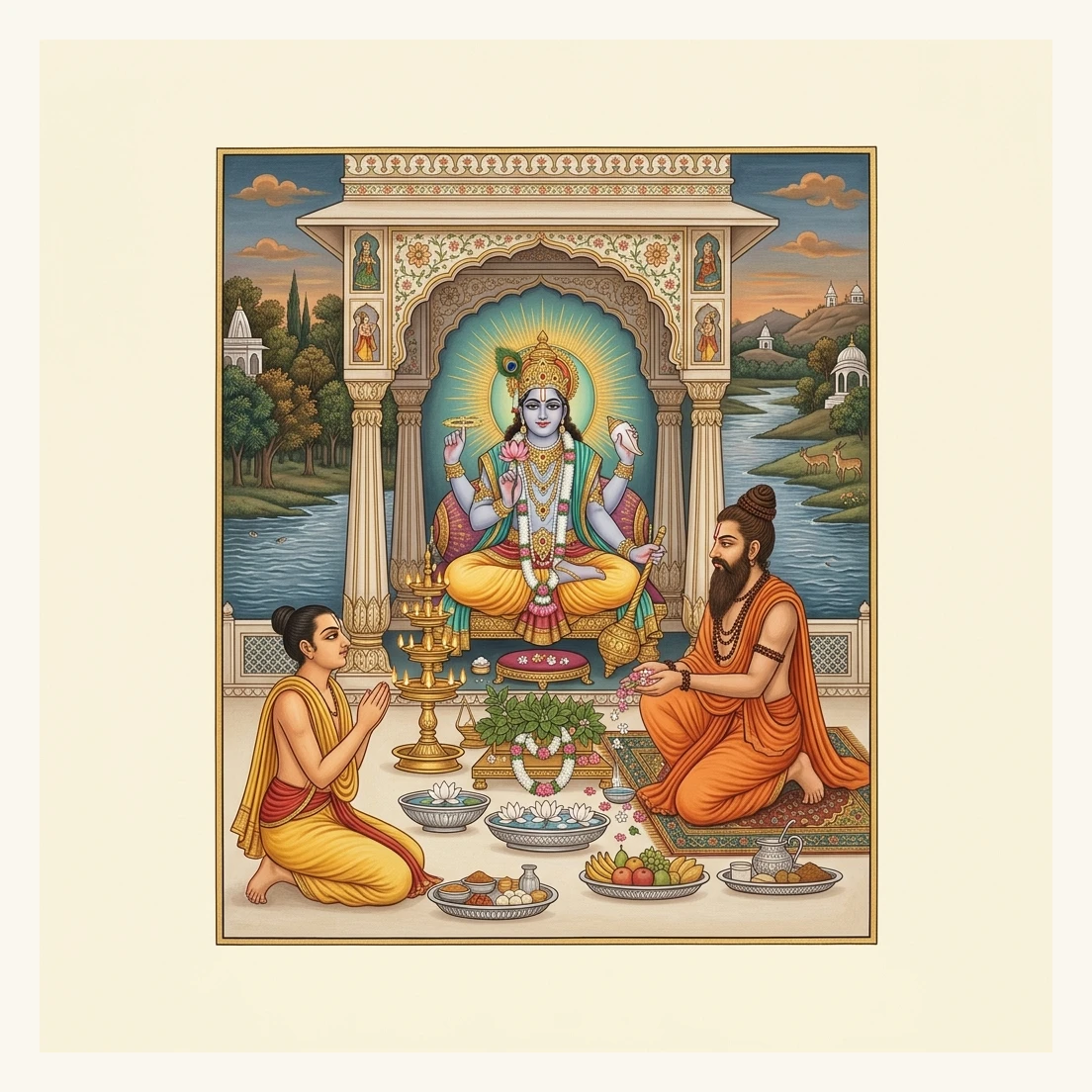
Lord Śrī Kṛṣṇa
Revealing transcendental glories
King Yudhiṣṭhira
Seeking liberation for all beings
ॐ नमो भगवते वासुदेवाय नमः
oṁ namo bhagavate vāsudevāya
The Legend of Kāmikā Ekādaśī
The sacred Purāṇic dialogue between Lord Śrī Kṛṣṇa and King Yudhiṣṭhira revealing the transcendental glories and vows of this holy vrata.
Liberation from accumulated sins and attainment of Viṣṇuloka.
The Sacred Offering of Tulasī (Kāmikā Ekādaśī)
King Yudhiṣṭhira asked Lord Śrī Kṛṣṇa:
“O Keśava, supreme refuge of all! Please tell me about the Ekādaśī that comes in the dark fortnight of Śrāvaṇa (July–August). What is its name, and which form of the Lord is worshipped on this holy day?”
Lord Kṛṣṇa replied with joy:
“O King! Listen to the nectar-like story of Kāmikā Ekādaśī, the fulfiller of all sacred desires. In ancient times, the divine sage Narada asked his father Lord Brahmā this very question. Brahmā replied that listening to the glories of Kāmikā Ekādaśī equals the merit of horse-sacrifices, and offering a single Tulasī leaf to Lord Hari on this day pleases Him more than mountains of gold and pearls!”
The Conflict in the Village
Lord Kṛṣṇa narrated an ancient story to illustrate its grace: In a prosperous village, there lived a proud and short-tempered landlord. One day, a misunderstanding arose between the landlord and a gentle, saintly brāhmaṇa. In a moment of uncontrolled anger, a quarrel broke out, and the landlord accidentally struck the brāhmaṇa, who fell and breathed his last.
When the landlord realized what his temper had caused, he was seized with overwhelming guilt and terror. He knew that taking the life of a gentle soul was a terrible karmic burden. The villagers shunned him, and even priests refused to enter his courtyard or accept his charity. Night after night, nightmares haunted his sleep.
The Sage’s Counsel
Desperate for atonement, the landlord left his estate and sought out a group of wise ascetics meditating in the forest. Falling at their feet, he wept:
‘O holy sages! I am tormented by what my anger has done. I have lost all peace of mind. Please tell me if there is any way for a penitent soul like me to find forgiveness.’
The elder sage looked upon his sincere repentance and said:
‘Genuine repentance is the first step toward grace. When the dark fortnight of Śrāvaṇa arrives, observe the fast of Kāmikā Ekādaśī. Worship Lord Śrīdhara with love, offer tender Tulasī leaves, and stay awake in prayer. Lord Hari is the ocean of compassion; He will wash away your agony and purify your soul.‘
The Vision of Peace
The landlord returned and observed Kāmikā Ekādaśī with tears of true repentance. He bathed early, abstained from all food and water, and sat before the sacred Tulasī plant and the deity of Lord Viṣṇu. He offered tulasī leaves one by one, chanting the holy names with deep sincerity.
During the night vigil, Lord Viṣṇu appeared before him in a gentle, reassuring vision, holding the conch, discus, and lotus:
‘O soul! Your pride has dissolved in your tears of repentance. By your sincere observance of Kāmikā Ekādaśī and your offering of Tulasī, your karmic debt is forgiven. Walk in righteousness and serve all beings with love.’
The landlord awoke with tears of peaceful joy. From that day forward, he lived as a humble servant of all beings, building shelters and feeding the hungry.
How to Observe Kamika Ekādaśī
- Tulasī Devotion: Worshipping the sacred Tulasī plant is especially auspicious on this day. Water the plant, circumambulate it, and offer fresh tulasī leaves to Lord Viṣṇu.
- Gentle Fasting: Observe a peaceful fast suited to your strength.
- Mantra Japa: Chant Oṁ Namo Bhagavate Vāsudevāya or the Mahā-mantra throughout the day.
- Repentance & Release: Let go of old anger, forgive past grievances, and cultivate kindness in the heart.
- Dvādaśī Pāraṇā: Break fast the next morning within the pāraṇā window after sharing food with others.
Source: Padma Purāṇa, Uttara Khaṇḍa, Chapter 54, ‘Kāmikā Ekādaśī Mahātmyam’. Translated and retold in classical devotional prose for contemplation and daily observance.
Deepen Your Spiritual Immersion
Support the preservation of authentic Vedic astronomy and scripture. Sanctum Patrons unlock deep commentaries, printable altar cards, and uninterrupted contemplation.
100% of contributions fund authentic scriptural research & planetary ephemeris maintenance.
Frequently Asked Questions
- What is Kamika Ekadasi?
- Kamika Ekadasi is the ekādaśī tithi, the eleventh lunar day, of the waning fortnight (kṛṣṇa pakṣa) of Śrāvaṇa. Its name signifies "the remover of obstacles". Like every Ekadasi, it is observed by fasting and remembrance of Lord Viṣṇu. The sacred narrative and transcendental fruits (phalaśruti) of Kamika are preserved in Purāṇas.
- When is Kamika Ekadasi observed?
- Kamika Ekadasi falls on the ekādaśī tithi of the waning fortnight of Śrāvaṇa in the Hindu lunar calendar. The exact Gregorian date varies each year because the lunar calendar shifts relative to the solar year. Smārta and Vaiṣṇava observers occasionally fast on different civil days when the tithi spans two sunrises; see the timings table above for your locality's exact window.
- Who is worshipped on Kamika Ekadasi?
- Kamika Ekadasi, like all Ekadasis, is dedicated to Lord Śrī Kṛṣṇa / Mahāviṣṇu. Traditional devotional observances include chanting the Viṣṇu-sahasranāma, reading the corresponding chapter from Purāṇas, hearing the sacred katha, and meditating on the divine holy names.
- What is the spiritual fruit (phalaśruti) of observing Kamika Ekadasi?
- Canonical scriptures declare that observing Kamika Ekadasi bestows: Liberation from accumulated sins and attainment of Viṣṇuloka.. Across all sacred Ekadasis, the fast purifies consciousness, dissolves karmic impressions, and elevates the soul toward spiritual liberation.
- How is Kamika Ekadasi observed?
- A complete observance begins the prior evening (Daśamī) with a light sattvic meal, followed by a dedicated fast on Ekadasi day. Devotees may observe nirjala (without water), phalahāra (fruits, milk, and water), or a single sattvic meal according to physical capacity. Grains, rice, wheat, beans, onion, and garlic are strictly avoided. The fast concludes on Dvādaśī morning during the designated pāraṇa window with sacred Caraṇāmṛta and Tulasī.
- What is the difference between Smārta and Vaiṣṇava observance of Kamika Ekadasi?
- On most occasions, both traditions observe the fast on the identical date. A variation occurs during an atirikta Ekādaśī when the tithi spans two consecutive sunrises. Smārtas fast on the first day (Viddhā), while Vaiṣṇavas observe the fast on the subsequent morning (Śuddhā), ensuring adherence to Dvādaśī touching sunrise.