Padminī Ekādaśī
Purāṇic Glories & Sacred Lore · Adhika Māsa · Śukla Pakṣa
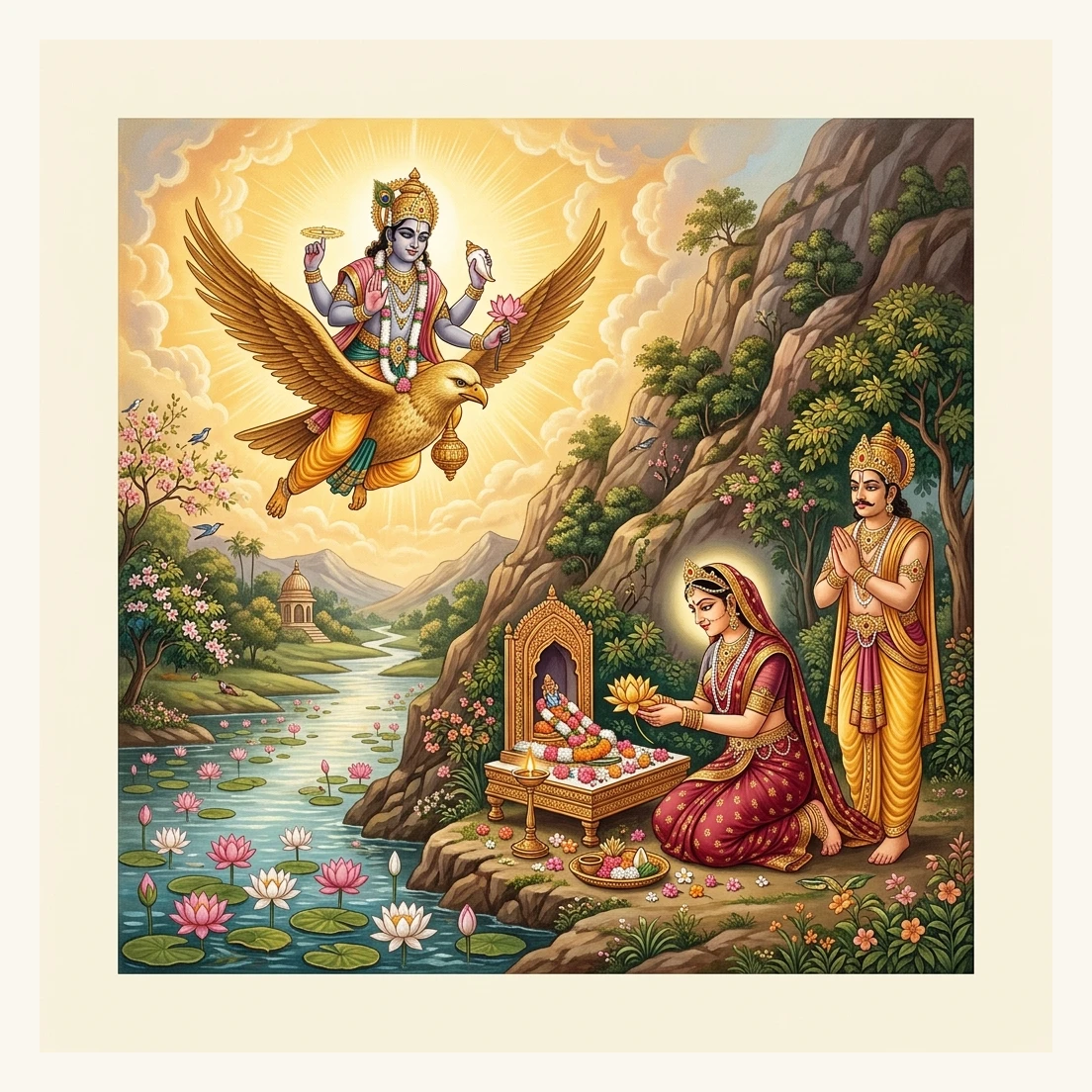
Lord Śrī Kṛṣṇa
Revealing transcendental glories
King Yudhiṣṭhira
Seeking liberation for all beings
ॐ नमो भगवते वासुदेवाय नमः
oṁ namo bhagavate vāsudevāya
The Legend of Padminī Ekādaśī
The sacred Purāṇic dialogue between Lord Śrī Kṛṣṇa and King Yudhiṣṭhira revealing the transcendental glories and vows of this holy vrata.
Liberation from accumulated sins and attainment of Viṣṇuloka.
The Tapasyā of Queen Padminī (Adhika Māsa Śukla)
King Yudhiṣṭhira asked Lord Śrī Kṛṣṇa with great curiosity:
“O Lord of all lords! What is the name of the Ekādaśī that comes in the bright fortnight of the extra leap month (Adhika Māsa / Puruṣottama Māsa)? What are its special rules and blessings?”
Lord Kṛṣṇa replied with deep joy:
“O King! The extra month belongs entirely to Me and is called Puruṣottama Māsa. The Ekādaśī of its bright fortnight is named Padminī Ekādaśī. It is so sacred that even Lord Brahmā cannot fully describe its glories! Listen to the ancient story of King Kṛtavīrya and Queen Padminī.”
The Sorrow of King Kṛtavīrya
In the Treta Yuga, there ruled a righteous king of the Hehaya dynasty named Kṛtavīrya. He had a hundred queens, but despite numerous sacrifices and penances, none of them bore him an heir. Sorrow weighed heavily upon the king’s heart as he saw his lineage facing an end.
Accompanied by his devoted and saintly queen Padminī, the daughter of King Hariścandra, Kṛtavīrya retired to Mount Gandhamādana to perform deep austerities. For thousands of years, the royal couple practiced penance, yet their prayer remained unanswered, and the king’s body grew thin and frail.
The Motherly Advice of Anusūyā Devī
Seeing her husband’s failing strength, Queen Padminī approached the venerable Mother Anusūyā, the chaste wife of Sage Atri, who lived nearby in a peaceful hermitage.
With folded hands, Queen Padminī wept: ‘O divine mother! My husband has performed austerities for ten thousand years, yet God has not granted us a son. Please tell me: what sacred fast can please the Supreme Lord and fulfill our longing?’
Mother Anusūyā embraced Padminī with deep maternal tenderness and said:
‘O gentle queen! Austerities done without the right timing may take long, but the extra month—Adhika Māsa—is the ocean of divine grace. In its bright fortnight falls Padminī Ekādaśī. Observe this fast with full faith, keeping a night vigil before Lord Hari. The Lord will surely hear your motherly prayer.‘
The Appearance of Lord Keśava
Queen Padminī observed the fast with complete devotion, offering flowers, water, and sweet fruits to Lord Nārāyaṇa. When Dvādaśī arrived, Lord Viṣṇu Himself appeared before her riding upon Garuḍa, radiant as a thousand suns!
‘O noble Queen Padminī!’ spoke the Lord in a voice like gentle thunder. ‘I am deeply pleased with your devotion and your observance of Padminī Ekādaśī. Ask whatever boon your heart desires!’
The queen bowed low and asked that her husband be granted a son who would be invincible to all foes and renowned across the universe. The Lord smiled and granted her wish.
In due course, Queen Padminī gave birth to the mighty and glorious Kārtavīryārjuna, whose fame and strength became legendary throughout the three worlds.
How to Observe Padmini Ekādaśī
- Sacred to Puruṣottama Month: Celebrated during the rare leap month (Adhika Māsa), this day carries magnified spiritual merit.
- Pūjā of Lord Keśava: Worship Lord Viṣṇu and Mother Lakṣmī with fragrant flowers, tulasī, and sweet rice naivedya.
- Gentle Fasting: Observe a peaceful fast suited to your strength.
- Lighting of Lamps: Light lamps in the evening to invite peace and prosperity into the home.
- Dvādaśī Pāraṇā: Next morning on Dvādaśī, offer food and gifts to the elderly or needy, and break your fast within the designated window.
Source: Skanda Purāṇa, ‘Padminī Ekādaśī Mahātmyam’. Translated and retold in classical devotional prose for contemplation and daily observance.
Deepen Your Spiritual Immersion
Support the preservation of authentic Vedic astronomy and scripture. Sanctum Patrons unlock deep commentaries, printable altar cards, and uninterrupted contemplation.
100% of contributions fund authentic scriptural research & planetary ephemeris maintenance.
Frequently Asked Questions
- What is Padmini Ekadasi?
- Padmini Ekadasi is the ekādaśī tithi, the eleventh lunar day, of the waxing fortnight (śukla pakṣa) of Adhika Māsa. Its name signifies "the lotus-named, of the leap month". Like every Ekadasi, it is observed by fasting and remembrance of Lord Viṣṇu. The sacred narrative and transcendental fruits (phalaśruti) of Padmini are preserved in Purāṇas.
- When is Padmini Ekadasi observed?
- Padmini Ekadasi falls on the ekādaśī tithi of the waxing fortnight of Adhika Māsa in the Hindu lunar calendar. The exact Gregorian date varies each year because the lunar calendar shifts relative to the solar year. Smārta and Vaiṣṇava observers occasionally fast on different civil days when the tithi spans two sunrises; see the timings table above for your locality's exact window.
- Who is worshipped on Padmini Ekadasi?
- Padmini Ekadasi, like all Ekadasis, is dedicated to Lord Śrī Kṛṣṇa / Mahāviṣṇu. Traditional devotional observances include chanting the Viṣṇu-sahasranāma, reading the corresponding chapter from Purāṇas, hearing the sacred katha, and meditating on the divine holy names.
- What is the spiritual fruit (phalaśruti) of observing Padmini Ekadasi?
- Canonical scriptures declare that observing Padmini Ekadasi bestows: Liberation from accumulated sins and attainment of Viṣṇuloka.. Across all sacred Ekadasis, the fast purifies consciousness, dissolves karmic impressions, and elevates the soul toward spiritual liberation.
- How is Padmini Ekadasi observed?
- A complete observance begins the prior evening (Daśamī) with a light sattvic meal, followed by a dedicated fast on Ekadasi day. Devotees may observe nirjala (without water), phalahāra (fruits, milk, and water), or a single sattvic meal according to physical capacity. Grains, rice, wheat, beans, onion, and garlic are strictly avoided. The fast concludes on Dvādaśī morning during the designated pāraṇa window with sacred Caraṇāmṛta and Tulasī.
- What is the difference between Smārta and Vaiṣṇava observance of Padmini Ekadasi?
- On most occasions, both traditions observe the fast on the identical date. A variation occurs during an atirikta Ekādaśī when the tithi spans two consecutive sunrises. Smārtas fast on the first day (Viddhā), while Vaiṣṇavas observe the fast on the subsequent morning (Śuddhā), ensuring adherence to Dvādaśī touching sunrise.