Pāpamocanī Ekādaśī
Purāṇic Glories & Sacred Lore · Chaitra · Kṛṣṇa Pakṣa
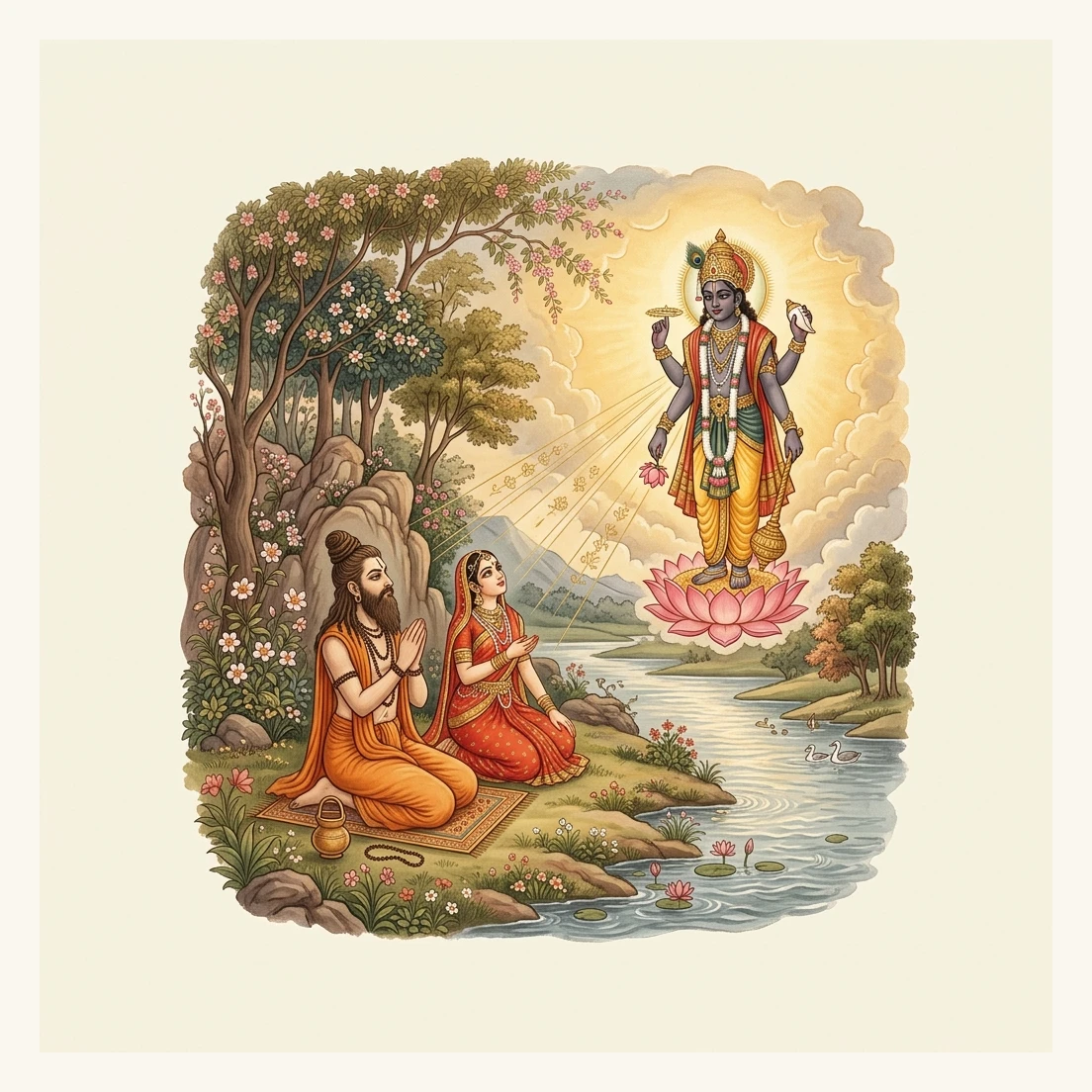
Lord Śrī Kṛṣṇa
Revealing transcendental glories
King Yudhiṣṭhira
Seeking liberation for all beings
ॐ नमो भगवते वासुदेवाय नमः
oṁ namo bhagavate vāsudevāya
The Legend of Pāpamocanī Ekādaśī
The sacred Purāṇic dialogue between Lord Śrī Kṛṣṇa and King Yudhiṣṭhira revealing the transcendental glories and vows of this holy vrata.
Liberation from accumulated sins and attainment of Viṣṇuloka.
The Compassionate Forgiveness of Pāpamocanī Ekādaśī
King Yudhiṣṭhira inquired:
“O Keśava! What is the name of the Ekādaśī that comes in the dark fortnight of the month of Caitra (March–April)? What is its fruit, and how does it release souls from past grief?”
Lord Śrī Kṛṣṇa answered with great warmth:
“O noble King! This sacred day is named Pāpamocanī Ekādaśī—the day that releases (mocana) the soul from all past mistakes and burdens (pāpa). In ancient times, Sage Lomaśa narrated this story to King Māndhātā. Listen to how divine compassion restored peace to Sage Medhāvī.”
The Hermitage of Sage Medhāvī
In the scenic forest of Caitraratha, where clear streams flowed amidst blossoming trees, the young sage Medhāvī, son of Sage Cyavana, practiced deep meditation. He was pure, handsome, and dedicated to austerities.
One spring evening, the celestial dancer Mañjughoṣā visited the forest. Captivated by the young sage’s radiant aura, she began to sing and dance near his hermitage. Bewitched by her beauty and sweet singing, Medhāvī’s meditation was broken, and his heart was drawn to her. Years slipped away unnoticed like a dream.
The Awakening of Remorse
One day, Mañjughoṣā bowed before Medhāvī and said: ‘O holy sage, please grant me permission to return to the heavenly realms of Lord Indra.’
Medhāvī smiled and replied: ‘Why do you rush, gentle maiden? You only arrived this morning.’
Mañjughoṣā looked down and answered softly: ‘O sage, not a single morning has passed, but fifty-seven earthly years have gone by since I came to your hermitage!’
Medhāvī was struck with shock and horror. He realized that half a century of his spiritual penance had evaporated in a haze of distraction. Overcome with sudden anger and grief, he cursed the maiden to become a restless spirit. But immediately, looking at her weeping form, deep remorse filled his own heart. He knew that anger and blame only deepened the wound.
The Healing Guidance of Sage Cyavana
Weeping with grief, Medhāvī returned to his father, the venerable Sage Cyavana. He prostrated in the dust and confessed his failure:
‘O father! I have lost decades of penance in delusion, and in anger I cursed an innocent soul. My heart burns with guilt. Is there any way for us to be forgiven?’
Sage Cyavana looked upon his weeping son with deep fatherly understanding:
‘My son, the grace of God is never exhausted by our human failings. In the dark fortnight of Caitra, observe the fast of Pāpamocanī Ekādaśī. Instruct Mañjughoṣā to observe it as well. Worshipping Lord Viṣṇu on this day with genuine repentance dissolves all stains and restores the soul to pristine purity.‘
Restoration of Divine Light
Both Medhāvī and Mañjughoṣā observed Pāpamocanī Ekādaśī with complete sincerity, weeping tears of true repentance before Lord Hari. They spent the entire day and night in prayer, fasting, and contemplation.
By the power of that single holy day, the curse was dissolved. Mañjughoṣā regained her radiant celestial form and ascended to heaven with gratitude, while Sage Medhāvī felt his heart cleansed of all guilt. His spiritual brilliance returned tenfold, and he resumed his meditation with profound peace.
How to Observe Papamochani Ekādaśī
- Repentance & Forgiveness: Begin the day by letting go of guilt over past errors and forgiving those who may have caused you sorrow.
- Worship of Lord Viṣṇu: Offer fresh spring blossoms, tulasī, and incense to the deity.
- Gentle Fasting: Observe a peaceful fast suited to your health.
- Reading Sacred Katha: Read or listen to the stories of divine mercy throughout the day.
- Dvādaśī Pāraṇā: Next morning on Dvādaśī, offer food and charity to the needy and break your fast within the morning window.
Source: Padma Purāṇa, Uttara Khaṇḍa, Chapter 48, ‘Pāpamocanī Ekādaśī Mahātmyam’. Translated and retold in classical devotional prose for contemplation and daily observance.
Deepen Your Spiritual Immersion
Support the preservation of authentic Vedic astronomy and scripture. Sanctum Patrons unlock deep commentaries, printable altar cards, and uninterrupted contemplation.
100% of contributions fund authentic scriptural research & planetary ephemeris maintenance.
Frequently Asked Questions
- What is Papamochani Ekadasi?
- Papamochani Ekadasi is the ekādaśī tithi, the eleventh lunar day, of the waning fortnight (kṛṣṇa pakṣa) of Chaitra. Its name signifies "the destroyer of sin". Like every Ekadasi, it is observed by fasting and remembrance of Lord Viṣṇu. The sacred narrative and transcendental fruits (phalaśruti) of Papamochani are preserved in Purāṇas.
- When is Papamochani Ekadasi observed?
- Papamochani Ekadasi falls on the ekādaśī tithi of the waning fortnight of Chaitra in the Hindu lunar calendar. The exact Gregorian date varies each year because the lunar calendar shifts relative to the solar year. Smārta and Vaiṣṇava observers occasionally fast on different civil days when the tithi spans two sunrises; see the timings table above for your locality's exact window.
- Who is worshipped on Papamochani Ekadasi?
- Papamochani Ekadasi, like all Ekadasis, is dedicated to Lord Śrī Kṛṣṇa / Mahāviṣṇu. Traditional devotional observances include chanting the Viṣṇu-sahasranāma, reading the corresponding chapter from Purāṇas, hearing the sacred katha, and meditating on the divine holy names.
- What is the spiritual fruit (phalaśruti) of observing Papamochani Ekadasi?
- Canonical scriptures declare that observing Papamochani Ekadasi bestows: Liberation from accumulated sins and attainment of Viṣṇuloka.. Across all sacred Ekadasis, the fast purifies consciousness, dissolves karmic impressions, and elevates the soul toward spiritual liberation.
- How is Papamochani Ekadasi observed?
- A complete observance begins the prior evening (Daśamī) with a light sattvic meal, followed by a dedicated fast on Ekadasi day. Devotees may observe nirjala (without water), phalahāra (fruits, milk, and water), or a single sattvic meal according to physical capacity. Grains, rice, wheat, beans, onion, and garlic are strictly avoided. The fast concludes on Dvādaśī morning during the designated pāraṇa window with sacred Caraṇāmṛta and Tulasī.
- What is the difference between Smārta and Vaiṣṇava observance of Papamochani Ekadasi?
- On most occasions, both traditions observe the fast on the identical date. A variation occurs during an atirikta Ekādaśī when the tithi spans two consecutive sunrises. Smārtas fast on the first day (Viddhā), while Vaiṣṇavas observe the fast on the subsequent morning (Śuddhā), ensuring adherence to Dvādaśī touching sunrise.