Pāpāṅkuśā Ekādaśī
Purāṇic Glories & Sacred Lore · Āśvina · Śukla Pakṣa
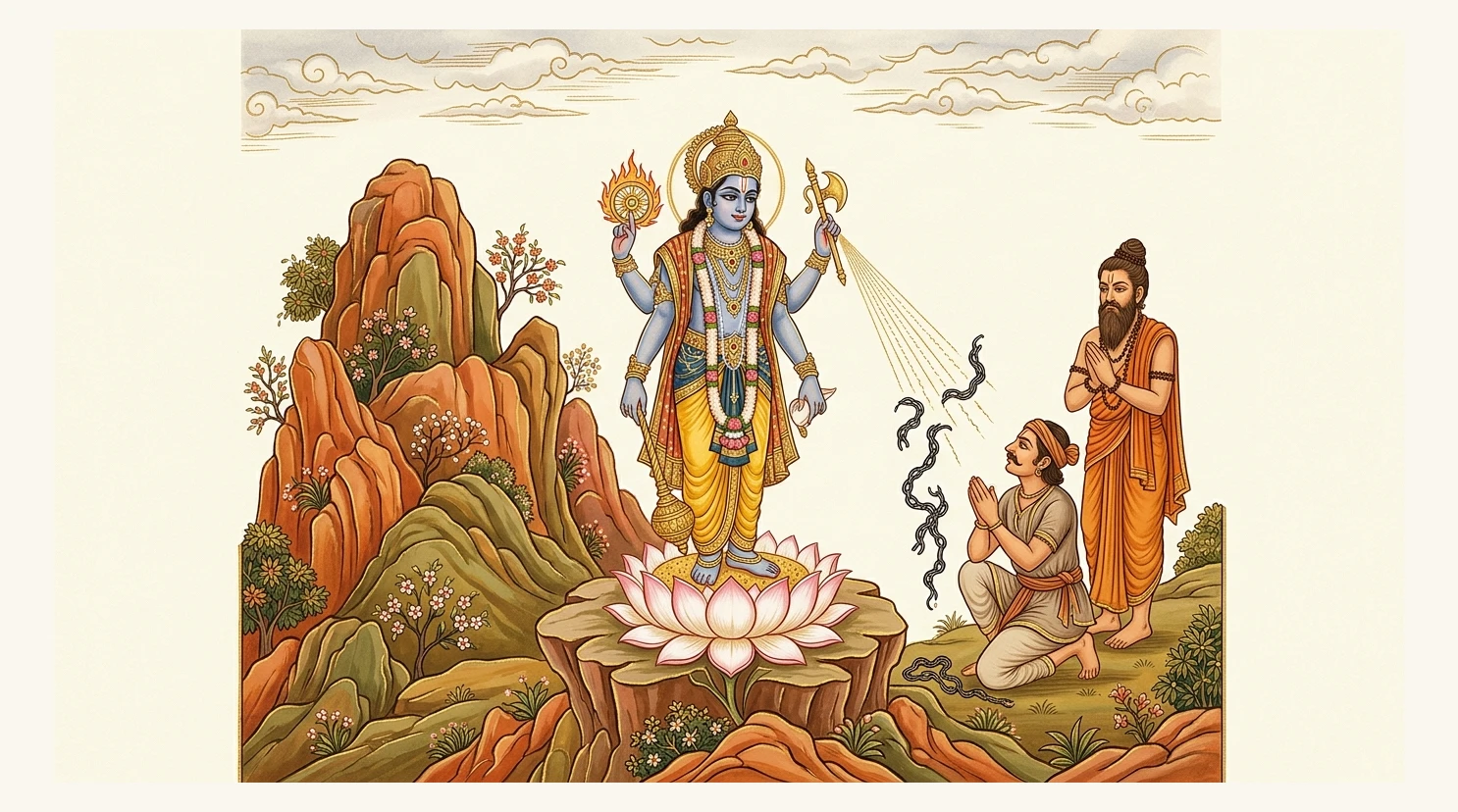
Lord Śrī Kṛṣṇa
Revealing transcendental glories
King Yudhiṣṭhira
Seeking liberation for all beings
ॐ नमो भगवते वासुदेवाय नमः
oṁ namo bhagavate vāsudevāya
The Legend of Pāpāṅkuśā Ekādaśī
The sacred Purāṇic dialogue between Lord Śrī Kṛṣṇa and King Yudhiṣṭhira revealing the transcendental glories and vows of this holy vrata.
Liberation from accumulated sins and attainment of Viṣṇuloka.
The Divine Hook of Grace
In the royal court of Indraprastha, King Yudhiṣṭhira folded his hands and addressed Lord Śrī Kṛṣṇa with great reverence:
“O Keśava! What is the name of the Ekādaśī that comes in the bright fortnight of the month of Āśvina (September–October)? What is its divine significance, and which form of the Lord is worshipped on this holy day? Please tell me in your loving words, for hearing your nectar-like speech brings peace to my heart.”
Lord Kṛṣṇa smiled with boundless compassion and replied:
“O righteous King! Listen attentively. The sacred Ekādaśī of this fortnight is known across the three worlds as Pāpāṅkuśā Ekādaśī. On this day, a devotee should worship Me in the form of Lord Padmanābha—the supreme Lord from whose navel blossoms the cosmic lotus carrying Brahmā, the creator.”
The Elephant and the Golden Hook
“Do you know why it is named Pāpāṅkuśā, O King? In Sanskrit, pāpa means our past misdeeds, worries, and heavy karmic burdens; aṅkuśa is the iron hook (the goad) that an elephant trainer uses to gently yet firmly steer a magnificent, powerful elephant.
Our restless mind, driven by unchecked desires, is just like a wild elephant charging through a dense forest. It can easily trample our inner peace. The sacred fast of Ekādaśī acts as the golden hook of grace. It halts the wild momentum of the senses, tames our old regrets, and directs our entire consciousness back toward God.”
The Hunter on Mount Vindhya
Lord Kṛṣṇa then shared the moving story of a man whose life was completely transformed by this day:
“In ancient times, on the rugged slopes of Mount Vindhya, lived a fierce hunter and fowler named Krodhana. His whole life had been spent wandering the hills, trapping birds and wild beasts, driven by anger, selfishness, and violence. He had never visited a temple, never offered a prayer, and never spoken a kind word.
As old age crept over him, his body grew frail and sickness arrived. One cold evening, gazing at the darkening sky, the terrifying realization of death struck his heart. He saw the dark messengers of Yama waiting in the shadows. Shivering with fear and grief, he realized the immense weight of the sins he had gathered.
Trembling and weeping, Krodhana dragged himself to the peaceful ashram of the revered sage Aṅgiras. He fell prostrate at the sage’s holy feet, crying out:
‘O gentle sage! Have mercy on me! My entire youth was wasted in cruelty. I have no good deeds to show. Death is near, and I am terrified of the darkness that awaits me. Is there any way for a fallen soul like me to be saved?’
Sage Aṅgiras looked upon the weeping old hunter with profound maternal pity. He gently lifted him up and said:
‘Take courage, my son. Do not despair. The grace of the Supreme Lord is infinitely greater than all the sins of mankind. In just a few days, the bright eleventh day of Āśvina will arrive: Pāpāṅkuśā Ekādaśī. On that day, observe a peaceful fast. Offer fresh water, flowers, and your sincere tears to Lord Padmanābha. Chant His holy name with repentance and love, and stay awake in prayer through the night.’
Krodhana listened with tears of gratitude. When the sacred dawn of Pāpāṅkuśā Ekādaśī arrived, he sat by the river, bathed, and observed the fast with complete sincerity. He had nothing material to give, but he gave his surrendered heart. When his final breath left his body shortly after, a radiant celestial chariot descended from the heavens. The messengers of Viṣṇu, shining like the morning sun, crowned him with divine garlands and escorted his liberated soul straight to Vaikuṇṭha, the eternal abode of joy.”
The Sacred Unity of Śiva and Viṣṇu
Lord Kṛṣṇa then revealed a timeless truth that every seeker should hold close to their heart:
“O Yudhiṣṭhira, remember this always: A true devotee of Viṣṇu never harbors ill-will toward Lord Śiva, and a devotee of Śiva never disrespects Lord Viṣṇu.
They are one in heart and one in essence. A person who claims to love Me but speaks ill of Śiva loses all their spiritual merit. And one who worships Śiva while scorning Me falls away from the truth. Real devotion brings universal kindness, not sectarian pride.”
Blessings Across Thirty Family Lines
“The blessings of Pāpāṅkuśā Ekādaśī are vast and boundless,” continued the Lord. “Even performing a thousand horse-sacrifices (Aśvamedha) does not equal one sixteenth of the fruit of keeping this fast.
Most wondrous of all, this sacred day carries the power to liberate thirty ancestral lines:
- Ten generations on the mother’s side,
- Ten generations on the father’s side, and
- Ten generations on the spouse’s side.
When a mother, father, son, or daughter fasts with love on this day, the purifying light of their prayer reaches backward into the unseen realms, lifting thirty generations of family ancestors into realms of light and peace.”
A Thought for Daily Life
Lord Kṛṣṇa concluded with a simple, memorable thought:
“He whose days pass by without any act of kindness or remembrance of God breathes, yet does not truly live—just like the bellows of a village blacksmith, which moves air in and out but has no life of its own.
Therefore, O King, let this day be a day of true living. Rest your body, calm your thoughts, speak gently to all, and let your heart rest in Lord Padmanābha.”
How to Observe Pāpāṅkuśā Ekādaśī
- Morning Resolve (Sankalpa): Wake up early at sunrise, bathe peacefully, and offer water and a small lamp to Lord Padmanābha (Viṣṇu).
- Mindful Fasting: Fast according to your health. A complete water-only fast (nirjala), a fruit and milk fast (phalāhāra), or a single light sattvic meal is equally blessed. What matters most is a quiet mind free from anger and gossip.
- Chanting: Gently chant the sacred mantra:
Oṁ Namo Bhagavate Vāsudevāya or Oṁ Padmanābhāya Namaḥ. - Breaking the Fast (Pāraṇa): Break the fast the next morning on Dvādaśī within the auspicious pāraṇa window after offering food to the Lord or an elder.
Source: Padma Purāṇa, Uttara Khaṇḍa, Chapter 59, “Pāpāṅkuśā Ekādaśī Mahātmyam.” The classic Sanskrit verses record the dialogue between King Yudhiṣṭhira and Bhagavān Śrī Kṛṣṇa on the supreme purifying grace of Lord Padmanābha.
Deepen Your Spiritual Immersion
Support the preservation of authentic Vedic astronomy and scripture. Sanctum Patrons unlock deep commentaries, printable altar cards, and uninterrupted contemplation.
100% of contributions fund authentic scriptural research & planetary ephemeris maintenance.
Frequently Asked Questions
- What is Papankusha Ekadasi?
- Papankusha Ekadasi is the ekādaśī tithi, the eleventh lunar day, of the waxing fortnight (śukla pakṣa) of Āśvina. Its name signifies "the goad upon sin". Like every Ekadasi, it is observed by fasting and remembrance of Lord Viṣṇu. The sacred narrative and transcendental fruits (phalaśruti) of Papankusha are preserved in Purāṇas.
- When is Papankusha Ekadasi observed?
- Papankusha Ekadasi falls on the ekādaśī tithi of the waxing fortnight of Āśvina in the Hindu lunar calendar. The exact Gregorian date varies each year because the lunar calendar shifts relative to the solar year. Smārta and Vaiṣṇava observers occasionally fast on different civil days when the tithi spans two sunrises; see the timings table above for your locality's exact window.
- Who is worshipped on Papankusha Ekadasi?
- Papankusha Ekadasi, like all Ekadasis, is dedicated to Lord Śrī Kṛṣṇa / Mahāviṣṇu. Traditional devotional observances include chanting the Viṣṇu-sahasranāma, reading the corresponding chapter from Purāṇas, hearing the sacred katha, and meditating on the divine holy names.
- What is the spiritual fruit (phalaśruti) of observing Papankusha Ekadasi?
- Canonical scriptures declare that observing Papankusha Ekadasi bestows: Liberation from accumulated sins and attainment of Viṣṇuloka.. Across all sacred Ekadasis, the fast purifies consciousness, dissolves karmic impressions, and elevates the soul toward spiritual liberation.
- How is Papankusha Ekadasi observed?
- A complete observance begins the prior evening (Daśamī) with a light sattvic meal, followed by a dedicated fast on Ekadasi day. Devotees may observe nirjala (without water), phalahāra (fruits, milk, and water), or a single sattvic meal according to physical capacity. Grains, rice, wheat, beans, onion, and garlic are strictly avoided. The fast concludes on Dvādaśī morning during the designated pāraṇa window with sacred Caraṇāmṛta and Tulasī.
- What is the difference between Smārta and Vaiṣṇava observance of Papankusha Ekadasi?
- On most occasions, both traditions observe the fast on the identical date. A variation occurs during an atirikta Ekādaśī when the tithi spans two consecutive sunrises. Smārtas fast on the first day (Viddhā), while Vaiṣṇavas observe the fast on the subsequent morning (Śuddhā), ensuring adherence to Dvādaśī touching sunrise.