Parivartinī Ekādaśī
Purāṇic Glories & Sacred Lore · Bhādrapada · Śukla Pakṣa
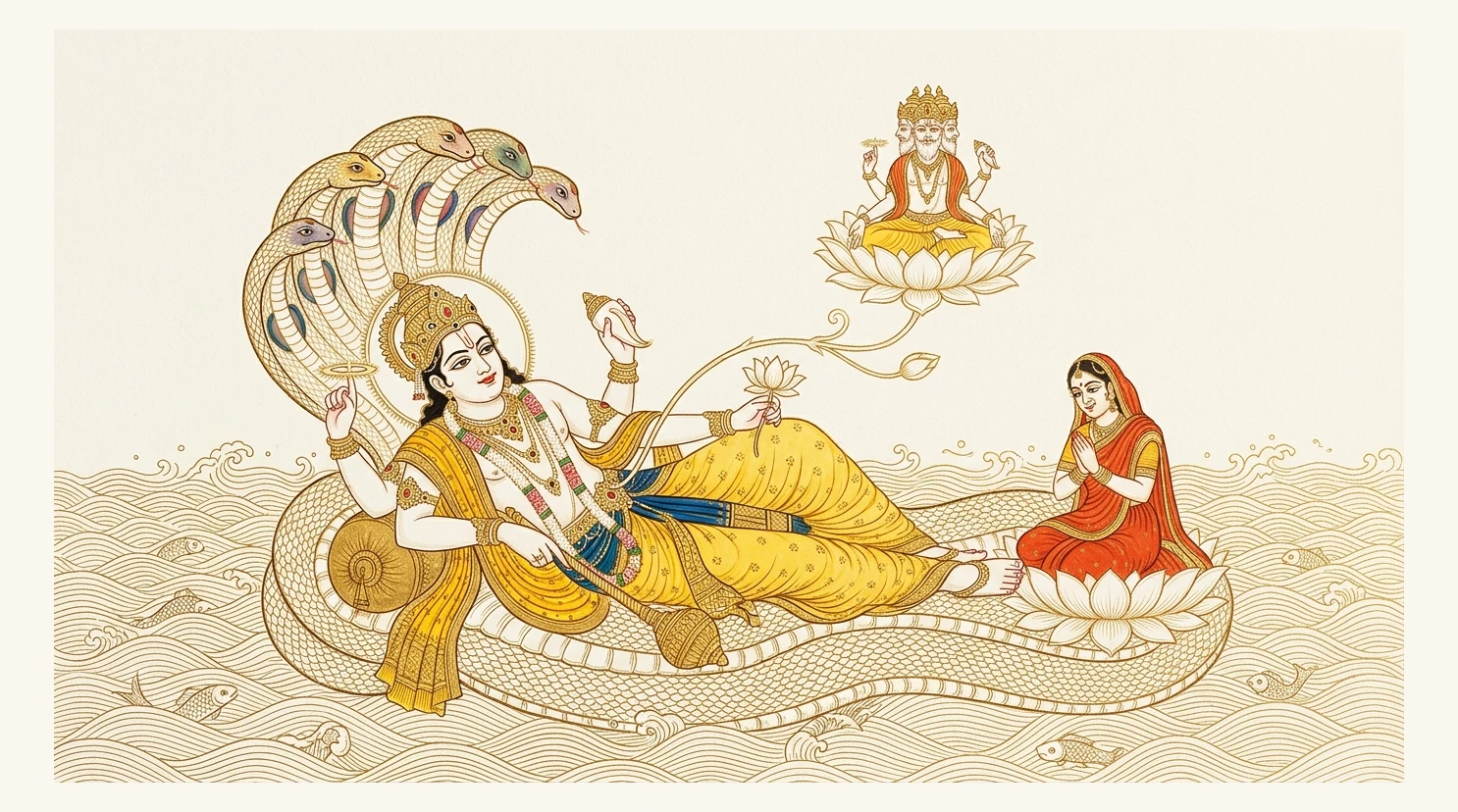
Lord Śrī Kṛṣṇa
Revealing transcendental glories
King Yudhiṣṭhira
Seeking liberation for all beings
ॐ नमो भगवते वासुदेवाय नमः
oṁ namo bhagavate vāsudevāya
The Legend of Parivartinī Ekādaśī
The sacred Purāṇic dialogue between Lord Śrī Kṛṣṇa and King Yudhiṣṭhira revealing the transcendental glories and vows of this holy vrata.
Liberation from accumulated sins and attainment of Viṣṇuloka.
The Lord Turns in Sacred Repose (Parivartinī / Vāmana Ekādaśī)
King Yudhiṣṭhira asked Lord Śrī Kṛṣṇa:
“O Keśava! What is the name of the Ekādaśī that comes in the bright fortnight of Bhādrapada (August–September)? Why is it called Parivartinī, and which divine form of Yours is worshipped on this day?”
Lord Kṛṣṇa replied with deep joy:
“O King! This day is celebrated as Parivartinī Ekādaśī (also called Vāmana Ekādaśī or Pārśva Ekādaśī). In My cosmic yogic sleep on the serpent Śeṣa during the monsoon months, I turn from My left side to My right side on this holy day (parivartana). On this day, I appeared in ancient times as the divine dwarf-incarnation, Lord Vāmana, to bless the noble King Bali. Whoever observes this fast is freed from all sins across the three worlds.”
The Sacrifice of King Bali
Lord Kṛṣṇa narrated the beloved story: In ancient times, the Asura king Bali, grandson of the great devotee Prahlāda, conquered all three worlds through his mighty penance and righteous rule. Although an Asura by birth, King Bali was deeply devoted to truth, honored brāhmaṇas, and never refused any request made by a beggar or seeker.
To consolidate his dominion, King Bali organized a magnificent horse-sacrifice on the northern banks of the Narmadā river. The gods, displaced from heaven, prayed to Lord Viṣṇu for protection.
The Arrival of the Divine Dwarf
In response to the prayers of Mother Aditī and the gods, Lord Viṣṇu took birth as the enchanting young sage Vāmana—holding a water pot in one hand and an umbrella in the other, radiating the brilliance of a thousand suns.
When Lord Vāmana entered the sacrificial arena of King Bali, the entire assembly stood up in awe. King Bali washed the lotus feet of the divine child, placed the sacred water on his own head, and said with folded hands:
‘Welcome, O holy sage! Ask whatever you desire—gold, palaces, elephants, or fertile lands—and it is yours.’
Lord Vāmana smiled gently and replied:
‘O King! I ask for neither gold nor kingdoms. I desire only as much land as I can measure in three strides of My feet!’
King Bali laughed, surprised by the modesty of the request, and readily poured water from his pot to confirm the gift, despite the warnings of his guru Śukrācārya.
The Cosmic Strides of Trivikrama
As soon as the pledge was sealed, Lord Vāmana began to expand into His infinite, cosmic form as Trivikrama! With His first stride, He covered the entire earth, all its mountains, rivers, and oceans. With His second stride, He covered the heavens, the stars, and the celestial realms. There was no space left for the third stride!
Lord Trivikrama looked down upon Bali and asked: ‘O King, where shall I place My third stride?’
King Bali, completely humbled and filled with pure surrender, bowed low and offered his own head:
‘O Lord of the Universe! All lands and heavens belong to You. Place Your holy foot upon my head, for I surrender my very self to You!’
Deeply pleased by Bali’s complete surrender (ātma-nivedanam), Lord Vāmana placed His lotus foot upon Bali’s head, elevating him to the realm of Sutala, more opulent than heaven itself, and promised to dwell forever as his personal guardian at his palace gates.
How to Observe Parivartini Ekādaśī
- Worship of Lord Vāmana: Meditate upon Lord Viṣṇu as the youthful Vāmanadeva. Offer yellow flowers, yogurt-rice, and tulasī.
- Practicing Surrender: Reflect on the humility and selflessness of King Bali, releasing pride and ego.
- Gentle Fasting: Observe a peaceful fast suited to your strength.
- Night Vigil: Sing sacred hymns or chant the Nārāyaṇa Sūkta.
- Dvādaśī Pāraṇā: Next morning on Dvādaśī, break your fast within the morning window after offering charity.
Source: Padma Purāṇa, Uttara Khaṇḍa, Chapter 55, ‘Parivartinī Ekādaśī Mahātmyam’. Translated and retold in classical devotional prose for contemplation and daily observance.
Deepen Your Spiritual Immersion
Support the preservation of authentic Vedic astronomy and scripture. Sanctum Patrons unlock deep commentaries, printable altar cards, and uninterrupted contemplation.
100% of contributions fund authentic scriptural research & planetary ephemeris maintenance.
Frequently Asked Questions
- What is Parivartini Ekadasi?
- Parivartini Ekadasi is the ekādaśī tithi, the eleventh lunar day, of the waxing fortnight (śukla pakṣa) of Bhādrapada. Its name signifies "the turning of the lord". Like every Ekadasi, it is observed by fasting and remembrance of Lord Viṣṇu. The sacred narrative and transcendental fruits (phalaśruti) of Parivartini are preserved in Purāṇas.
- When is Parivartini Ekadasi observed?
- Parivartini Ekadasi falls on the ekādaśī tithi of the waxing fortnight of Bhādrapada in the Hindu lunar calendar. The exact Gregorian date varies each year because the lunar calendar shifts relative to the solar year. Smārta and Vaiṣṇava observers occasionally fast on different civil days when the tithi spans two sunrises; see the timings table above for your locality's exact window.
- Who is worshipped on Parivartini Ekadasi?
- Parivartini Ekadasi, like all Ekadasis, is dedicated to Lord Śrī Kṛṣṇa / Mahāviṣṇu. Traditional devotional observances include chanting the Viṣṇu-sahasranāma, reading the corresponding chapter from Purāṇas, hearing the sacred katha, and meditating on the divine holy names.
- What is the spiritual fruit (phalaśruti) of observing Parivartini Ekadasi?
- Canonical scriptures declare that observing Parivartini Ekadasi bestows: Liberation from accumulated sins and attainment of Viṣṇuloka.. Across all sacred Ekadasis, the fast purifies consciousness, dissolves karmic impressions, and elevates the soul toward spiritual liberation.
- How is Parivartini Ekadasi observed?
- A complete observance begins the prior evening (Daśamī) with a light sattvic meal, followed by a dedicated fast on Ekadasi day. Devotees may observe nirjala (without water), phalahāra (fruits, milk, and water), or a single sattvic meal according to physical capacity. Grains, rice, wheat, beans, onion, and garlic are strictly avoided. The fast concludes on Dvādaśī morning during the designated pāraṇa window with sacred Caraṇāmṛta and Tulasī.
- What is the difference between Smārta and Vaiṣṇava observance of Parivartini Ekadasi?
- On most occasions, both traditions observe the fast on the identical date. A variation occurs during an atirikta Ekādaśī when the tithi spans two consecutive sunrises. Smārtas fast on the first day (Viddhā), while Vaiṣṇavas observe the fast on the subsequent morning (Śuddhā), ensuring adherence to Dvādaśī touching sunrise.