Prabodhinī Ekādaśī
Purāṇic Glories & Sacred Lore · Kārtika · Śukla Pakṣa
Lord Śrī Kṛṣṇa
Revealing transcendental glories
King Yudhiṣṭhira
Seeking liberation for all beings
ॐ नमो भगवते वासुदेवाय नमः
oṁ namo bhagavate vāsudevāya
The Legend of Prabodhinī Ekādaśī
The sacred Purāṇic dialogue between Lord Śrī Kṛṣṇa and King Yudhiṣṭhira revealing the transcendental glories and vows of this holy vrata.
Liberation from accumulated sins and attainment of Viṣṇuloka.
The Divine Awakening and Tulasī Vivāha (Prabodhinī Ekādaśī)
King Yudhiṣṭhira said with overflowing devotion:
“O Keśava, soul of the cosmos! Please tell me of the glorious Ekādaśī that marks the end of Cāturmāsya in the bright fortnight of Kārtika (October–November). What are its rites and celebrations?”
Lord Kṛṣṇa answered with great joy:
“O righteous King! This most beloved and auspicious day is celebrated across all worlds as Prabodhinī Ekādaśī (also called Devotthāna or Hari-Prabodhinī). On this day, I awaken from My four-month yogic slumber. The waters of the earth become calm, the skies turn clear, and the sacred wedding of Mother Tulasī and Lord Śālagrāma (Tulasī Vivāha) begins. Even the sins of a hundred lifetimes are dissolved when a devotee lights lamps and offers prayers on this day!”
The Awakening of the Lord
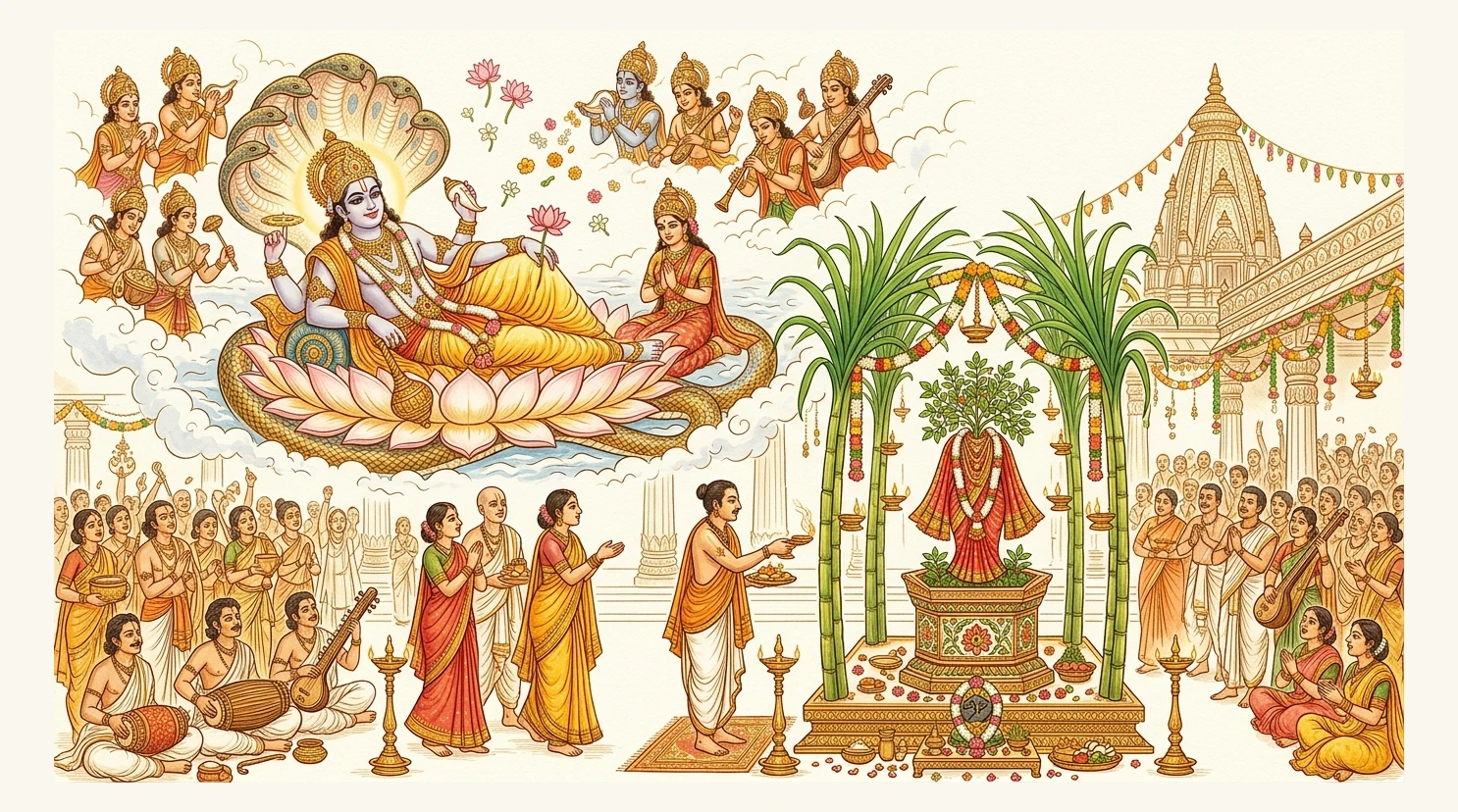
For four sacred monsoon months, devotees observe disciplines, vows, and prayers while Lord Viṣṇu rests in divine repose. On the eleventh day of the bright fortnight of Kārtika, sages and celestial beings gather around the milk ocean to gently awaken the Lord with melodious songs, the blowing of conch shells, and the offering of fresh lotus flowers.
As the Lord opens His lotus eyes, a wave of grace and joy sweeps across the universe. Auspicious ceremonies, weddings, and sacred beginnings, which were paused during Cāturmāsya, now joyfully resume across the earth.
The Divine Wedding of Tulasī Devī (Tulasī Vivāha)
Prabodhinī Ekādaśī marks the commencement of the sacred Tulasī Vivāha festival. In every home and temple courtyard, the sacred Tulasī plant is lovingly adorned as a bride with red silk, turmeric, vermilion, and fragrant flowers. Beside her, Lord Viṣṇu is installed in His sacred Śālagrāma stone form.
Priests chant traditional wedding mantras as the divine union of devotion (Tulasī) and divinity (Nārāyaṇa) is celebrated. Performing or witnessing this holy wedding is said to bestow the merit of giving away a daughter in sacred marriage (kanyādāna) and invites eternal peace, harmony, and prosperity into the household.
The Matchless Power of Kārtika Vows
Lord Kṛṣṇa declared to King Yudhiṣṭhira:
‘O King! One who stays awake on the night of Prabodhinī Ekādaśī, singing hymns and lighting ghee lamps before Me, earns spiritual merit greater than performing ten thousand sacrifices. Even if one could not observe fasts during the rest of the year, keeping this single day of Prabodhinī pleases Me beyond measure.‘
How to Observe Prabodhini Ekādaśī
- Awakening Prayers: Rise early, bathe peacefully, and offer prayers to awaken the divine presence in your heart: Uttisṭha Uttisṭha Govinda, Uttisṭha Garuḍadhvaja.
- Tulasī Vivāha Ceremony: Cleanse around the Tulasī plant, decorate with sugarcane stalks, marigolds, and rangoli, and perform a loving pūjā.
- Lighting of Lamps (Dīpa-Dāna): Light rows of ghee lamps in the evening before the altar and around the house.
- Joyful Fasting: Observe fasting during the day with fruits, milk, or pure water.
- Dvādaśī Pāraṇā: Next morning on Dvādaśī, offer sweets and prasāda to family and friends, and break your fast within the morning window.
Source: Padma Purāṇa, Uttara Khaṇḍa, Chapter 60, ‘Prabodhinī Ekādaśī Mahātmyam’. Translated and retold in classical devotional prose for contemplation and daily observance.
Deepen Your Spiritual Immersion
Support the preservation of authentic Vedic astronomy and scripture. Sanctum Patrons unlock deep commentaries, printable altar cards, and uninterrupted contemplation.
100% of contributions fund authentic scriptural research & planetary ephemeris maintenance.
Frequently Asked Questions
- What is Prabodhini Ekadasi?
- Prabodhini Ekadasi is the ekādaśī tithi, the eleventh lunar day, of the waxing fortnight (śukla pakṣa) of Kārtika. Its name signifies "the lord's awakening". Like every Ekadasi, it is observed by fasting and remembrance of Lord Viṣṇu. The sacred narrative and transcendental fruits (phalaśruti) of Prabodhini are preserved in Purāṇas.
- When is Prabodhini Ekadasi observed?
- Prabodhini Ekadasi falls on the ekādaśī tithi of the waxing fortnight of Kārtika in the Hindu lunar calendar. The exact Gregorian date varies each year because the lunar calendar shifts relative to the solar year. Smārta and Vaiṣṇava observers occasionally fast on different civil days when the tithi spans two sunrises; see the timings table above for your locality's exact window.
- Who is worshipped on Prabodhini Ekadasi?
- Prabodhini Ekadasi, like all Ekadasis, is dedicated to Lord Śrī Kṛṣṇa / Mahāviṣṇu. Traditional devotional observances include chanting the Viṣṇu-sahasranāma, reading the corresponding chapter from Purāṇas, hearing the sacred katha, and meditating on the divine holy names.
- What is the spiritual fruit (phalaśruti) of observing Prabodhini Ekadasi?
- Canonical scriptures declare that observing Prabodhini Ekadasi bestows: Liberation from accumulated sins and attainment of Viṣṇuloka.. Across all sacred Ekadasis, the fast purifies consciousness, dissolves karmic impressions, and elevates the soul toward spiritual liberation.
- How is Prabodhini Ekadasi observed?
- A complete observance begins the prior evening (Daśamī) with a light sattvic meal, followed by a dedicated fast on Ekadasi day. Devotees may observe nirjala (without water), phalahāra (fruits, milk, and water), or a single sattvic meal according to physical capacity. Grains, rice, wheat, beans, onion, and garlic are strictly avoided. The fast concludes on Dvādaśī morning during the designated pāraṇa window with sacred Caraṇāmṛta and Tulasī.
- What is the difference between Smārta and Vaiṣṇava observance of Prabodhini Ekadasi?
- On most occasions, both traditions observe the fast on the identical date. A variation occurs during an atirikta Ekādaśī when the tithi spans two consecutive sunrises. Smārtas fast on the first day (Viddhā), while Vaiṣṇavas observe the fast on the subsequent morning (Śuddhā), ensuring adherence to Dvādaśī touching sunrise.