Ramā Ekādaśī
Purāṇic Glories & Sacred Lore · Kārtika · Kṛṣṇa Pakṣa
Lord Śrī Kṛṣṇa
Revealing transcendental glories
King Yudhiṣṭhira
Seeking liberation for all beings
ॐ नमो भगवते वासुदेवाय नमः
oṁ namo bhagavate vāsudevāya
The Legend of Ramā Ekādaśī
The sacred Purāṇic dialogue between Lord Śrī Kṛṣṇa and King Yudhiṣṭhira revealing the transcendental glories and vows of this holy vrata.
Liberation from accumulated sins and attainment of Viṣṇuloka.
The Unfailing Devotion of Princess Candrabhāgā (Ramā Ekādaśī)
King Yudhiṣṭhira inquired of Lord Śrī Kṛṣṇa:
“O Lord of all creation! What is the name of the Ekādaśī that arrives in the dark fortnight of Kārtika (October–November), just before Dīpāvalī? What are its glories?”
Lord Kṛṣṇa smiled with warmth and replied:
“O King! This holy day is named Ramā Ekādaśī, after Mother Lakṣmī (Ramā), the eternal consort of Lord Viṣṇu. It has the divine power to wash away heavy karmic burdens and bestow peace, spiritual prosperity, and liberation. Listen to the moving story of Princess Candrabhāgā and Prince Śobhana.”
The Kingdom of Mucukunda
In ancient days, there ruled a saintly king named Mucukunda, an intimate friend of Lord Indra. Mucukunda’s kingdom was renowned for its strict spiritual discipline: on every Ekādaśī, every citizen—young and old, rich and poor, and even domestic animals—observed a peaceful fast.
King Mucukunda had a daughter named Candrabhāgā, who was beautiful, wise, and devoted to Lord Hari from her earliest childhood. She was married to Prince Śobhana, the son of King Candrasena. Śobhana was a gentle and kind prince, but his physical constitution was frail, and he found it difficult to endure hunger.
The Dilemma of Prince Śobhana
One autumn, Prince Śobhana arrived at his father-in-law’s palace to visit his beloved wife. It happened to be the sacred month of Kārtika, and the drum sounded across the city proclaiming that Ramā Ekādaśī would be observed the following dawn.
Prince Śobhana was filled with anxiety. He said to Candrabhāgā: ‘My beloved! In your father’s palace, even horses and elephants do not eat on Ekādaśī. My body is weak, and I cannot bear hunger for a whole day. What shall I do?’
Candrabhāgā took his hand with tender love and answered: ‘O prince! If you eat here, it will bring criticism upon your honor. Have faith in Lord Hari! Surrender your weakness to the Lord, and He will sustain you through the day.’
Moved by his wife’s faith, Śobhana resolved to keep the fast alongside everyone.
Faith and the Celestial City
Throughout the day and night of Ramā Ekādaśī, Prince Śobhana fasted and chanted the names of the Lord. But his frail body was overwhelmed by exhaustion, and just before sunrise on Dvādaśī, his gentle soul departed his body.
Candrabhāgā was heartbroken, but her deep devotion sustained her. She knew that whoever passes away while observing a sacred Ekādaśī fast attains a high spiritual destination. Instead of giving in to despair, she remained in her father’s home, dedicating her life to prayers, charity, and steadfast Ekādaśī fasts.
By the spiritual power of his Ramā Ekādaśī fast, Prince Śobhana was reborn as a radiant celestial king ruling a magnificent, jewel-encrusted city on Mount Mandara! When a brāhmaṇa traveler from Mucukunda’s kingdom recognized Śobhana on the mountain, Śobhana told him with joy: ‘My celestial kingdom was granted by Ramā Ekādaśī, but it needs the lifelong devotion of my beloved Candrabhāgā to make it eternal!’
When Candrabhāgā heard this, she traveled with the brāhmaṇa to Mount Mandara. Bathed in sacred water and shining with decades of Ekādaśī merit, she was reunited with her beloved husband, and together they ruled in joy and peace for thousands of years.
How to Observe Rama Ekādaśī
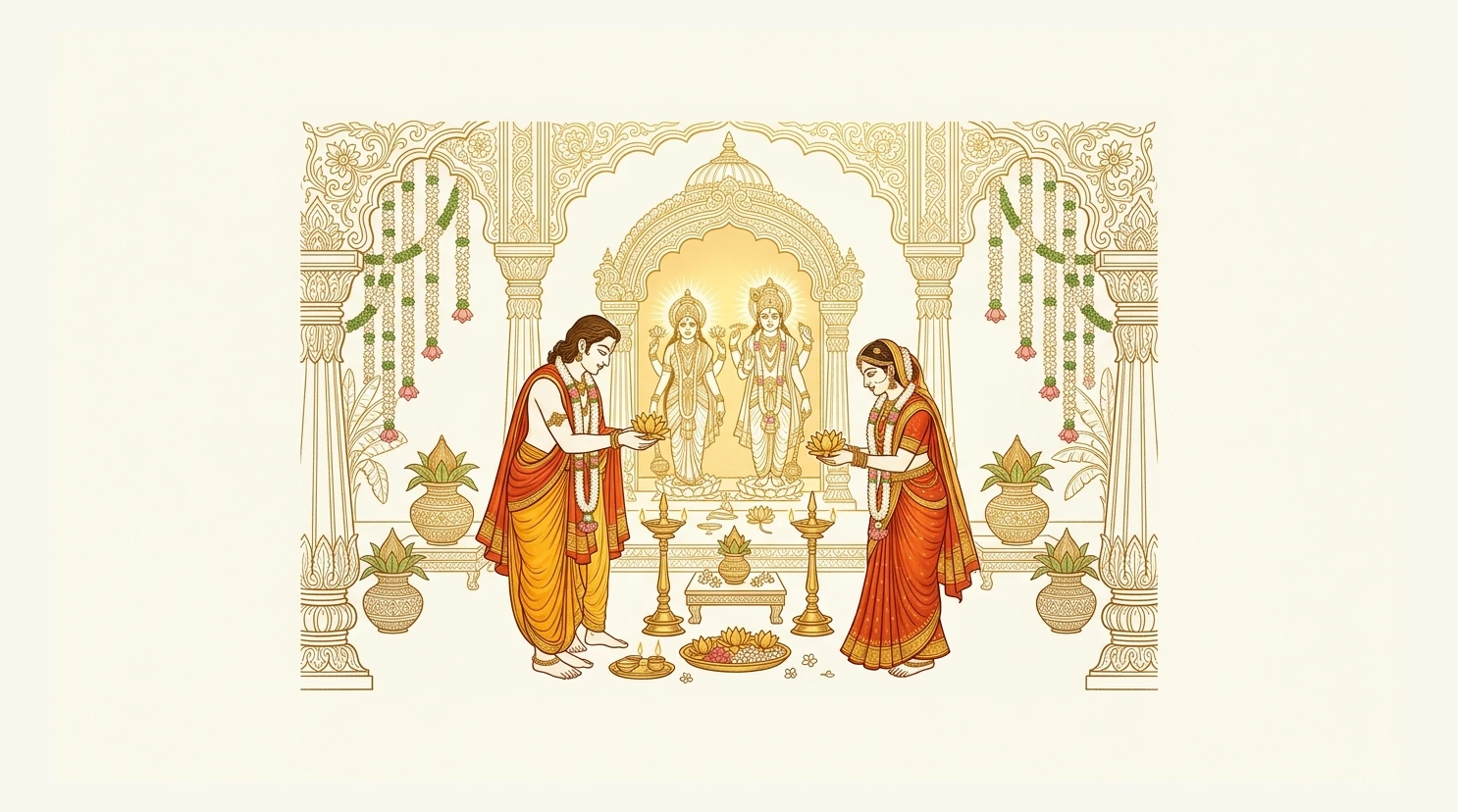
- Worship of Lakṣmī-Nārāyaṇa: Because this day bears the name of Ramā (Lakṣmī), worship the divine couple together with lotus flowers, sweet rice, and fragrant incense.
- Gentle Fasting: Observe a peaceful fast suited to your health.
- Lighting Lamps: Light ghee lamps in the evening to usher in the auspiciousness of the upcoming Dīpāvalī festival.
- Devotional Songs: Sing devotional hymns celebrating divine love and fidelity.
- Dvādaśī Pāraṇā: Next morning on Dvādaśī, break fast within the designated morning window after offering charity.
Source: Padma Purāṇa, Uttara Khaṇḍa, Chapter 59, ‘Ramā Ekādaśī Mahātmyam’. Translated and retold in classical devotional prose for contemplation and daily observance.
Deepen Your Spiritual Immersion
Support the preservation of authentic Vedic astronomy and scripture. Sanctum Patrons unlock deep commentaries, printable altar cards, and uninterrupted contemplation.
100% of contributions fund authentic scriptural research & planetary ephemeris maintenance.
Frequently Asked Questions
- What is Rama Ekadasi?
- Rama Ekadasi is the ekādaśī tithi, the eleventh lunar day, of the waning fortnight (kṛṣṇa pakṣa) of Kārtika. Its name signifies "the delighting one". Like every Ekadasi, it is observed by fasting and remembrance of Lord Viṣṇu. The sacred narrative and transcendental fruits (phalaśruti) of Rama are preserved in Purāṇas.
- When is Rama Ekadasi observed?
- Rama Ekadasi falls on the ekādaśī tithi of the waning fortnight of Kārtika in the Hindu lunar calendar. The exact Gregorian date varies each year because the lunar calendar shifts relative to the solar year. Smārta and Vaiṣṇava observers occasionally fast on different civil days when the tithi spans two sunrises; see the timings table above for your locality's exact window.
- Who is worshipped on Rama Ekadasi?
- Rama Ekadasi, like all Ekadasis, is dedicated to Lord Śrī Kṛṣṇa / Mahāviṣṇu. Traditional devotional observances include chanting the Viṣṇu-sahasranāma, reading the corresponding chapter from Purāṇas, hearing the sacred katha, and meditating on the divine holy names.
- What is the spiritual fruit (phalaśruti) of observing Rama Ekadasi?
- Canonical scriptures declare that observing Rama Ekadasi bestows: Liberation from accumulated sins and attainment of Viṣṇuloka.. Across all sacred Ekadasis, the fast purifies consciousness, dissolves karmic impressions, and elevates the soul toward spiritual liberation.
- How is Rama Ekadasi observed?
- A complete observance begins the prior evening (Daśamī) with a light sattvic meal, followed by a dedicated fast on Ekadasi day. Devotees may observe nirjala (without water), phalahāra (fruits, milk, and water), or a single sattvic meal according to physical capacity. Grains, rice, wheat, beans, onion, and garlic are strictly avoided. The fast concludes on Dvādaśī morning during the designated pāraṇa window with sacred Caraṇāmṛta and Tulasī.
- What is the difference between Smārta and Vaiṣṇava observance of Rama Ekadasi?
- On most occasions, both traditions observe the fast on the identical date. A variation occurs during an atirikta Ekādaśī when the tithi spans two consecutive sunrises. Smārtas fast on the first day (Viddhā), while Vaiṣṇavas observe the fast on the subsequent morning (Śuddhā), ensuring adherence to Dvādaśī touching sunrise.