Saphalā Ekādaśī
Purāṇic Glories & Sacred Lore · Pauṣa · Kṛṣṇa Pakṣa
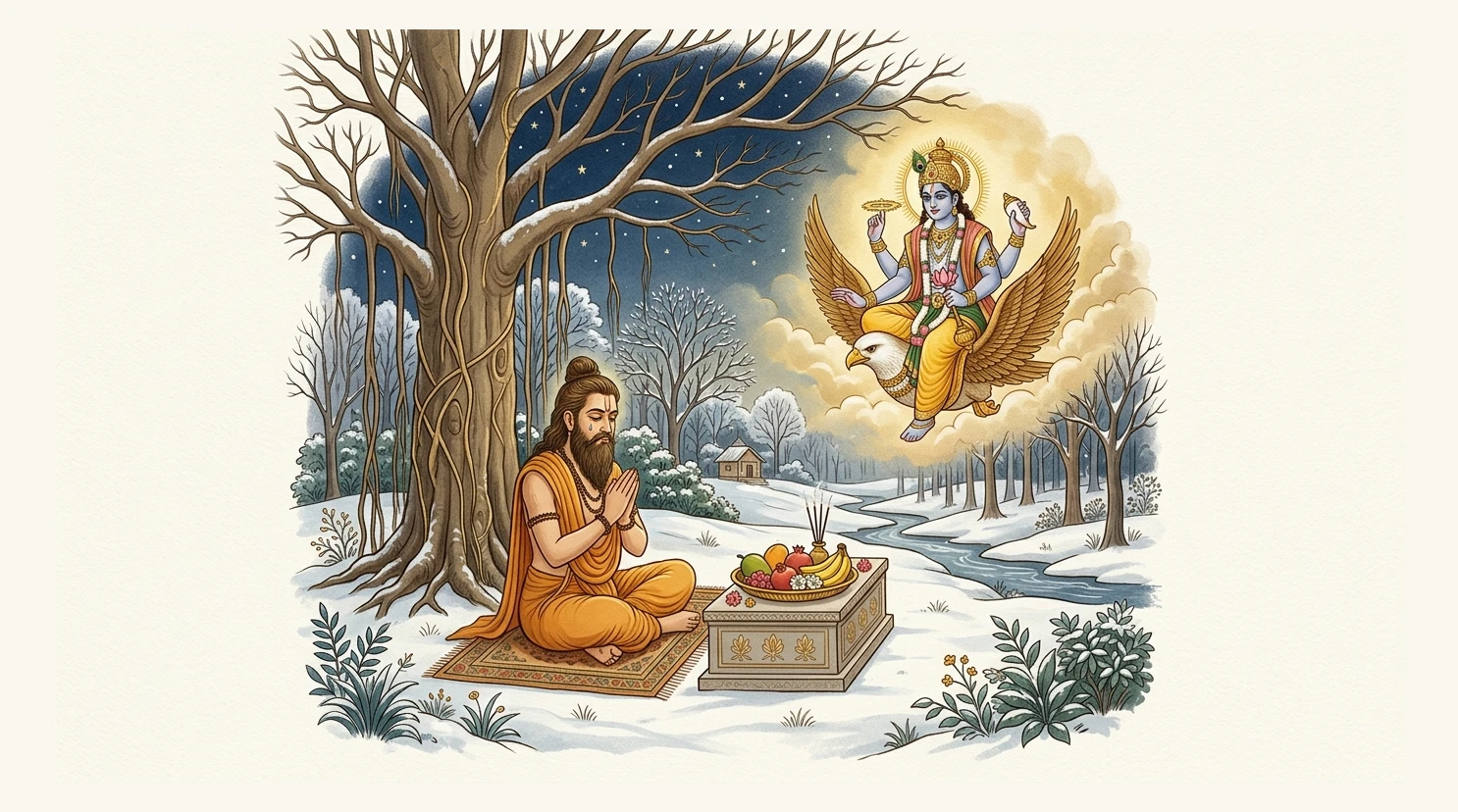
Lord Śrī Kṛṣṇa
Revealing transcendental glories
King Yudhiṣṭhira
Seeking liberation for all beings
ॐ नमो भगवते वासुदेवाय नमः
oṁ namo bhagavate vāsudevāya
The Legend of Saphalā Ekādaśī
The sacred Purāṇic dialogue between Lord Śrī Kṛṣṇa and King Yudhiṣṭhira revealing the transcendental glories and vows of this holy vrata.
Liberation from accumulated sins and attainment of Viṣṇuloka.
The Fruit of Complete Surrender (Saphalā Ekādaśī)
King Yudhiṣṭhira bowed low before Lord Śrī Kṛṣṇa:
“O Janārdana! Which Ekādaśī falls in the dark fortnight of the month of Pauṣa (December–January)? What is its name, and which divine form is worshipped?”
Lord Kṛṣṇa answered with profound tenderness:
“O King! This holy day is known as Saphalā Ekādaśī—the day that brings fulfillment (saphala) to all righteous endeavors and turns even the bitterest life into a blossoming garden of grace. Even if someone has committed grave mistakes, sincere surrender on this day yields the fruit of thousands of years of penance. Listen to the story of Lumpaka.”
The Wayward Prince Lumpaka
In the ancient city of Campāvatī, ruled by the noble King Māhiṣmat, lived the king’s eldest son, Prince Lumpaka. Despite having a wise father and every royal luxury, Lumpaka fell into cruel and reckless ways. He associated with thieves, wasted the royal treasury, and caused distress to the citizens.
After many patient warnings, King Māhiṣmat was finally forced to exile Lumpaka from the kingdom. Stripped of his royal clothes, the prince took shelter in a dense forest, surviving on wild fruit and hunting, lonely and miserable.
The Freezing Night Under the Banyan Tree
In the cold month of Pauṣa, on the eve of the dark eleventh day (Saphalā Ekādaśī), a bitter winter chill swept through the forest. Shivering in thin rags, Lumpaka was so frozen that he could not sleep all night.
When morning dawned, he was too numb to hunt. Weak and trembling, he gathered a few wild fruits that had fallen from the trees. He sat beneath an ancient sacred banyan tree as the winter sun set. Tears of utter helplessness and exhaustion streamed down his cheeks. Placing the wild fruits on the roots of the banyan tree, he sighed from the depths of his soul:
‘O Lord, whoever You are, take these wild fruits. I have nothing left in this world.‘
Unwitting Grace and Transformation
Lumpaka did not know that the banyan tree was sacred to Lord Nārāyaṇa, nor did he realize that the day was Saphalā Ekādaśī! Without intending it, he had kept an unbroken fast, stayed awake through the night, and offered food at the base of the sacred tree.
Lord Nārāyaṇa, who looks only at the sincerity of the heart, accepted his humble offering! When the sun rose on Dvādaśī, a divine celestial chariot descended into the clearing. A heavenly voice spoke:
‘O Lumpaka! By the grace of Saphalā Ekādaśī, your heart is cleansed of all bitter karma. Return to your father as a transformed soul.’
A radiant celestial garment fell onto his shoulders, and his mind became clear, serene, and full of love. When Lumpaka returned to Campāvatī, his father wept with joy to see his son gentle and humble. The king embraced him, restored his title, and Lumpaka ruled for many years as a saintly king before attaining the eternal abode of peace.
How to Observe Saphala Ekādaśī
- Surrender of the Heart: Begin the day by surrendering all worries, anxieties, and past regrets to Lord Nārāyaṇa.
- Worship with Fresh Fruits: Offer fresh seasonal fruits, tulasī, and a lighted ghee lamp to Lord Viṣṇu.
- Gentle Fasting: Observe a peaceful fast suited to your strength.
- Evening Vigil: Spend time in quiet prayer or reading sacred texts.
- Dvādaśī Pāraṇā: Next morning on Dvādaśī, offer food to others and break fast within the morning window.
Source: Padma Purāṇa, Uttara Khaṇḍa, Chapter 43, ‘Saphalā Ekādaśī Mahātmyam’. Translated and retold in classical devotional prose for contemplation and daily observance.
Deepen Your Spiritual Immersion
Support the preservation of authentic Vedic astronomy and scripture. Sanctum Patrons unlock deep commentaries, printable altar cards, and uninterrupted contemplation.
100% of contributions fund authentic scriptural research & planetary ephemeris maintenance.
Frequently Asked Questions
- What is Saphala Ekadasi?
- Saphala Ekadasi is the ekādaśī tithi, the eleventh lunar day, of the waning fortnight (kṛṣṇa pakṣa) of Pauṣa. Its name signifies "the fruitful one". Like every Ekadasi, it is observed by fasting and remembrance of Lord Viṣṇu. The sacred narrative and transcendental fruits (phalaśruti) of Saphala are preserved in Purāṇas.
- When is Saphala Ekadasi observed?
- Saphala Ekadasi falls on the ekādaśī tithi of the waning fortnight of Pauṣa in the Hindu lunar calendar. The exact Gregorian date varies each year because the lunar calendar shifts relative to the solar year. Smārta and Vaiṣṇava observers occasionally fast on different civil days when the tithi spans two sunrises; see the timings table above for your locality's exact window.
- Who is worshipped on Saphala Ekadasi?
- Saphala Ekadasi, like all Ekadasis, is dedicated to Lord Śrī Kṛṣṇa / Mahāviṣṇu. Traditional devotional observances include chanting the Viṣṇu-sahasranāma, reading the corresponding chapter from Purāṇas, hearing the sacred katha, and meditating on the divine holy names.
- What is the spiritual fruit (phalaśruti) of observing Saphala Ekadasi?
- Canonical scriptures declare that observing Saphala Ekadasi bestows: Liberation from accumulated sins and attainment of Viṣṇuloka.. Across all sacred Ekadasis, the fast purifies consciousness, dissolves karmic impressions, and elevates the soul toward spiritual liberation.
- How is Saphala Ekadasi observed?
- A complete observance begins the prior evening (Daśamī) with a light sattvic meal, followed by a dedicated fast on Ekadasi day. Devotees may observe nirjala (without water), phalahāra (fruits, milk, and water), or a single sattvic meal according to physical capacity. Grains, rice, wheat, beans, onion, and garlic are strictly avoided. The fast concludes on Dvādaśī morning during the designated pāraṇa window with sacred Caraṇāmṛta and Tulasī.
- What is the difference between Smārta and Vaiṣṇava observance of Saphala Ekadasi?
- On most occasions, both traditions observe the fast on the identical date. A variation occurs during an atirikta Ekādaśī when the tithi spans two consecutive sunrises. Smārtas fast on the first day (Viddhā), while Vaiṣṇavas observe the fast on the subsequent morning (Śuddhā), ensuring adherence to Dvādaśī touching sunrise.