Putradā Ekādaśī (Śrāvaṇa)
Purāṇic Glories & Sacred Lore · Śrāvaṇa · Śukla Pakṣa
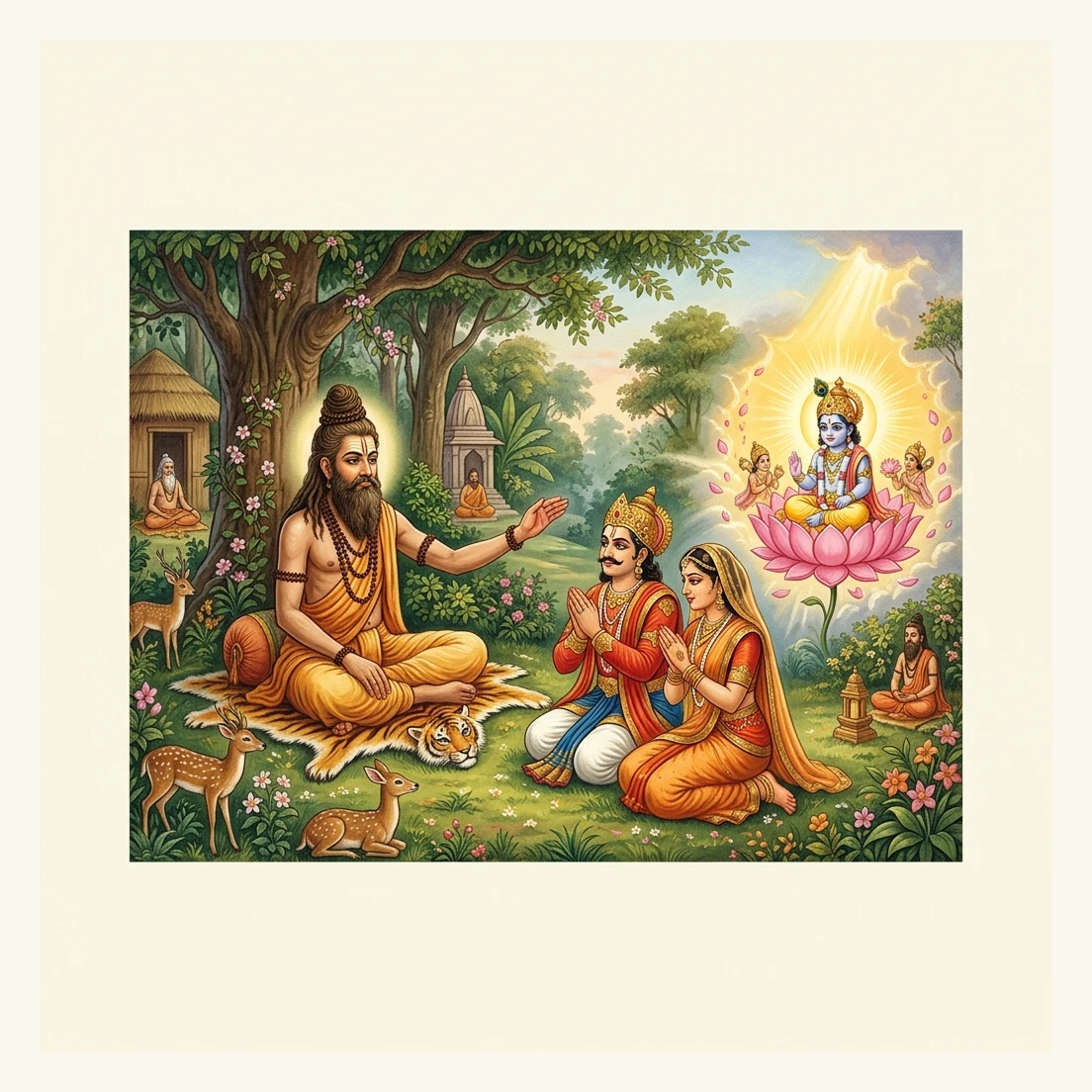
Lord Śrī Kṛṣṇa
Revealing transcendental glories
King Yudhiṣṭhira
Seeking liberation for all beings
ॐ नमो भगवते वासुदेवाय नमः
oṁ namo bhagavate vāsudevāya
The Legend of Putradā Ekādaśī (Śrāvaṇa)
The sacred Purāṇic dialogue between Lord Śrī Kṛṣṇa and King Yudhiṣṭhira revealing the transcendental glories and vows of this holy vrata.
Liberation from accumulated sins and attainment of Viṣṇuloka.
The Loving Prayer of King Mahijit (Śrāvaṇa Putradā Ekādaśī)
King Yudhiṣṭhira asked Lord Śrī Kṛṣṇa:
“O Keśava! Please tell me about the Ekādaśī that comes in the bright fortnight of the holy month of Śrāvaṇa (July–August). What is its name and spiritual glory?”
Lord Kṛṣṇa answered with great warmth:
“O righteous King! This sacred day is known as Śrāvaṇa Putradā Ekādaśī (also called Pavitropanā Ekādaśī). It has the power to fulfill the heartfelt desires of devotees and grant noble offspring. Listen to how the great Sage Lomaśa guided King Mahijit.”
The Childless King of Māhiṣmatī
In the ancient city of Māhiṣmatī, King Mahijit ruled his subjects with boundless love, treating every citizen as his own child. The kingdom was prosperous and free from famine, yet the king himself was deeply sorrowful because he had no child of his own.
One day, King Mahijit gathered his citizens, ministers, and sages and spoke with an aching heart: ‘O friends! I have never taken wealth unjustly, never harmed an innocent being, and protected everyone with righteousness. Yet why has God denied me a child to continue our line?‘
The Hermitage of Sage Lomaśa
Deeply moved by their beloved king’s sorrow, a delegation of citizens traveled into the forest to seek the guidance of Sage Lomaśa—the ancient, enlightened sage whose lifespan spanned cosmic ages.
The citizens prostrated before the venerable sage and pleaded for their king. Sage Lomaśa closed his eyes and looked into King Mahijit’s past lifetime:
*‘Listen, O citizens! In his previous life, this king was a merchant. One hot summer afternoon, exhausted and thirsty, he reached a small pond. A cow and her newborn calf were drinking the fresh water. Driven by his own desperate thirst, the merchant chased the thirsty cow and calf away and drank the water himself.
Because of his charitable deeds in that life, he was born as a king today. But because he separated a thirsty mother cow and her calf from water, he was destined to be childless in this life.’*
Collective Devotion and Joy
The citizens wept and asked: ‘O holy sage, is there no remedy to heal this karma?’
Sage Lomaśa replied with immense compassion: ‘There is a supreme remedy! In the bright fortnight of Śrāvaṇa comes Putradā Ekādaśī. Let the king, the queen, and all of you observe this fast collectively with pure hearts. On Dvādaśī, dedicate all the spiritual merit of your fasting to the king. Lord Hari will surely grant him an heir.’
The citizens returned with joy and shared the message. When Śrāvaṇa Putradā Ekādaśī arrived, the entire kingdom fasted together in solidarity and love. On Dvādaśī morning, they offered their collective merit to their king.
By this wave of selfless love, the past karma was dissolved. Soon Queen Candramukhī was blessed with a radiant baby boy, and the kingdom celebrated with music, dancing, and endless gratitude to Lord Hari.
How to Observe Shravana Putrada Ekādaśī
- Morning Devotion: Bathe early, pray for the peace and happiness of children, and cultivate a generous heart.
- Honoring Mother Cow: If possible, feed cows with green grass, jaggery, or fresh fruits on this day.
- Gentle Fasting: Observe a peaceful fast suited to your strength.
- Community Prayer: Pray together with family members for the collective harmony of your home.
- Dvādaśī Pāraṇā: Next morning on Dvādaśī, break your fast within the designated morning window after offering food to others.
Source: Padma Purāṇa, Uttara Khaṇḍa, Chapter 55, ‘Śrāvaṇa Putradā Ekādaśī Mahātmyam’. Translated and retold in classical devotional prose for contemplation and daily observance.
Deepen Your Spiritual Immersion
Support the preservation of authentic Vedic astronomy and scripture. Sanctum Patrons unlock deep commentaries, printable altar cards, and uninterrupted contemplation.
100% of contributions fund authentic scriptural research & planetary ephemeris maintenance.
Frequently Asked Questions
- What is Putrada Ekadasi?
- Putrada Ekadasi is the ekādaśī tithi, the eleventh lunar day, of the waxing fortnight (śukla pakṣa) of Śrāvaṇa. Its name signifies "the giver of progeny". Like every Ekadasi, it is observed by fasting and remembrance of Lord Viṣṇu. The sacred narrative and transcendental fruits (phalaśruti) of Putrada are preserved in Purāṇas.
- When is Putrada Ekadasi observed?
- Putrada Ekadasi falls on the ekādaśī tithi of the waxing fortnight of Śrāvaṇa in the Hindu lunar calendar. The exact Gregorian date varies each year because the lunar calendar shifts relative to the solar year. Smārta and Vaiṣṇava observers occasionally fast on different civil days when the tithi spans two sunrises; see the timings table above for your locality's exact window.
- Who is worshipped on Putrada Ekadasi?
- Putrada Ekadasi, like all Ekadasis, is dedicated to Lord Śrī Kṛṣṇa / Mahāviṣṇu. Traditional devotional observances include chanting the Viṣṇu-sahasranāma, reading the corresponding chapter from Purāṇas, hearing the sacred katha, and meditating on the divine holy names.
- What is the spiritual fruit (phalaśruti) of observing Putrada Ekadasi?
- Canonical scriptures declare that observing Putrada Ekadasi bestows: Liberation from accumulated sins and attainment of Viṣṇuloka.. Across all sacred Ekadasis, the fast purifies consciousness, dissolves karmic impressions, and elevates the soul toward spiritual liberation.
- How is Putrada Ekadasi observed?
- A complete observance begins the prior evening (Daśamī) with a light sattvic meal, followed by a dedicated fast on Ekadasi day. Devotees may observe nirjala (without water), phalahāra (fruits, milk, and water), or a single sattvic meal according to physical capacity. Grains, rice, wheat, beans, onion, and garlic are strictly avoided. The fast concludes on Dvādaśī morning during the designated pāraṇa window with sacred Caraṇāmṛta and Tulasī.
- What is the difference between Smārta and Vaiṣṇava observance of Putrada Ekadasi?
- On most occasions, both traditions observe the fast on the identical date. A variation occurs during an atirikta Ekādaśī when the tithi spans two consecutive sunrises. Smārtas fast on the first day (Viddhā), while Vaiṣṇavas observe the fast on the subsequent morning (Śuddhā), ensuring adherence to Dvādaśī touching sunrise.