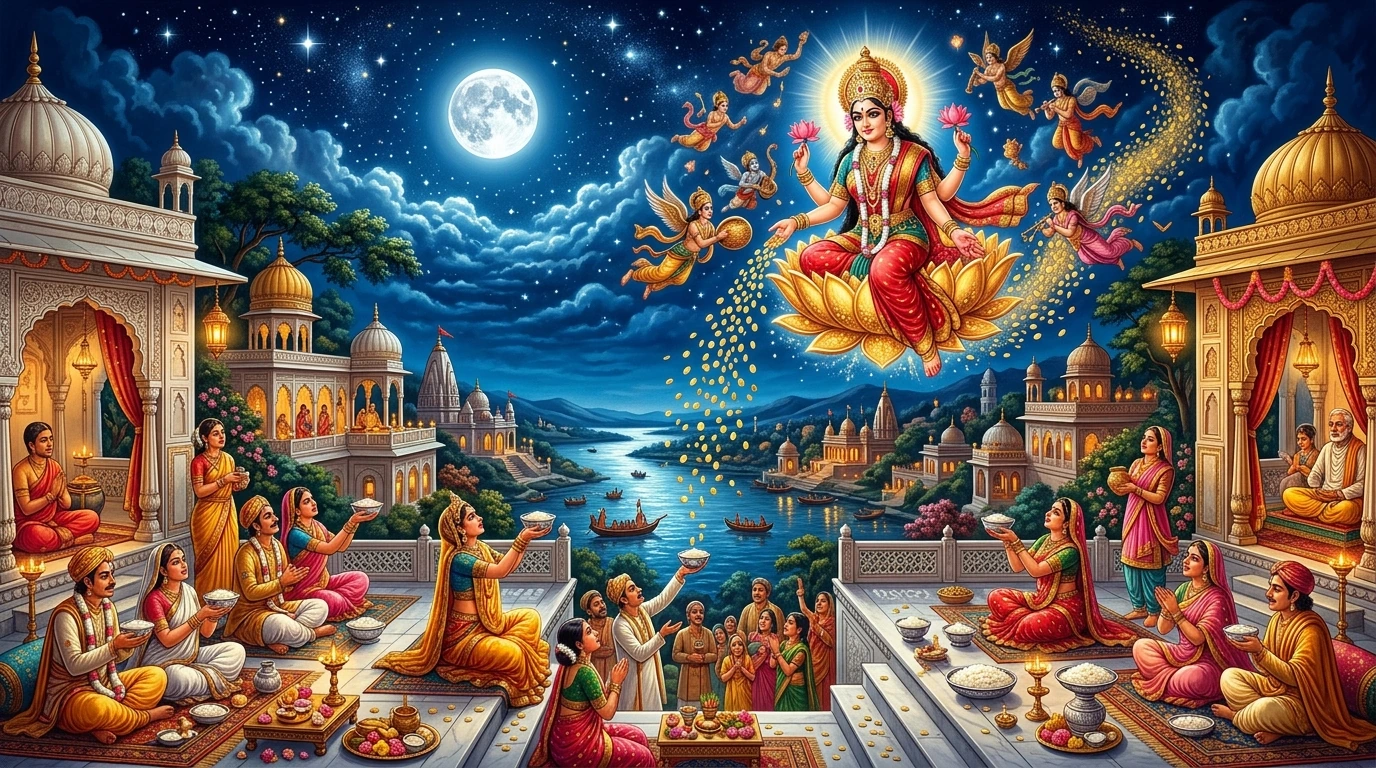
Śarad Pūrṇimā / Kojāgarī Lakṣmī Pūjā
Rāsa Līlā of Lord Kṛṣṇa and the Night of Ambrosial Moonbeams
Tuesday, 13 October 1761
From the pañchāṅga
How it is observed
The brightest full moon: kheer is left out in the moonlight overnight and shared, and Lakṣmī is welcomed on the night she walks asking “ko jāgarti?” (who is awake?).
Tulā Saṅkrānti
The Sun enters Tulā
Tuesday, 13 October 1761
The Sun crosses at 10:02 PM, your local time
The Sun enters Tulā (Libra), where day and night stand in balance. Kept as Tulā Saṅkrānti, and as Kati Bihu in Assam, a quieter festival of lamps in the fields and prayers for the ripening crop.
What is done, A bath in sacred water, the Tulā-snāna in the Kāverī is especially honoured, and charity.
Celestial Coordinates & Muhūrtas
3:27 PM – 4:56 PM
9:31 AM – 11:00 AM
12:05 PM – 12:53 PM
Bearings indicate horizon degrees. Rāhu and Yamagaṇḍa are avoided for new auspicious beginnings; Abhijit is the midday victory window.
Found an error?
ekadasi.day has no ads and no popups. If a date, name, or story reads wrong, please write, accuracy matters more than reach.
mrvi@post.com →·Other ways to help