Mohinī Ekādaśī
Purāṇic Glories & Sacred Lore · Vaiśākha · Śukla Pakṣa
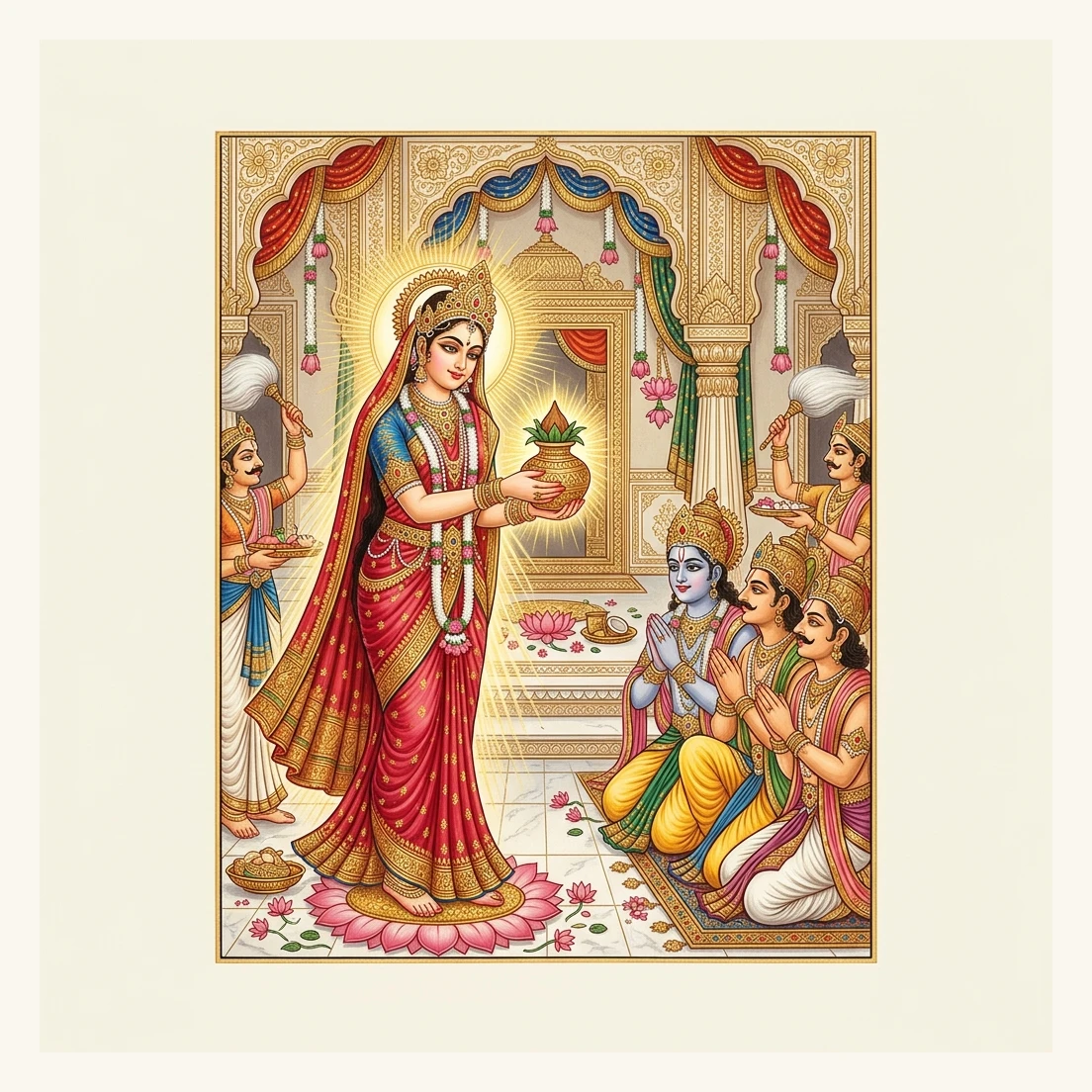
Lord Śrī Kṛṣṇa
Revealing transcendental glories
King Yudhiṣṭhira
Seeking liberation for all beings
ॐ नमो भगवते वासुदेवाय नमः
oṁ namo bhagavate vāsudevāya
The Legend of Mohinī Ekādaśī
The sacred Purāṇic dialogue between Lord Śrī Kṛṣṇa and King Yudhiṣṭhira revealing the transcendental glories and vows of this holy vrata.
Liberation from accumulated sins and attainment of Viṣṇuloka.
The Loving Grace of Mohinī Ekādaśī
In the quiet forest of Kamyaka, King Yudhiṣṭhira asked Lord Śrī Kṛṣṇa:
“O Beloved Lord! Our hearts are weary with the sorrows of exile. Please tell us of an Ekādaśī that lifts the heavy cloud of grief and delusion from the soul.”
Lord Kṛṣṇa looked upon Yudhiṣṭhira with immense tenderness and said:
“O King! Listen to the sacred story of Mohinī Ekādaśī, which arrives in the bright fortnight of the month of Vaiśākha (April–May). The word mohinī signifies that divine power of the Lord which cuts through all illusion, despair, and attachment. This holy fast was first revealed by Sage Vasiṣṭha to Lord Śrī Rāmacandra to soothe His grief during the search for Sītā Devī. Hear the touching story of the merchant’s son.”
The Merchant Dhanapāla and His Son
On the peaceful banks of the sacred Sarasvatī river lay the beautiful city of Bhadrāvatī, ruled by King Dyutimān. In this city lived a prosperous and deeply religious merchant named Dhanapāla. He built public wells, planted shade trees, and fed thousands of travelers every day.
Dhanapāla had five sons. The four elder sons were devoted, hard-working, and respectful. But the youngest son, Dhṛṣṭabuddhi, fell into bad company. He spent his days in gambling, drinking, and wasteful living, scorning the gentle advice of his loving parents.
Destitution and Awakening
When Dhṛṣṭabuddhi refused to mend his ways, his sorrowful father was finally forced to ask him to leave home. Abandoned by his fair-weather companions the moment his money ran out, Dhṛṣṭabuddhi soon found himself in dire poverty.
Hungry, clothed in rags, and shivering in the forest, he spent days searching for scraps of food. In his deep misery, the memory of his father’s kindness and the purity of his childhood home flooded his heart. Tears of deep remorse poured from his eyes:
‘Alas! What have I done? I disregarded the loving counsel of my father and squandered the gift of human life. Who will ever take pity on a wretch like me?‘
The Compassion of Sage Kauṇḍinya
Wandering through the woods, Dhṛṣṭabuddhi stumbled into the peaceful ashram of the revered Sage Kauṇḍinya on the riverbank. It was the month of Vaiśākha, and the sage had just returned from his morning bath in the holy waters.
Dhṛṣṭabuddhi threw himself at the sage’s feet, weeping bitterly:
‘O holy father! I am a fallen soul, guilty of terrible waste and disrespect. I suffer from hunger, shame, and agony. Is there any penance in this world that can wash away my sins and bring peace to my soul?’
Sage Kauṇḍinya looked down with profound fatherly compassion. He lifted the weeping youth and said:
‘Do not despair, my son. The grace of God is infinitely greater than any mistake you have made. In a few days, the bright fortnight of Vaiśākha brings Mohinī Ekādaśī. Fast on that holy day with a pure heart, surrender all your regrets to Lord Viṣṇu, and pray for His mercy. It will burn away your sorrow just as the morning sun melts the frost.‘
Redemption and Transformation
Dhṛṣṭabuddhi listened with tears of hope. When Mohinī Ekādaśī arrived, he bathed peacefully, fasted without taking food or water, and spent the entire day and night chanting the names of Lord Hari under the sage’s guidance.
By the merit of that single day of sincere surrender, the heavy veil of illusion was lifted from his consciousness. His mind became peaceful, clear, and radiant. When he completed the fast on Dvādaśī, a celestial chariot descended, and he was crowned with divine light, returning as a liberated, saintly soul to the eternal realm of God.
How to Observe Mohini Ekādaśī
- Morning Bath & Prayer: Bathe peacefully in the morning, letting go of past regrets and guilt.
- Worship of Lord Viṣṇu: Offer fragrant white or yellow flowers, sandalwood paste, and tulasī leaves.
- Gentle Fasting: Observe a peaceful fast suited to your health—water, milk, or fresh fruits.
- Cultivating Compassion: Forgive those who may have hurt you, and pray for the well-being of all beings.
- Dvādaśī Pāraṇā: Next morning on Dvādaśī, offer gratitude, share food with the hungry, and break fast within the morning window.
Source: Padma Purāṇa, Uttara Khaṇḍa, Chapter 50, ‘Mohinī Ekādaśī Mahātmyam’. Translated and retold in classical devotional prose for contemplation and daily observance.
Deepen Your Spiritual Immersion
Support the preservation of authentic Vedic astronomy and scripture. Sanctum Patrons unlock deep commentaries, printable altar cards, and uninterrupted contemplation.
100% of contributions fund authentic scriptural research & planetary ephemeris maintenance.
Frequently Asked Questions
- What is Mohini Ekadasi?
- Mohini Ekadasi is the ekādaśī tithi, the eleventh lunar day, of the waxing fortnight (śukla pakṣa) of Vaiśākha. Its name signifies "the bewildering one". Like every Ekadasi, it is observed by fasting and remembrance of Lord Viṣṇu. The sacred narrative and transcendental fruits (phalaśruti) of Mohini are preserved in Purāṇas.
- When is Mohini Ekadasi observed?
- Mohini Ekadasi falls on the ekādaśī tithi of the waxing fortnight of Vaiśākha in the Hindu lunar calendar. The exact Gregorian date varies each year because the lunar calendar shifts relative to the solar year. Smārta and Vaiṣṇava observers occasionally fast on different civil days when the tithi spans two sunrises; see the timings table above for your locality's exact window.
- Who is worshipped on Mohini Ekadasi?
- Mohini Ekadasi, like all Ekadasis, is dedicated to Lord Śrī Kṛṣṇa / Mahāviṣṇu. Traditional devotional observances include chanting the Viṣṇu-sahasranāma, reading the corresponding chapter from Purāṇas, hearing the sacred katha, and meditating on the divine holy names.
- What is the spiritual fruit (phalaśruti) of observing Mohini Ekadasi?
- Canonical scriptures declare that observing Mohini Ekadasi bestows: Liberation from accumulated sins and attainment of Viṣṇuloka.. Across all sacred Ekadasis, the fast purifies consciousness, dissolves karmic impressions, and elevates the soul toward spiritual liberation.
- How is Mohini Ekadasi observed?
- A complete observance begins the prior evening (Daśamī) with a light sattvic meal, followed by a dedicated fast on Ekadasi day. Devotees may observe nirjala (without water), phalahāra (fruits, milk, and water), or a single sattvic meal according to physical capacity. Grains, rice, wheat, beans, onion, and garlic are strictly avoided. The fast concludes on Dvādaśī morning during the designated pāraṇa window with sacred Caraṇāmṛta and Tulasī.
- What is the difference between Smārta and Vaiṣṇava observance of Mohini Ekadasi?
- On most occasions, both traditions observe the fast on the identical date. A variation occurs during an atirikta Ekādaśī when the tithi spans two consecutive sunrises. Smārtas fast on the first day (Viddhā), while Vaiṣṇavas observe the fast on the subsequent morning (Śuddhā), ensuring adherence to Dvādaśī touching sunrise.