Paramā Ekādaśī
Purāṇic Glories & Sacred Lore · Adhika Māsa · Kṛṣṇa Pakṣa
Lord Śrī Kṛṣṇa
Revealing transcendental glories
King Yudhiṣṭhira
Seeking liberation for all beings
ॐ नमो भगवते वासुदेवाय नमः
oṁ namo bhagavate vāsudevāya
The Legend of Paramā Ekādaśī
The sacred Purāṇic dialogue between Lord Śrī Kṛṣṇa and King Yudhiṣṭhira revealing the transcendental glories and vows of this holy vrata.
Liberation from accumulated sins and attainment of Viṣṇuloka.
The Humble Offering of Sumati (Paramā Ekādaśī)
King Yudhiṣṭhira bowed low before Lord Śrī Kṛṣṇa:
“O Supreme Lord! What is the name of the Ekādaśī that arrives in the dark fortnight of Adhika Māsa (the sacred leap month)? What are its special virtues?”
Lord Kṛṣṇa answered with great tenderness:
“O righteous King! This sacred day is named Paramā Ekādaśī—the supreme vow that bestows the highest spiritual wealth (paramā-sampat) and removes poverty of body, mind, and spirit. Listen to this touching story of a humble brāhmaṇa named Sumati and his noble wife.”
Poverty in Kāmpyanagara
In the ancient city of Kāmpyanagara lived a virtuous and learned brāhmaṇa named Sumati, belonging to the lineage of Sage Bhṛgu. Though rich in wisdom and Vedic knowledge, Sumati and his wife lived in extreme, grinding poverty. Often they had not a single grain of rice in their earthen pots for days.
Yet, his wife Candirā (or Sumukhī) was a gem among women. Never once did she complain or show bitterness. Whenever a guest arrived at their humble hut, she would quietly give her own portion of food to the guest, smiling with warmth, while she and her husband drank plain water and went to bed hungry.
The Husband’s Resolve and the Wife’s Faith
One evening, distressed by seeing his gentle wife suffer, Sumati said:
‘My beloved! I cannot bear to see you go hungry day after day. Let me travel to distant lands to seek wealth from kings and merchants.’
His wife took his hand with tears of tender faith in her eyes:
‘O noble husband! Wealth does not come merely by running after it; it comes through the grace of God and our past good deeds. If we leave our home in desperation, we may lose our inner peace. Let us remain together, trust in Lord Nārāyaṇa, and wait for His divine grace.’
Comforted by her loving faith, Sumati stayed home.
The Visit of Sage Kauṇḍinya
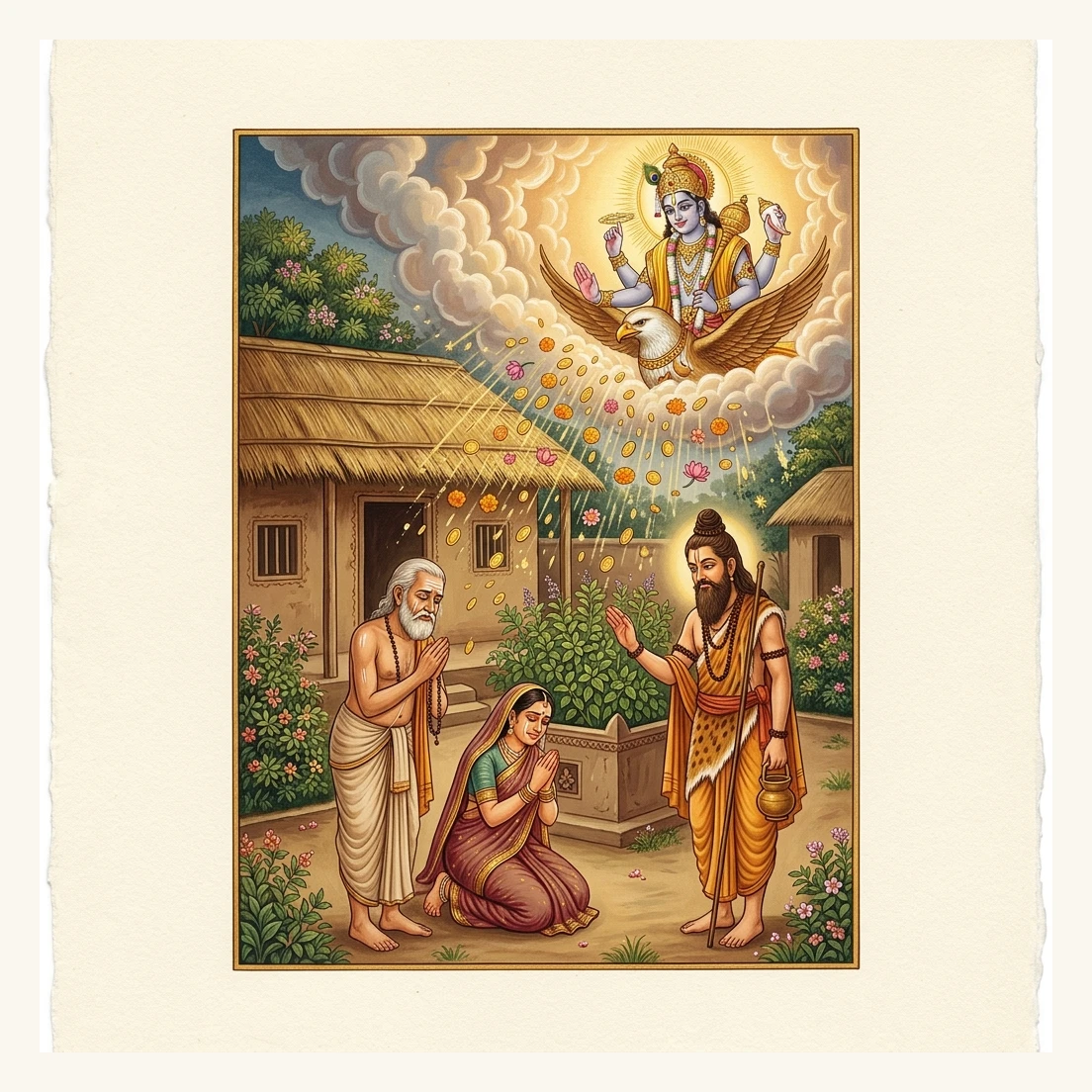
A few days later, the great Sage Kauṇḍinya arrived at their humble doorway. Sumati and his wife welcomed the revered sage with overflowing joy, washed his feet with pure water, and offered whatever little fruit they could find in the woods.
Deeply pleased by their hospitality, Sage Kauṇḍinya smiled and said:
‘O blessed couple! Your devotion and selflessness are known in the heavens. To dissolve this hardship, observe the upcoming fast of Paramā Ekādaśī during this sacred Puruṣottama month. Fast with devotion, stay awake in prayer through the night, and worship Lord Viṣṇu. In ancient times, even Kubera, the treasurer of the gods, attained his vast wealth by observing this holy vow.‘
Blessings of Abundance
Sumati and his devoted wife observed Paramā Ekādaśī with complete love and purity, remaining awake in prayer through the night. On Dvādaśī morning, after completing their prayers and feeding the poor, a miraculous change took place.
Their dilapidated mud hut was transformed into a beautiful, sunlit dwelling filled with grains, garments, and all earthly comforts. From that day forward, they lived in peace, sharing their abundance with all travelers and eventually attaining the supreme spiritual realm of Lord Hari.
How to Observe Parama Ekādaśī
- Sacred to Puruṣottama Month: Observed during the rare Adhika Māsa (leap month), this fast carries extraordinary spiritual power.
- Hospitality & Charity: Practice kindness, share food with the hungry, and offer respect to guests.
- Pūjā of Lord Viṣṇu: Offer fresh flowers, incense, and lamps to Lord Nārāyaṇa.
- Gentle Fasting: Observe a peaceful fast suited to your strength.
- Dvādaśī Pāraṇā: Next morning on Dvādaśī, break your fast within the auspicious window after feeding others.
Source: Skanda Purāṇa, ‘Paramā Ekādaśī Mahātmyam’. Translated and retold in classical devotional prose for contemplation and daily observance.
Deepen Your Spiritual Immersion
Support the preservation of authentic Vedic astronomy and scripture. Sanctum Patrons unlock deep commentaries, printable altar cards, and uninterrupted contemplation.
100% of contributions fund authentic scriptural research & planetary ephemeris maintenance.
Frequently Asked Questions
- What is Parama Ekadasi?
- Parama Ekadasi is the ekādaśī tithi, the eleventh lunar day, of the waning fortnight (kṛṣṇa pakṣa) of Adhika Māsa. Its name signifies "the supreme". Like every Ekadasi, it is observed by fasting and remembrance of Lord Viṣṇu. The sacred narrative and transcendental fruits (phalaśruti) of Parama are preserved in Purāṇas.
- When is Parama Ekadasi observed?
- Parama Ekadasi falls on the ekādaśī tithi of the waning fortnight of Adhika Māsa in the Hindu lunar calendar. The exact Gregorian date varies each year because the lunar calendar shifts relative to the solar year. Smārta and Vaiṣṇava observers occasionally fast on different civil days when the tithi spans two sunrises; see the timings table above for your locality's exact window.
- Who is worshipped on Parama Ekadasi?
- Parama Ekadasi, like all Ekadasis, is dedicated to Lord Śrī Kṛṣṇa / Mahāviṣṇu. Traditional devotional observances include chanting the Viṣṇu-sahasranāma, reading the corresponding chapter from Purāṇas, hearing the sacred katha, and meditating on the divine holy names.
- What is the spiritual fruit (phalaśruti) of observing Parama Ekadasi?
- Canonical scriptures declare that observing Parama Ekadasi bestows: Liberation from accumulated sins and attainment of Viṣṇuloka.. Across all sacred Ekadasis, the fast purifies consciousness, dissolves karmic impressions, and elevates the soul toward spiritual liberation.
- How is Parama Ekadasi observed?
- A complete observance begins the prior evening (Daśamī) with a light sattvic meal, followed by a dedicated fast on Ekadasi day. Devotees may observe nirjala (without water), phalahāra (fruits, milk, and water), or a single sattvic meal according to physical capacity. Grains, rice, wheat, beans, onion, and garlic are strictly avoided. The fast concludes on Dvādaśī morning during the designated pāraṇa window with sacred Caraṇāmṛta and Tulasī.
- What is the difference between Smārta and Vaiṣṇava observance of Parama Ekadasi?
- On most occasions, both traditions observe the fast on the identical date. A variation occurs during an atirikta Ekādaśī when the tithi spans two consecutive sunrises. Smārtas fast on the first day (Viddhā), while Vaiṣṇavas observe the fast on the subsequent morning (Śuddhā), ensuring adherence to Dvādaśī touching sunrise.