Ṣaṭtilā Ekādaśī
Purāṇic Glories & Sacred Lore · Māgha · Kṛṣṇa Pakṣa
Lord Śrī Kṛṣṇa
Revealing transcendental glories
King Yudhiṣṭhira
Seeking liberation for all beings
ॐ नमो भगवते वासुदेवाय नमः
oṁ namo bhagavate vāsudevāya
The Legend of Ṣaṭtilā Ekādaśī
The sacred Purāṇic dialogue between Lord Śrī Kṛṣṇa and King Yudhiṣṭhira revealing the transcendental glories and vows of this holy vrata.
Liberation from accumulated sins and attainment of Viṣṇuloka.
The Blessed Gift of Love (Ṣaṭ-tilā Ekādaśī)
The venerable Sage Dālbhya approached Sage Pulastya with folded hands:
“O holy master! In this world, people suffer from poverty, illness, and grief caused by past selfishness. What simple and compassionate vow can free all beings from distress?”
Sage Pulastya replied with great warmth:
“O Dālbhya! Listen to the sacred glory of Ṣaṭ-tilā Ekādaśī, which comes in the dark fortnight of the month of Māgha (January–February). On this holy day, sacred sesame seeds (tila) are used in six loving ways (ṣaṭ)—in bathing, anointing, offering to the sacred fire, offering water, giving in charity, and eating at pāraṇā. Hear the moving tale of the wealthy woman who learned the true meaning of charity.”
The Austere Woman’s Empty Palace
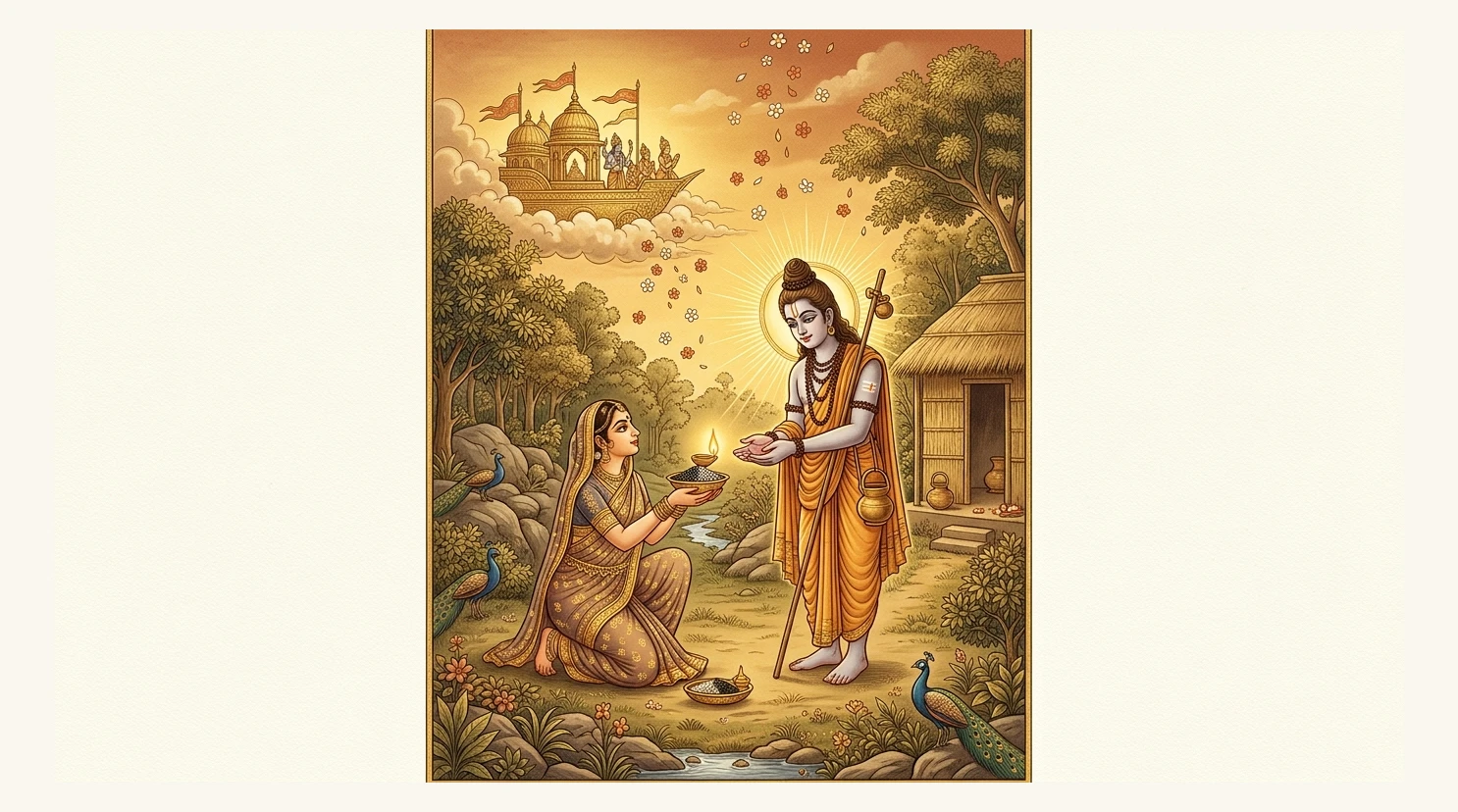
In ancient times, there lived a wealthy and deeply religious woman who performed rigorous fasts and penances. For many years, she observed every Ekādaśī with great strictness, chastening her body through austerities.
However, although she spent fortunes on herself and practiced hard vows, she possessed a closed heart: she had never given a single grain of food to a hungry beggar, nor offered a warm meal to a wandering seeker.
When she passed away, the merit of her severe fasts carried her soul to the celestial realm. There she was given a magnificent, towering golden palace with marble halls. But when she walked inside, she was shocked: the palace was completely empty! There was not a single bed, no warm blankets, no clothing, and not a single particle of food. Tormented by hunger and thirst in the midst of golden walls, she cried out to Lord Viṣṇu for mercy.
The Lesson of the Divine Beggar
Lord Viṣṇu appeared before her in a gentle vision. She wept: ‘O Lord! I practiced severe fasts for decades. Why is my heavenly palace empty of all nourishment?’
The Lord looked upon her with infinite love and answered:
‘O soul! In your earthly life, you performed great austerities, but you never shared food with the hungry. What you give to others in love is what awaits you in heaven. Your palace is empty because your hands never gave.’
The woman wept in deep repentance: ‘O Lord, have mercy on me! Is there any way I can remedy my closed heart?’
Lord Viṣṇu instructed her: ‘When the celestial maidens visit you, do not open your doors until they reveal to you the sacred vow of Ṣaṭ-tilā Ekādaśī. Observe it with all your heart, and your home will be filled with abundance.‘
The Six Sacred Uses of Sesame
The woman followed the Lord’s guidance. On Ṣaṭ-tilā Ekādaśī, she observed the vow with deep humility and used sesame seeds in the six traditional ways: bathing in water mixed with sesame, anointing with sesame oil, offering sesame to the sacred fire, offering water with sesame to ancestors, donating sesame and warm blankets to the needy, and breaking fast with sesame prasāda.
By this single act of selfless sharing, her spiritual merit was perfected. When she opened her eyes, her celestial palace was filled with warm silks, nourishing food, radiant jewels, and joyful companions. She realized that pure devotion is never complete without sharing love and food with our fellow beings.
How to Observe Shattila Ekādaśī
- The Six Uses of Sesame (Ṣaṭ-tila): Use sesame seeds in your bath water, offer sesame in prayer, and share food containing sesame with others.
- Charity & Warmth: It is especially meritorious on this cold winter day to donate warm clothing, blankets, umbrellas, and food to the poor.
- Gentle Fasting: Observe a peaceful fast suited to your strength.
- Worship of Lord Mādhava: Offer flowers, sesame seeds, and lamps to Lord Viṣṇu.
- Dvādaśī Pāraṇā: Next morning on Dvādaśī, break your fast within the morning window after offering charity.
Source: Padma Purāṇa, Uttara Khaṇḍa, Chapter 46, ‘Ṣaṭ-tilā Ekādaśī Mahātmyam’. Translated and retold in classical devotional prose for contemplation and daily observance.
Deepen Your Spiritual Immersion
Support the preservation of authentic Vedic astronomy and scripture. Sanctum Patrons unlock deep commentaries, printable altar cards, and uninterrupted contemplation.
100% of contributions fund authentic scriptural research & planetary ephemeris maintenance.
Frequently Asked Questions
- What is Shattila Ekadasi?
- Shattila Ekadasi is the ekādaśī tithi, the eleventh lunar day, of the waning fortnight (kṛṣṇa pakṣa) of Māgha. Its name signifies "the six sesame". Like every Ekadasi, it is observed by fasting and remembrance of Lord Viṣṇu. The sacred narrative and transcendental fruits (phalaśruti) of Shattila are preserved in Purāṇas.
- When is Shattila Ekadasi observed?
- Shattila Ekadasi falls on the ekādaśī tithi of the waning fortnight of Māgha in the Hindu lunar calendar. The exact Gregorian date varies each year because the lunar calendar shifts relative to the solar year. Smārta and Vaiṣṇava observers occasionally fast on different civil days when the tithi spans two sunrises; see the timings table above for your locality's exact window.
- Who is worshipped on Shattila Ekadasi?
- Shattila Ekadasi, like all Ekadasis, is dedicated to Lord Śrī Kṛṣṇa / Mahāviṣṇu. Traditional devotional observances include chanting the Viṣṇu-sahasranāma, reading the corresponding chapter from Purāṇas, hearing the sacred katha, and meditating on the divine holy names.
- What is the spiritual fruit (phalaśruti) of observing Shattila Ekadasi?
- Canonical scriptures declare that observing Shattila Ekadasi bestows: Liberation from accumulated sins and attainment of Viṣṇuloka.. Across all sacred Ekadasis, the fast purifies consciousness, dissolves karmic impressions, and elevates the soul toward spiritual liberation.
- How is Shattila Ekadasi observed?
- A complete observance begins the prior evening (Daśamī) with a light sattvic meal, followed by a dedicated fast on Ekadasi day. Devotees may observe nirjala (without water), phalahāra (fruits, milk, and water), or a single sattvic meal according to physical capacity. Grains, rice, wheat, beans, onion, and garlic are strictly avoided. The fast concludes on Dvādaśī morning during the designated pāraṇa window with sacred Caraṇāmṛta and Tulasī.
- What is the difference between Smārta and Vaiṣṇava observance of Shattila Ekadasi?
- On most occasions, both traditions observe the fast on the identical date. A variation occurs during an atirikta Ekādaśī when the tithi spans two consecutive sunrises. Smārtas fast on the first day (Viddhā), while Vaiṣṇavas observe the fast on the subsequent morning (Śuddhā), ensuring adherence to Dvādaśī touching sunrise.