Vijayā Ekādaśī
Purāṇic Glories & Sacred Lore · Phālguna · Kṛṣṇa Pakṣa
Lord Śrī Kṛṣṇa
Revealing transcendental glories
King Yudhiṣṭhira
Seeking liberation for all beings
ॐ नमो भगवते वासुदेवाय नमः
oṁ namo bhagavate vāsudevāya
The Legend of Vijayā Ekādaśī
The sacred Purāṇic dialogue between Lord Śrī Kṛṣṇa and King Yudhiṣṭhira revealing the transcendental glories and vows of this holy vrata.
Liberation from accumulated sins and attainment of Viṣṇuloka.
The Bridge of Victory Across the Ocean (Vijayā Ekādaśī)
King Yudhiṣṭhira said with great reverence:
“O Keśava! Please tell me about the Ekādaśī that comes in the dark fortnight of the month of Phālguna (February–March). What is its name, and how does it bring victory over difficult obstacles?”
Lord Kṛṣṇa replied with radiant joy:
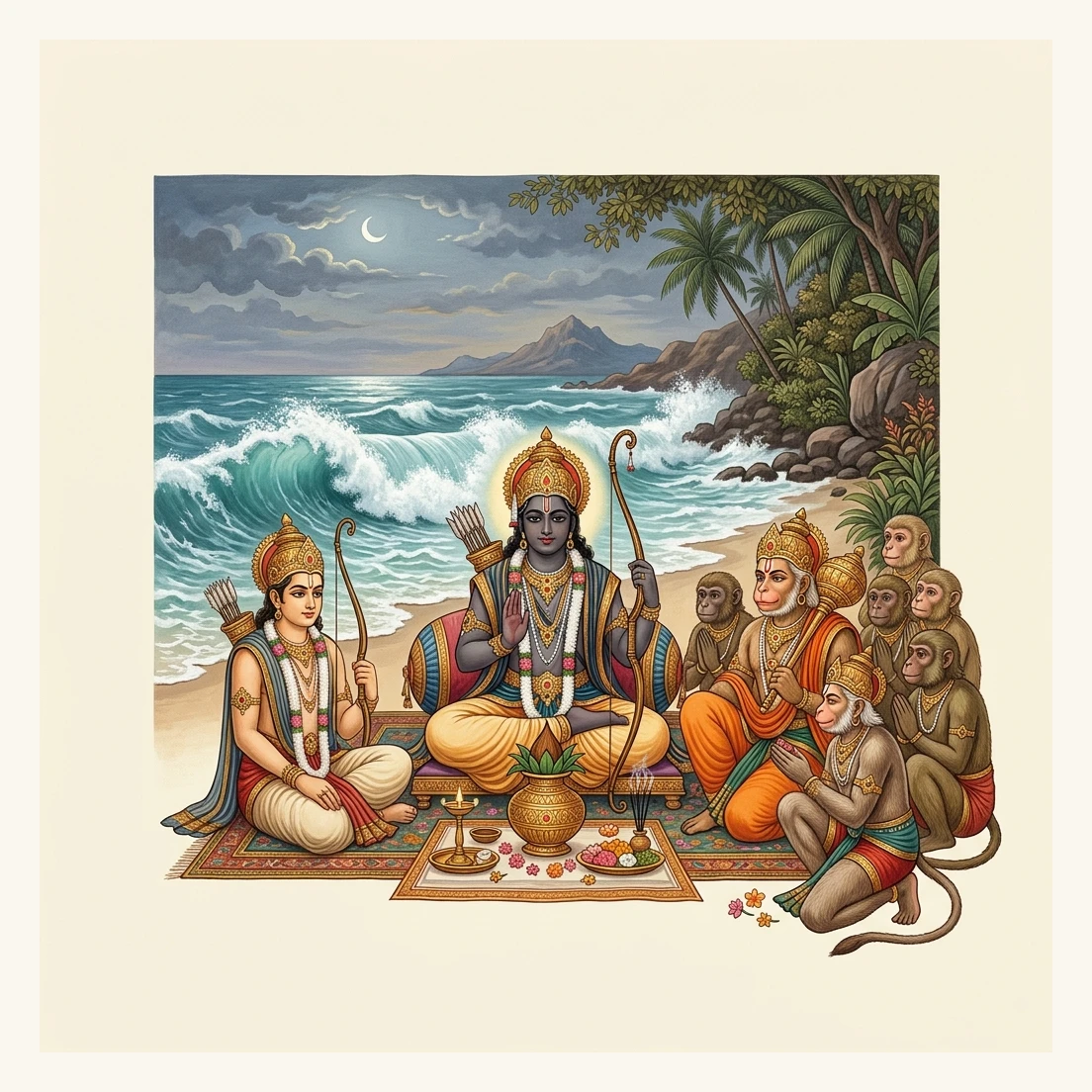
“O noble King! This sacred day is celebrated across all worlds as Vijayā Ekādaśī—the giver of victory (vijaya) over all obstacles, fears, and adversaries! In ancient times, Lord Śrī Rāmacandra Himself observed this very fast on the seashore to build the bridge across the ocean to Laṅkā. Listen to this glorious legend.”
Lord Rāma on the Seashore
During the search for Mother Sītā, Lord Śrī Rāma, His brother Lakṣmaṇa, and the vast army of Sugrīva arrived on the southern shores of the great ocean. Before them stretched miles of roaring, turbulent waters filled with formidable sea creatures.
Looking across the impassable waves toward Laṅkā, Lord Rāma turned to Lakṣmaṇa with a gentle smile: ‘O brother! How shall this vast army of vānaras cross this unfathomable sea to rescue Sītā and conquer the forces of darkness?‘
The Counsel of Sage Bakadālbhya
Lakṣmaṇa replied: ‘O Lord! A short distance from here lives the ancient and venerable Sage Bakadālbhya. Let us seek his counsel.’
Lord Rāma and Lakṣmaṇa walked to the peaceful ashram of the sage. Sage Bakadālbhya was overwhelmed with tears of joy to behold the Supreme Lord standing at his doorway as an earthly prince. Prostrating before Rāma, the sage said:
‘O Rāma! You are the creator and master of the universe; yet to set an example for all human beings on how to conquer insurmountable obstacles, observe the upcoming fast of Vijayā Ekādaśī in the dark fortnight of Phālguna.’
The sage instructed: ‘On Daśamī day, install a clean water pot (kalaśa) made of gold, silver, copper, or clay, adorned with mango leaves, barley, and fragrant flowers. On Vijayā Ekādaśī, fast with your entire army, worship Lord Nārāyaṇa with love, and keep an all-night vigil with devotional songs. Through this vow, every barrier will yield, and victory will be Yours!’
Victory and the Bridge to Laṅkā
Lord Śrī Rāma observed the fast of Vijayā Ekādaśī with Lakṣmaṇa, Sugrīva, Hanumān, and the entire army on the seashore. They worshipped Lord Hari with heartfelt devotion, remaining awake throughout the night in prayer.
By the power of that sacred vow, all obstacles dissolved. The Lord of the Ocean appeared and revealed how Nala and Nīla could build the miraculous floating bridge (Rāma Setu). The bridge was built across the sea, Rāvaṇa was defeated, Sītā was liberated, and Dharma was restored to the earth.
Whoever observes Vijayā Ekādaśī with faith is blessed with victory over their own inner battles, anxieties, and worldly obstacles.
How to Observe Vijaya Ekādaśī
- Installation of the Kalaśa: If possible, place a small water pot (kalaśa) with mango leaves and a coconut on a bed of grains before the altar.
- Worship of Lord Rāma / Nārāyaṇa: Offer fresh flowers, incense, a lighted lamp, and tulasī leaves.
- Gentle Fasting: Observe a peaceful fast suited to your strength.
- Chanting of Rāma-Nāma: Spend time chanting the sweet name of Rāma: Śrī Rāma Jaya Rāma Jaya Jaya Rāma.
- Dvādaśī Pāraṇā: Next morning on Dvādaśī, offer food and water to others and break fast within the morning window.
Source: Padma Purāṇa, Uttara Khaṇḍa, Chapter 46, ‘Vijayā Ekādaśī Mahātmyam’. Translated and retold in classical devotional prose for contemplation and daily observance.
Deepen Your Spiritual Immersion
Support the preservation of authentic Vedic astronomy and scripture. Sanctum Patrons unlock deep commentaries, printable altar cards, and uninterrupted contemplation.
100% of contributions fund authentic scriptural research & planetary ephemeris maintenance.
Frequently Asked Questions
- What is Vijaya Ekadasi?
- Vijaya Ekadasi is the ekādaśī tithi, the eleventh lunar day, of the waning fortnight (kṛṣṇa pakṣa) of Phālguna. Its name signifies "the victory". Like every Ekadasi, it is observed by fasting and remembrance of Lord Viṣṇu. The sacred narrative and transcendental fruits (phalaśruti) of Vijaya are preserved in Purāṇas.
- When is Vijaya Ekadasi observed?
- Vijaya Ekadasi falls on the ekādaśī tithi of the waning fortnight of Phālguna in the Hindu lunar calendar. The exact Gregorian date varies each year because the lunar calendar shifts relative to the solar year. Smārta and Vaiṣṇava observers occasionally fast on different civil days when the tithi spans two sunrises; see the timings table above for your locality's exact window.
- Who is worshipped on Vijaya Ekadasi?
- Vijaya Ekadasi, like all Ekadasis, is dedicated to Lord Śrī Kṛṣṇa / Mahāviṣṇu. Traditional devotional observances include chanting the Viṣṇu-sahasranāma, reading the corresponding chapter from Purāṇas, hearing the sacred katha, and meditating on the divine holy names.
- What is the spiritual fruit (phalaśruti) of observing Vijaya Ekadasi?
- Canonical scriptures declare that observing Vijaya Ekadasi bestows: Liberation from accumulated sins and attainment of Viṣṇuloka.. Across all sacred Ekadasis, the fast purifies consciousness, dissolves karmic impressions, and elevates the soul toward spiritual liberation.
- How is Vijaya Ekadasi observed?
- A complete observance begins the prior evening (Daśamī) with a light sattvic meal, followed by a dedicated fast on Ekadasi day. Devotees may observe nirjala (without water), phalahāra (fruits, milk, and water), or a single sattvic meal according to physical capacity. Grains, rice, wheat, beans, onion, and garlic are strictly avoided. The fast concludes on Dvādaśī morning during the designated pāraṇa window with sacred Caraṇāmṛta and Tulasī.
- What is the difference between Smārta and Vaiṣṇava observance of Vijaya Ekadasi?
- On most occasions, both traditions observe the fast on the identical date. A variation occurs during an atirikta Ekādaśī when the tithi spans two consecutive sunrises. Smārtas fast on the first day (Viddhā), while Vaiṣṇavas observe the fast on the subsequent morning (Śuddhā), ensuring adherence to Dvādaśī touching sunrise.